AI Integration Services That Put AI Inside the Systems You Already Run
QSS Technosoft connects language models, machine learning, vision, speech and AI agents to your CRM, ERP, EHR, help desk, data warehouse and legacy applications. We build the part most AI projects underestimate: the connectors, data flows, access rules, cost controls and fallbacks that let AI read from your systems, write back safely and pass your security review.
The model is the variable. The integration is the asset.
Getting an answer from a model takes an afternoon. Getting that answer into the right Salesforce field, under the right user's permissions, with a log and a fallback when the model is down, is where AI integration for business is won or lost. We engineer that layer, and we stay accountable for it after launch.
From API Key to Production AI Integration
400+
Projects delivered to production
250+
In-house engineers
99.9%
Production uptime
4.9/5
Client rating on Clutch
WHERE AI INTEGRATION PROJECTS GET STUCK
What you're up against, and how we get AI working inside your stack
AI integration rarely fails on the model. It fails on data nobody prepared, systems with no clean API, a security review nobody planned for and token bills nobody forecast. Our AI integration solutions start with those four. Here is where we see teams get stuck, and how we get them unstuck.
Problem
The pilot works, but only on a spreadsheet
How we solve it
An integration map of source systems, data contracts, owners and quality checks, then pipelines that feed the model live data instead of exports.
AI that runs on the same data your teams do.
Problem
AI lives in another tab
How we solve it
AI built into the screens people already use: a panel in the CRM record, a draft in the help desk reply, a field in the ERP form.
Adoption without asking anyone to change tools.
Problem
The core system has no usable API
How we solve it
Wrapper APIs, database change capture, file and message queues, or secure robotic steps where nothing else exists, all without touching the core code.
Legacy systems that take part in AI workflows.
Problem
Security won't approve the connection
How we solve it
Single sign-on, scoped service accounts, role-based access, secrets management, data-residency choices and audit logs designed in from the first sprint.
A sign-off, not a standoff.
Problem
Model costs climb and you're tied to one vendor
How we solve it
One AI gateway with adapters for several providers, model routing, caching, per-team budgets and cost tracked on every call.
Predictable spend and the freedom to switch models.
Problem
Integrations break quietly
How we solve it
Retries, timeouts, fallbacks, health checks and tracing on every connector, with alerts before users notice.
Problems found by monitoring, not by customers.
Need to wire AI into Salesforce, SAP, your EHR or a system built in-house?Book a 30-minute architecture review and we'll show you the safest path to production.
Eight services, one team, from the first integration map to a production connection your team can run. To build the AI itself, see our generative AI development services.
SERVICE
AI integration consulting & integration mapping
AI integration consulting that starts with your systems, not a model. We map where AI should read and write, what each connection needs and what could fail, then hand you a plan with an engineer's estimate.
System inventoryApps, data stores, APIs and owners listed.
Data contractsFields, formats, refresh rates and quality rules agreed.
Failure modesTimeouts, outages and bad data planned for.
Build, buy or extendVendor AI, custom integration or both.
Generative AI integration services that connect OpenAI, Anthropic, Google, Meta and open models to your apps, grounded in your own content through retrieval, with vision and speech models added where the work needs them.
LLM integrationHosted or private models behind one internal API.
RAG pipelinesYour documents and records retrieved with permissions.
Vision and speechDocument, image and voice models in the same flow.
Prompt and output contractsStructured outputs your systems can trust.
AI inside Salesforce, HubSpot, Microsoft Dynamics 365, SAP, Oracle, Odoo, ServiceNow, Zendesk and Workday, whether you extend the vendor's own AI or connect your own models.
CRMLead scoring, summaries and next steps on the record.
ERPInvoice matching, demand signals and exception flags.
Help desk and ITSMTicket triage, drafts and routing.
Vendor AIAgentforce, Joule and Copilot extended to your other systems.
Model Context Protocol (MCP) servers and tool APIs that let AI assistants and agents use your systems through a controlled, logged interface instead of broad credentials.
MCP serversYour systems exposed as scoped tools.
Tool permissionsEach tool limited to the actions it needs.
Agent platformsConnections for Agentforce, Copilot Studio and custom agents.
ApprovalsHuman sign-off for actions that change records.
The controls and operations that let AI integrations pass review and keep running: one gateway for every model call, access tied to your identity provider, and monitoring after launch.
AI gatewayRouting, caching, budgets and provider fallback.
IdentitySSO, role-based access and scoped service accounts.
AuditEvery prompt, source, output and write-back logged.
SupportMonitoring, fixes and model updates on a schedule you set.
Choose a system you run today. The window shows what the business asks for, what the integration actually does, how it connects, where the data stays, which model does the work and where the result is written back.
AI integration map · Illustrative example
Salesforce / CRM
Sales operations
Reps waste time reading long account histories before every call.
When a rep opens an opportunity, the integration pulls recent emails, calls and cases, sends them to the model under the rep's own permissions and returns a short brief with risks and a suggested next step.
Connector: REST API + platform eventsData stays in: your cloud
ModelHosted LLM through your AI gateway
Writes back toOpportunity summary field and a follow-up task
AI integration map · Illustrative example
SAP / ERP
Finance team
Invoice exceptions pile up because nobody can match them fast enough.
New invoices are read with document AI, matched against purchase orders and goods receipts, and only the mismatches are sent to a reviewer with the likely reason.
Connector: OData APIs + event queueHuman approval: before posting
ModelDocument AI and a matching model
Writes back toException queue and invoice notes
AI integration map · Illustrative example
EHR (Epic / Oracle Health via FHIR)
Clinic operations
Clinicians spend too long writing referral letters from the chart.
A SMART on FHIR app reads the problem list, medications and recent notes, drafts the referral letter and leaves it for the clinician to edit and sign.
Writes back toDraft document in the chart, after clinician sign-off
AI integration map · Illustrative example
Zendesk / ServiceNow help desk
Support lead
Tickets reach the wrong queue and wait hours for a first reply.
Each new ticket is classified by topic, urgency and language, matched to similar solved tickets and given a draft reply the agent can accept or edit.
Connector: webhooks + REST APIAgent reviews: every reply
ModelClassifier plus LLM with retrieval
Writes back toTicket fields, queue and draft reply
AI integration map · Illustrative example
Microsoft 365 / Teams
Operations manager
Decisions from meetings get lost in chat threads.
After a meeting, the transcript and shared files are summarized into decisions and owners, posted to the team channel and turned into tasks.
Connector: Microsoft Graph APIAccess: user's own permissions
ModelHosted LLM in your Azure tenancy
Writes back toTeams channel post and Planner tasks
AI integration map · Illustrative example
Data warehouse (Snowflake / BigQuery)
Revenue team
We want a churn score on every account, not a quarterly report.
A pipeline builds features from usage, billing and support data, scores every account each night and explains the top three drivers for each score.
Connector: scheduled pipeline + SQLData stays in: your warehouse
ModelCustom ML model with explanations
Writes back toWarehouse table and CRM account field
AI integration map · Illustrative example
Shopify / e-commerce
E-commerce manager
Thousands of product pages have thin, inconsistent descriptions.
Product data and images are sent in batches, descriptions and attributes are generated in the brand style, and each batch waits for review before it is published.
Connector: Admin API + bulk jobsReview: before publish
ModelVision-language model and LLM
Writes back toProduct descriptions and attributes
AI integration map · Illustrative example
Legacy on-premise app
IT director
Our claims system is 20 years old and has no API, but staff need AI help inside it.
A small service reads new records through database change capture, runs the AI checks inside your network and returns flags through a secure wrapper API the old screens can call.
Connector: change data capture + wrapper APIData stays in: your data center
ModelOpen-weight model hosted on-premise
Writes back toReview flag table read by the legacy app
AI integration map · Illustrative example
Custom SaaS product
Product team
Customers want AI features in our product without us building a model team.
An internal AI service gives the product one API for summaries, search and drafting, with per-customer usage limits, data isolation and the option to switch providers later.
Connector: internal API + MCP serverIsolation: per customer
ModelRouted across two providers through an AI gateway
Writes back toYour product database and usage billing
Illustrative integration patterns. Connectors, data location, models and write-backs are designed for each system and approved by your security team. Product names are trademarks of their owners.
WHY QSS
Why Businesses Choose QSS as Their AI Integration Company
Plenty of firms can call a model API. Fewer have spent years connecting EHRs, CRMs, ERPs and legacy systems, and can make AI pass the same security review. We are an engineering firm of 250+ that does both.
01
Integration engineers first
16+ years of connecting enterprise systems, long before language models, so we plan for the data contracts, outages and edge cases that sink AI projects.
Dedicated HL7, FHIR, SMART on FHIR, Mirth Connect and Iguana practices, with 20+ EHR, EMR and HIS integrations delivered, including Epic, Oracle Health (Cerner) and Allscripts.
One gateway with adapters for OpenAI, Anthropic, Google, Amazon Bedrock, Azure OpenAI and open-weight models, so you can change providers without rewriting your applications.
SSO, role-based access, secrets management, data-residency controls and audit logs are part of every build, under CMMI Level 3, ISO 27001 and ISO 9001 processes.
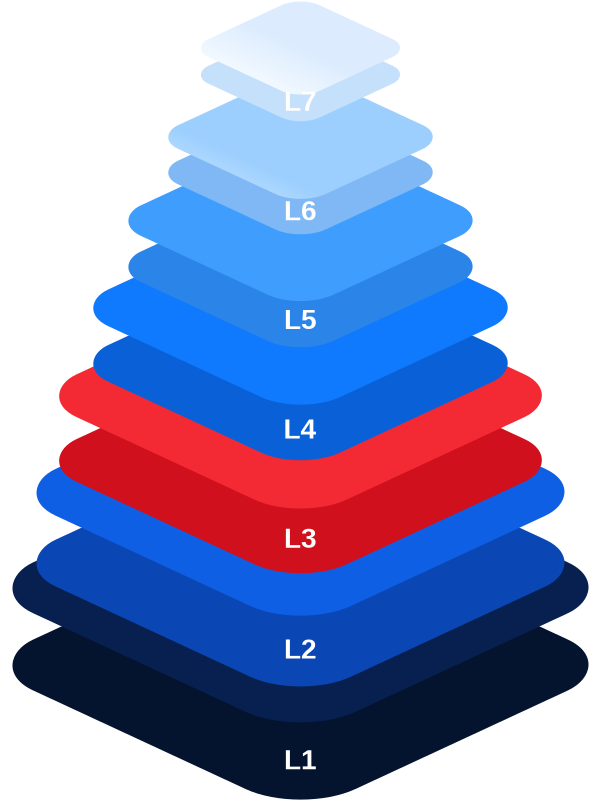
An enterprise AI integration is seven layers, not one API call. We engineer every one of them, which is why the integration keeps working when a model, a vendor or a schema changes.
Most AI integration failures are data and access problems, not model problems. We fix the data contracts and permissions before we tune a single prompt.
Write-back, monitoring & auditResults returned to the right field with approvals, tracing, cost tracking and logs.
Models & orchestrationLLMs, ML, vision, speech and agents, chosen per task and swappable.
AI gatewayOne entry point for every model call: routing, caching, budgets, redaction and provider fallback.
Identity & accessSSO, scoped service accounts, role-based access and permission-aware retrieval.
Connectors & APIsREST, GraphQL, webhooks, iPaaS flows, FHIR and MCP servers, with retries and timeouts.
Data pipelines & contractsBatch, streaming and change capture, with agreed fields, quality checks and lineage.
Systems of recordCRM, ERP, EHR, help desk, warehouse and legacy apps, left where they are.
BUILD CHOICES
Vendor AI, API integration, MCP tools or an AI integration platform which do you need?
Your CRM or ERP may already include AI. The question is whether it reaches the data and systems the work depends on. We often extend vendor AI first, and build custom connections only where it falls short.
Vendor-native AI
Best forWork that stays inside one platform, using its built-in assistants such as Agentforce, Joule or Copilot
Speed to launchWeeks, once licenses and data are in place
Trade-offLimited reach into other systems, and pricing set by the vendor
API & middleware integration
Usual start
Best forOne AI capability connected to one to three systems through APIs, webhooks or your iPaaS
Speed to launch4 to 8 weeks for a first integration
Trade-offEach new system adds testing, security review and upkeep
MCP & agent tool layer
Best forLetting assistants and agents use many systems through scoped, logged tools
Speed to launch8 to 14 weeks, building on existing APIs
Best forA shared gateway, connectors and governance across business units and regions
Speed to launch4 to 9 months, phased
Trade-offThe largest investment; it pays off once several use cases share it
SUCCESS STORIES
AI systems we've built on top of existing code, data and documents
We have not yet published a case study that is purely an AI integration project. These three AI platforms each had to work with what the client already had: a legacy codebase, enterprise data files and legal document collections. Each links to the full case study.
GenAI-Powered Legacy Code Modernization
A US technology services firm needed to modernize sprawling legacy codebases without disrupting operations. We built an AI-native platform combining code analysis, LLM-powered BRD generation and collaborative review on AWS.
A German enterprise struggled with slow, expert-dependent analytics. We built a GenAI analytics platform with conversational queries and automated analysis across CSV and PDF data.
AI integration solutions for the systems your industry runs on
Each industry has its own core systems, data rules and approval steps. We integrate AI with the platforms and regulations you actually work with.
HEALTHCARE & LIFE SCIENCES
AI that works inside the clinician's workflow
AI integration in healthcare starts with the EHR. We connect language models and clinical AI to Epic, Oracle Health (Cerner), Allscripts and other systems through FHIR R4, SMART on FHIR and HL7 v2, so drafts, summaries and alerts appear in the chart and write back only after clinician review, with HIPAA controls throughout.
AI in core banking and lending, with an audit trail
AI connected to core banking, loan origination, fraud and KYC/AML workflows, with every model score and recommendation logged next to the decision it informed.
Claims and underwriting systems that read documents for you
Document AI and language models connected to policy administration and claims systems to extract details, flag gaps and draft notes for adjusters and underwriters to review.
Recommendation and personalization models, product content generation and support automation connected to your commerce platform, order system and customer data platform.
Product ContentPersonalized RecommendationsOrder Data
Predictive maintenance, quality-control and demand models fed by IoT and MES data, with results written back to SAP, Oracle or your ERP as work orders and alerts.
Faster exceptions across shipping and warehouse systems
Shipping-document extraction, delay prediction and exception handling connected to your TMS, WMS and carrier APIs, so planners see the problem and a suggested fix in one place.
Listings, leads and leases handled inside your CRM
Lead scoring, lease and contract extraction, and listing content generation connected to the CRM and listing systems your agents and property managers already use.
AI connected to learning management and student information systems.
Public sector: secure, auditable AI inside case and records systems.
AI in booking, reservation and customer service platforms.
AI features added to your product through one internal API.
RESPONSIBLE AI & SECURITY
The controls we build into every AI integration
An AI integration opens a path between a model and your systems of record. These eight controls decide what can travel along it, who can use it and what happens when something goes wrong.
OWASP LLM Top 10NIST AI RMFISO/IEC 42001EU AI ActHIPAAGDPRISO 27001
Each connector and AI tool gets its own scoped account with only the reads and writes it needs, never shared admin credentials.
The model sees only what the requesting user is allowed to see, enforced at retrieval, not left to the prompt.
Content from emails, tickets and documents treated as untrusted, with input screening, separated instructions and limits on what tools can do.
PII and secrets redacted before model calls, outputs checked before they leave, and providers that do not train on your data.
Models in your cloud tenancy, region or data center when the data cannot leave.
Changes to records, payments, orders or clinical documents wait for a person unless you decide otherwise.
Every prompt, source, model, output and write-back logged to your retention policy, ready for review.
If a model, provider or connector fails, the business process continues without AI, and any integration can be switched off at once.
Our AI integration process
Integration map (weeks 1–2)
Source systems, data contracts, auth model, service levels and failure modes agreed with your IT and system owners.
Data readiness
Field-level checks on quality, access and freshness, with fixes scoped before anyone builds on bad data.
Proof of value
One use case running on real data in a test environment, with accuracy, latency and cost measured.
Build connectors & guardrails (weeks 3–6)
Connectors, retries, gateway, access controls and monitoring built, with a development environment live.
UAT & hardening (weeks 6–10)
Load tests, security review, IT sign-off and verified fallback paths.
Production cutover & support (weeks 10–14)
Rollout by user group, an on-call runbook and knowledge transfer, then ongoing support or full handover to your team.
Ways to work with us
Fixed-scope integration
One AI capability connected to a defined set of systems, with a fixed price, timeline and milestones. A practical first step for mid-sized and smaller companies.
Dedicated AI integration team
A named team of integration architects, AI engineers and security specialists working as an extension of yours.
Hire AI integration engineers
Specific skills ramped in weeks: API and middleware, data pipelines, LLM integration, MCP servers and identity.
Build-operate-transfer
We build and run your AI integration layer, then transfer the team, gateway and runbooks to you.
OUR TECHNOLOGY STACK
Our AI integration technology stack
Model-agnostic and platform-agnostic. We work with the systems you already have and recommend new tools only where they earn their place.
The model is rarely the big line item. Data preparation, connectors, security review and testing drive most of the cost, and every extra system adds to it, so we count the systems and check the data before we quote.
AI integration pilot
One AI capability connected to one system with a modern API, on real data, with an evaluation and a go or no-go decision
◷4–8 weeks
◉$18,000–$40,000Typical investment
Production multi-system integration
AI connected to two to four systems, with an AI gateway, access controls, monitoring, fallbacks and write-back
◷10–16 weeks
◉$50,000–$120,000Typical investment
Enterprise AI integration platform
A shared gateway, connectors, MCP tool layer and governance across business units, regions or legacy systems
◷4–9 months, phased
◉$130,000–$350,000+Typical investment
Model usage, hosting and integration-platform licenses are billed separately and depend on volume; we forecast them during the pilot. Systems without a modern API usually add time and cost, and ongoing support typically runs 15–20% of the build cost a year. You leave the first call with a range specific to your systems.
Ready to put AI inside the systems your teams already use?
A 30-minute architecture review with an engineer from an AI integration company that builds and runs what it designs. Bring the system you want to add AI to and the problem you want solved, and leave with a first read on the right integration pattern, the data it needs and a cost range.
Straight answers about AI integration: what it covers, cost, timelines, security, vendor AI, MCP and legacy systems.
AI integration is the work of connecting AI models, such as language models, machine learning, vision, speech or agents, to the software a business already runs, so AI can read the data it needs and put its results back where people work. It covers APIs and middleware, data pipelines, identity and access, cost control, monitoring and fallbacks. Building the model is AI development; making it useful inside your CRM, ERP, EHR or help desk is AI integration.
Our AI integration services cover the whole path: AI integration consulting and integration mapping, data readiness, LLM and machine learning integration, connectors for CRM, ERP, help desk and data warehouse systems, workflow automation, MCP servers for AI agents, legacy system access, an AI gateway, security controls, testing, cutover and support after launch.
A pilot that connects one AI capability to one system typically costs $18,000–$40,000, a production integration across two to four systems $50,000–$120,000, and an enterprise AI integration platform $130,000–$350,000 or more. Model usage, hosting and platform licenses are extra, systems without modern APIs add cost, and support usually runs 15–20% of the build cost a year. The number of systems and the state of your data drive the price more than the model does.
A pilot takes 4 to 8 weeks, a first production integration 10 to 16 weeks (our standard plan runs 14 weeks from integration map to cutover), and an enterprise platform 4 to 9 months in phases. Data readiness and API access are the two things that move the timeline most.
Successful AI integration into business systems starts with one problem and one system. Map the data the AI needs and where its result should go, check that data on your real systems, prove the value in a test environment, then add security controls, monitoring and fallbacks before going live. Grow to more systems once the first integration is stable. Our AI implementation roadmap service can plan the wider program.
No. AI integration exists so you don't have to. Salesforce, SAP, ServiceNow, your EHR or a system built in-house stay where they are; we connect AI through them, not around them.
With one AI gateway and inference layer that has adapters for OpenAI, Anthropic, Amazon Bedrock, Azure OpenAI, Google Gemini and open-weight models. Your applications call the gateway, not a provider, so you can change models without rewriting application code.
That is what it is designed for. Every integration includes SSO, role-based access, scoped service accounts, secrets management, audit logging and data-residency choices, and we prepare the documentation your security team will ask for. Our processes are certified to ISO 27001 and CMMI Level 3, and for regulated data we build to HIPAA and GDPR controls.
Through the AI gateway: per-team or per-customer budgets, cost tracked on every call, caching, and routing that sends simple tasks to smaller models and escalates only when needed. We forecast run costs during the pilot so there are no surprises at scale.
The Model Context Protocol (MCP) is an open standard for connecting AI assistants and agents to tools and data. An MCP server exposes a system, such as your CRM or ticketing tool, as a set of scoped actions an AI can use. You need it when several assistants or agents must use the same systems; for a single AI feature, a direct API integration is usually simpler.
Use the vendor's AI when the work stays inside that platform and its licensing fits. Build a custom integration when the AI needs data or actions from several systems, a model the vendor doesn't offer, or controls the vendor can't give you. Many teams do both: we extend vendor AI with connections to the rest of the stack.
Yes. We connect AI to Epic, Oracle Health (Cerner), Allscripts and other EHRs through FHIR R4, SMART on FHIR and HL7 v2, with HIPAA controls and clinician review before anything is written to the chart. We have delivered 20+ EHR, EMR and HIS integrations; see our EHR and EMR development page for the interface work itself.
Yes. We use the safest access point each system offers: a wrapper API, database change capture, file or message queues, or secure automated steps where nothing else exists. AI can run on-premise when data cannot leave your network.
We check the specific fields each use case needs for quality, completeness, freshness and access, agree data contracts with system owners, and build pipelines with validation and lineage. Fixes are scoped before the build, because data readiness is the most common reason AI projects stall. For a wider review, see our AI readiness assessment.
Data leakage is controlled with permission-aware retrieval, PII and secret redaction, output checks and providers that do not train on your data. Prompt injection is handled by treating emails, tickets and documents as untrusted input, separating instructions from content, limiting what each tool can do and requiring approval for write-backs. We test against the OWASP Top 10 for LLM applications.
Language models for summaries, drafts, extraction and search; machine learning models for forecasts, scores and classifications; vision models for documents and images; speech models for calls and voice notes; and AI agents that use your systems as tools. Our chatbot, computer vision and AI agent pages cover building each of those in depth.
Often, when a team spends hours on work that already lives in one system, such as sorting tickets, matching invoices or updating CRM records. AI integration for small businesses usually starts with a fixed-scope pilot on one system, so the value is proven in weeks before anything larger is funded.
Ask how they handle data contracts, access controls and model outages, which enterprise systems they have integrated before, how they track cost per call, and who owns the connectors and gateway afterward. The strongest AI integration companies will show you an integration map and a security design, not just a demo.