AI Fraud Detection Software: How Machine Learning Is Stopping Financial Crime in Real Time
 By Deepak Rathaur
AI/ML Engineer
July 27, 2026
11 min read
Last Updated on July 27, 2026
By Deepak Rathaur
AI/ML Engineer
July 27, 2026
11 min read
Last Updated on July 27, 2026

Quick Answer
AI fraud detection software uses machine learning to analyze transactions and behavior in real time, scoring each one in milliseconds and blocking fraud before it clears. Unlike rigid rule-based systems, ML models learn what “normal” looks like for each customer, adapt to new fraud tactics automatically, and dramatically cut the false positives that frustrate legitimate customers.
Score every transaction in real time — and stop fraud before it clears, not after the loss.
When Fraud Moves in Milliseconds, So Must Your Defenses
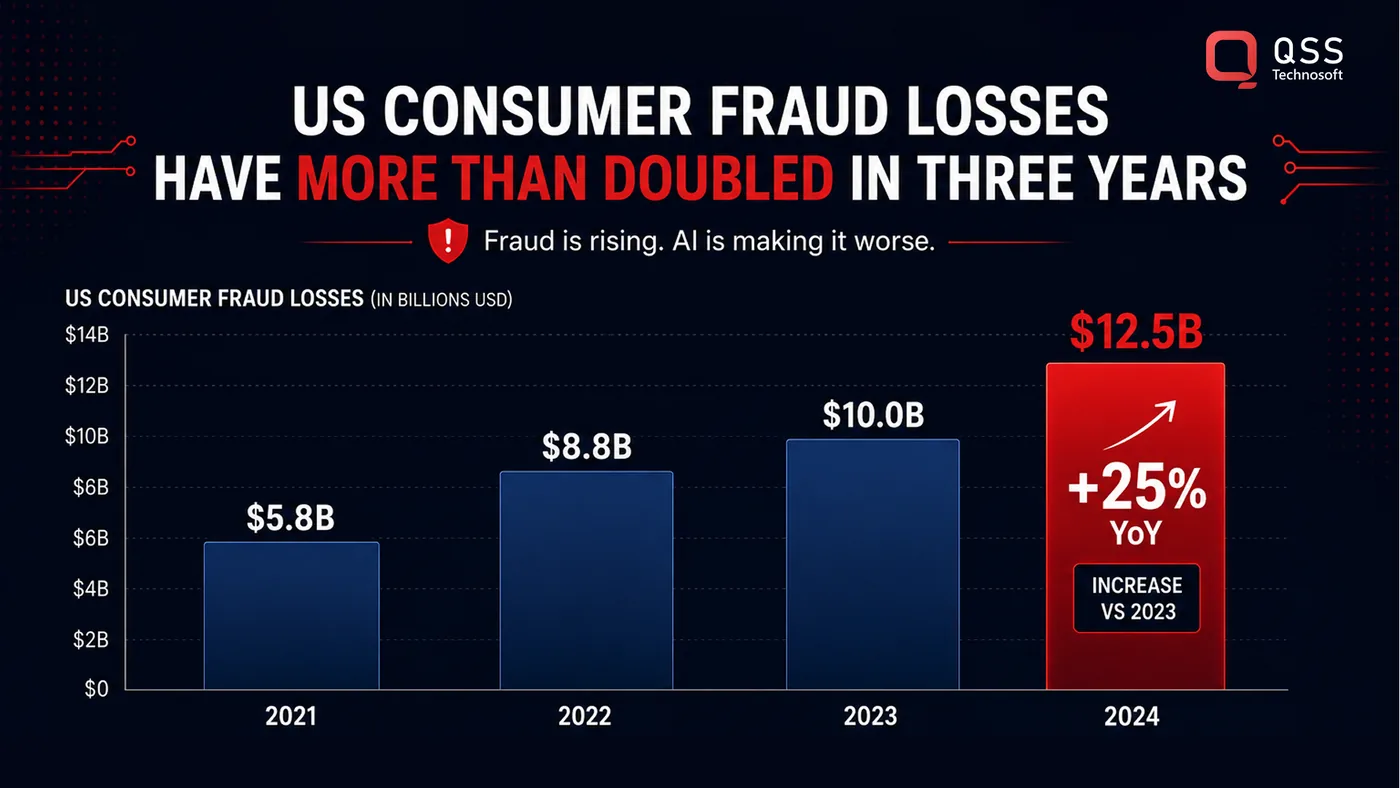
A fraudulent card transaction can be authorized in under a second. By the time a human analyst — or a static rulebook — flags it, the money is gone. Financial crime has become faster, more automated, and more sophisticated, and the old way of fighting it can't keep pace.
That's why financial institutions are moving to AI-powered fraud detection. Machine learning doesn't just apply a fixed set of rules; it learns from millions of transactions, spots patterns no human could see, and makes a decision in the moment a payment happens. In this guide, we break down how it works, the techniques behind it, the fraud it stops, and what it takes to build a system that actually holds up in production.
What Is AI Fraud Detection Software?
AI fraud detection software is a system that uses machine learning models to identify and prevent fraudulent activity across financial transactions, accounts, and applications. Instead of relying on hand-written rules (“flag any transaction over $10,000”), it learns the difference between legitimate and suspicious behavior from historical and live data.
Every transaction is scored in real time against what the model knows about normal behavior — for that customer, that device, that location, and that pattern of activity. If the risk score crosses a threshold, the transaction is blocked, challenged, or sent for review, all in milliseconds. Crucially, the model keeps learning: as fraudsters change tactics, it adapts.
Why Rule-Based Fraud Detection Is Failing
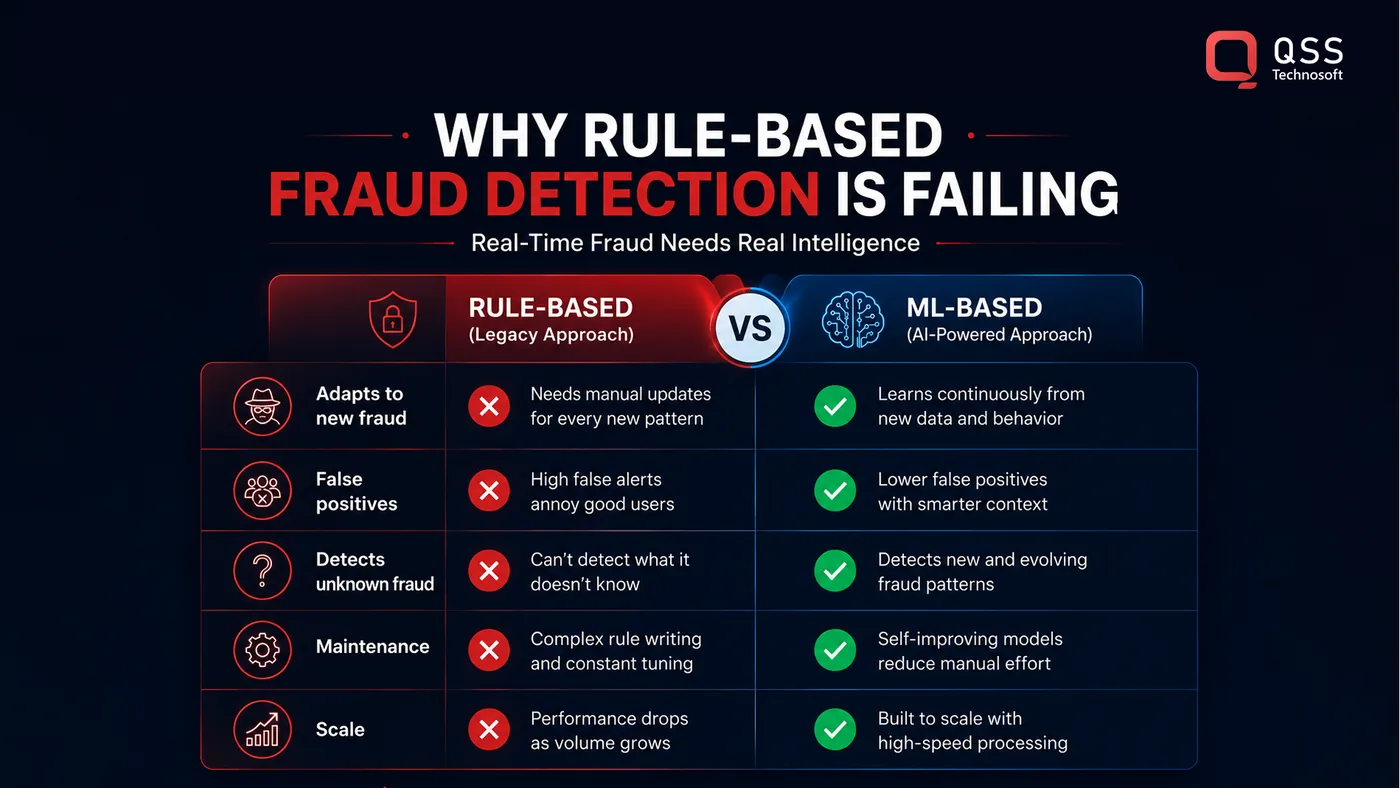
For decades, fraud defenses were built on rules. Rules are simple and explainable, but they have a fatal weakness: they can only catch fraud someone has already seen and written a rule for. Fraudsters know this, and they move faster than any rule-writing team.
The result is a lose-lose: too few rules and fraud slips through; too many rules and legitimate customers get declined. Here's how the two approaches compare.
Rules still have a place — often as a fast first filter — but on their own, they leave too much on the table. Machine learning is what closes the gap.
How Machine Learning Detects Fraud in Real Time
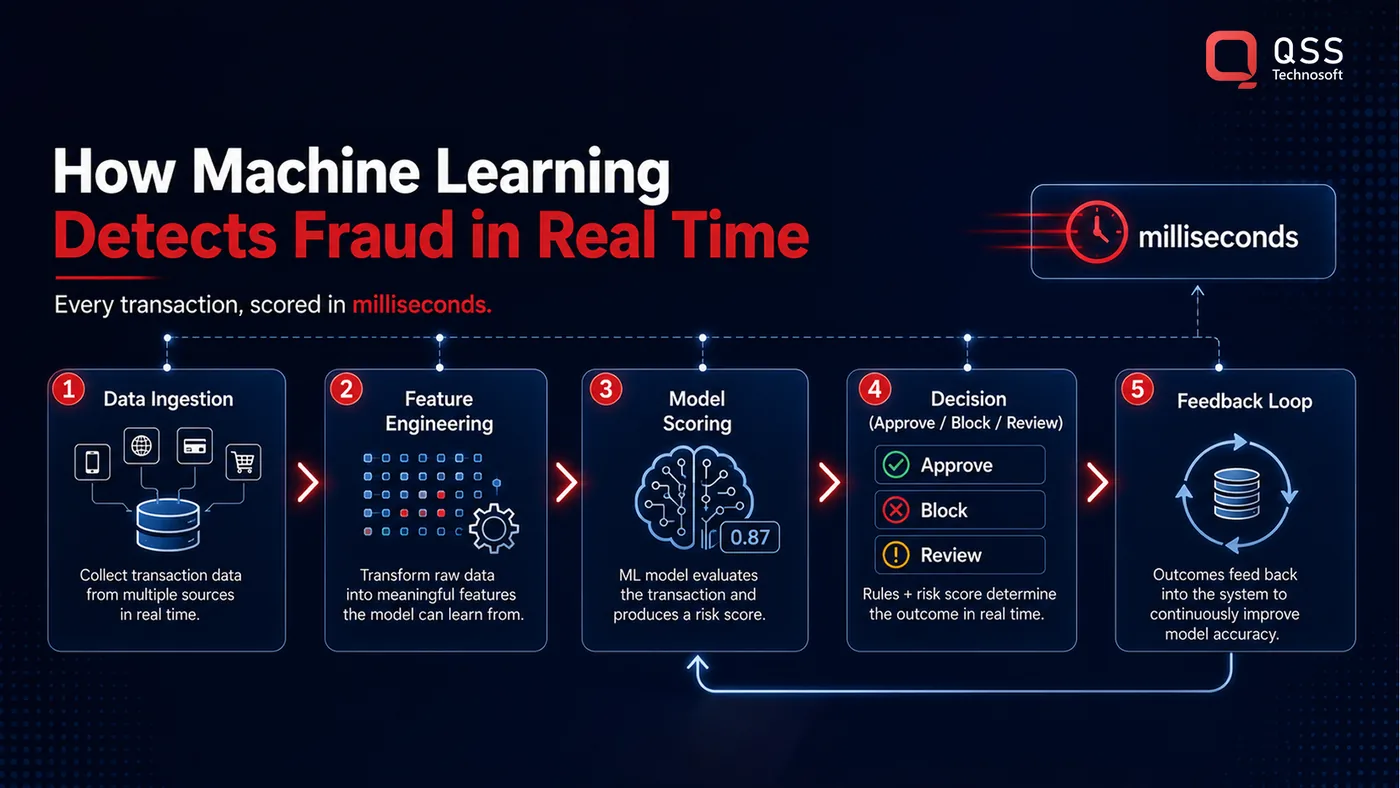
The magic isn't a single model; it's a pipeline that turns raw activity into a decision in a fraction of a second. Here's what happens the instant a transaction hits.
- Data ingestion — the system captures the transaction plus context: amount, location, device, time, merchant, and the customer's history.
- Feature engineering — it computes signals in real time, such as “how far is this from the last transaction?” or “how many payments in the last five minutes?”
- Model scoring — a trained ML model assigns a fraud-risk score to the transaction, weighing hundreds of signals at once.
- Decision — based on the score, the transaction is approved, blocked, or sent for step-up verification or human review.
- Feedback loop — the outcome (confirmed fraud or not) flows back to retrain and sharpen the model.
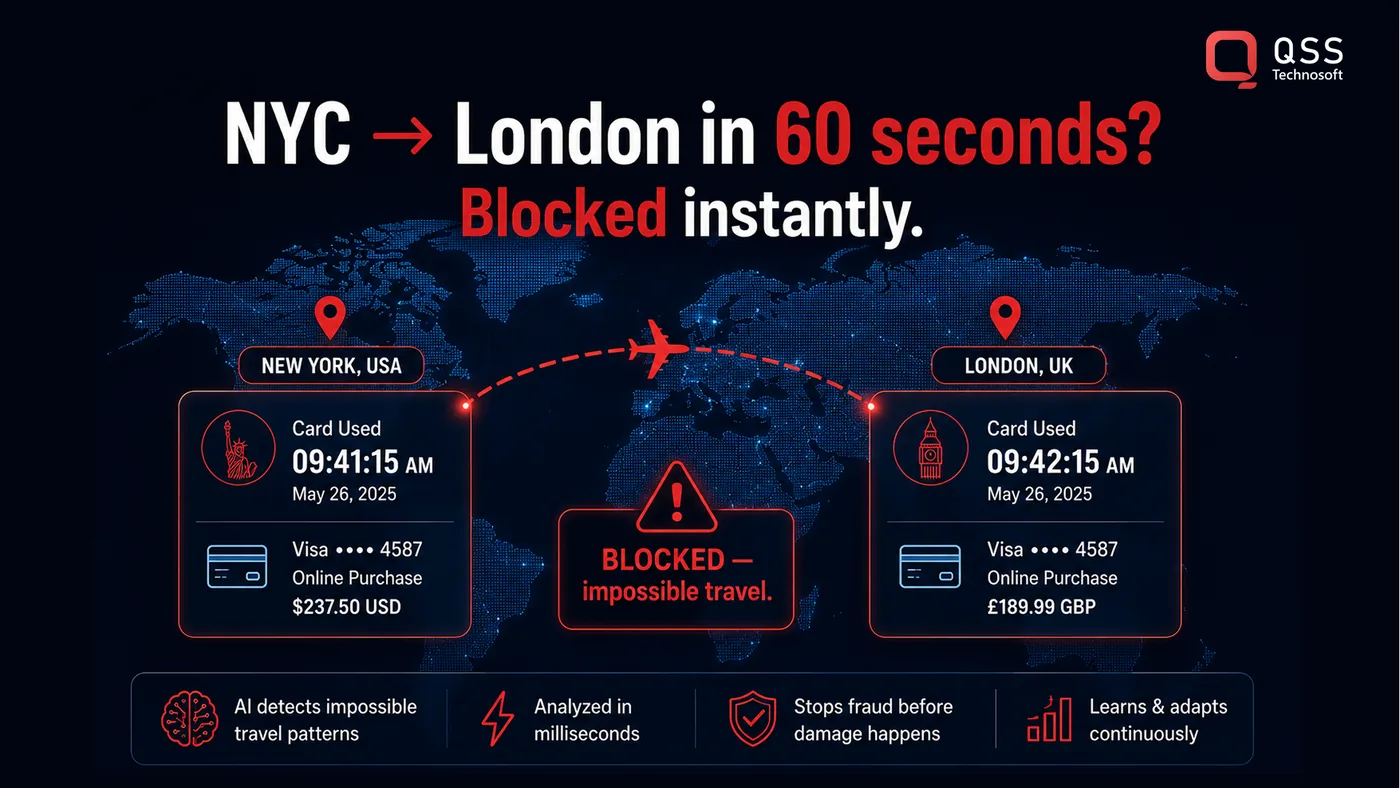
A classic example: a card is used in New York, then a minute later in London. No human set a rule for that exact case, but the model recognizes the “impossible travel” pattern instantly and blocks it. The same logic catches sudden spending spikes, unusual login behavior, and dozens of other tells — as they happen.
By industry estimates, global payment-fraud losses run into the tens of billions of dollars a year, and for many businesses false positives cost more than the fraud itself — declining good customers and driving them away. Real-time ML is aimed squarely at both problems.
The Machine Learning Techniques Behind It
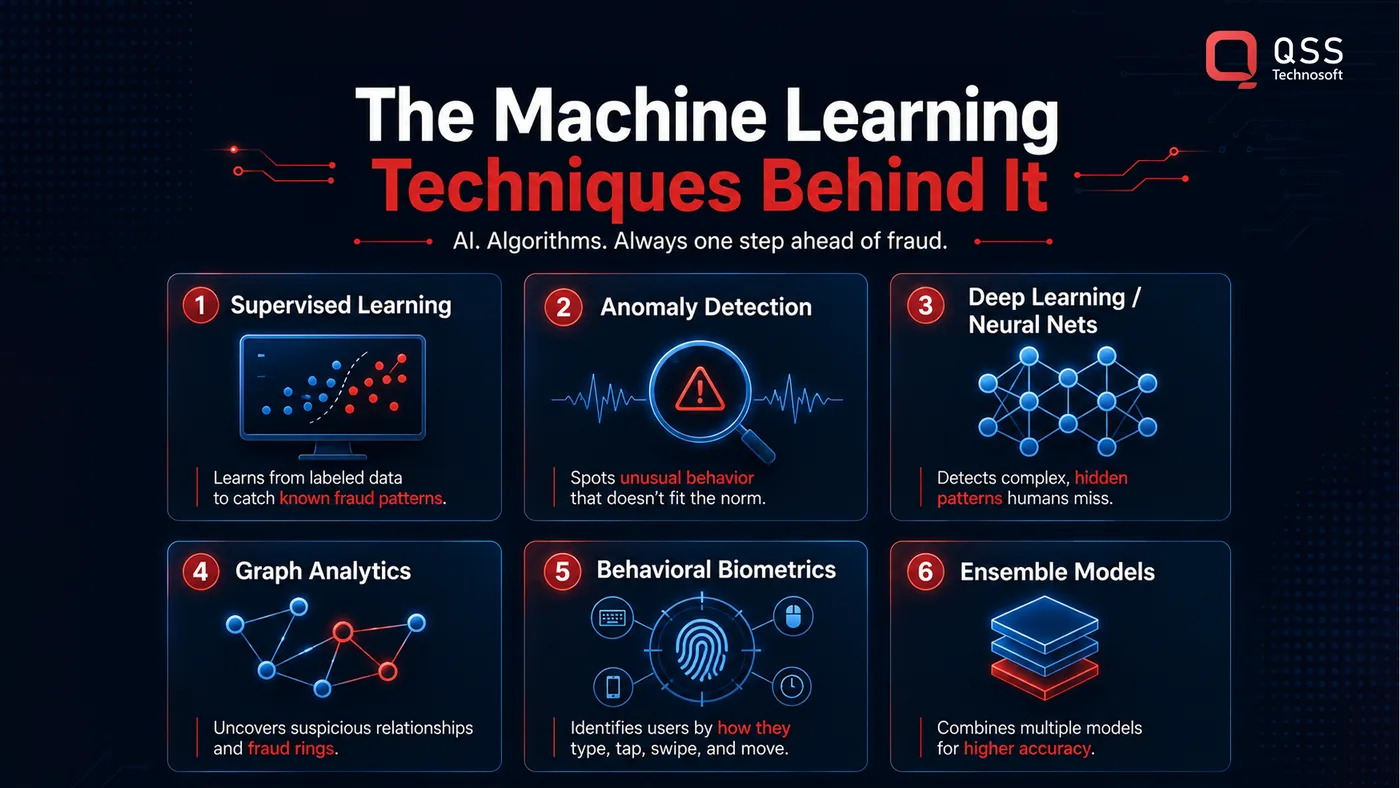
“AI fraud detection” isn't one algorithm — it's a toolkit, and the best systems combine several.
- Supervised learning — models trained on labeled data (known fraud vs. legitimate) to recognize established fraud patterns with high accuracy.
- Unsupervised learning & anomaly detection — spots behavior that simply doesn't fit, catching brand-new fraud no one has labeled yet.
- Deep learning & neural networks — model complex, non-obvious relationships in huge datasets, powering real-time transaction monitoring.
- Graph analytics — maps the connections between accounts, devices, and payments to uncover organized fraud rings and money-laundering networks.
- Behavioral biometrics — learns how a genuine user types, swipes, and navigates, flagging impostors even with the right password.
- Ensemble models — combine multiple techniques so the strengths of one cover the blind spots of another.
Types of Financial Crime AI Stops
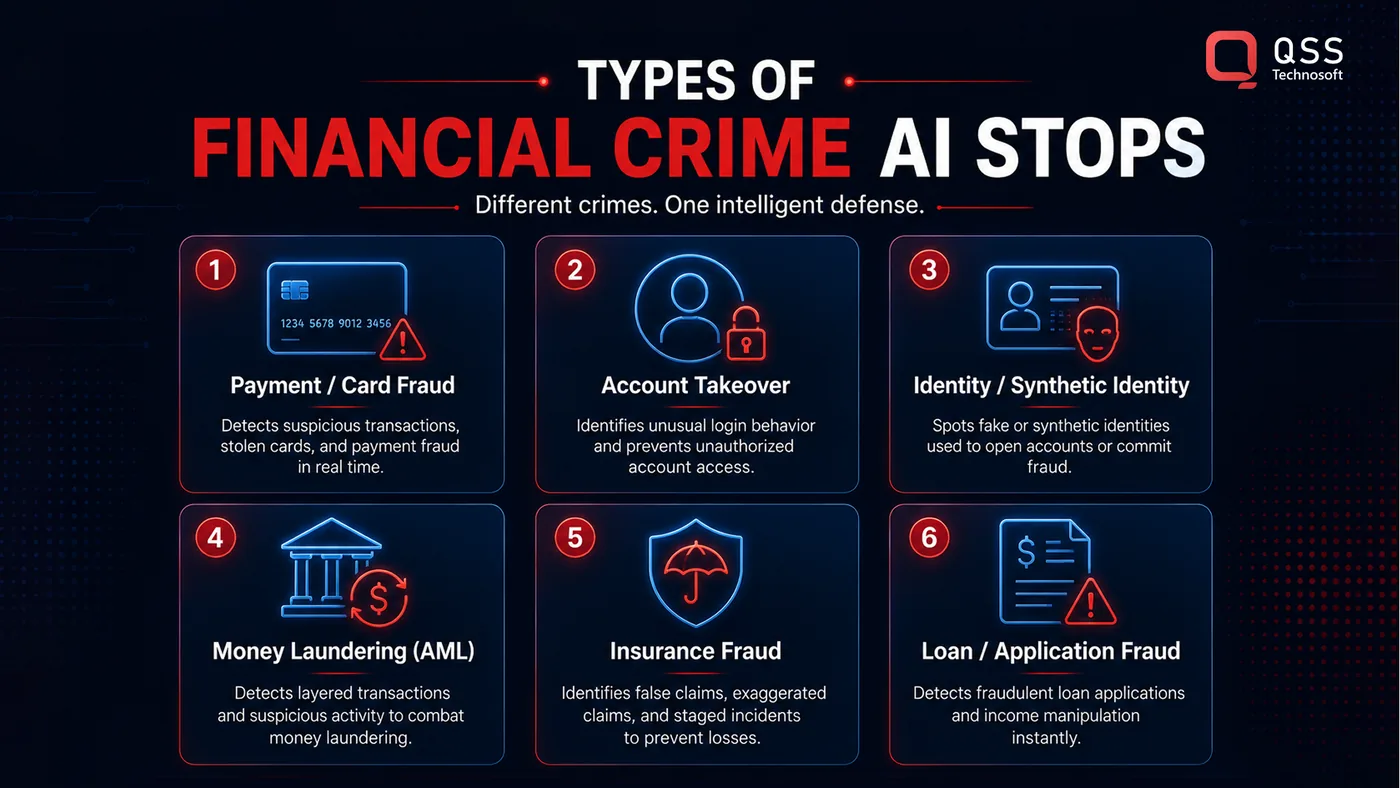
The same core approach defends against a wide range of threats:
- Payment & card fraud — unauthorized transactions caught and blocked in real time.
- Account takeover (ATO) — detecting when a legitimate account is hijacked via stolen credentials.
- Identity theft & synthetic identity — spotting fabricated or stolen identities at onboarding.
- Money laundering (AML) — surfacing suspicious flows and networks that rules miss.
- Insurance fraud — flagging fraudulent claims and inflated losses.
- Loan & application fraud — catching falsified applications before approval.
Losing revenue to fraud — or to false declines?
Tell us where fraud is slipping through, and we'll map an AI detection approach tuned to your risk and your customers.
Book a fraud-AI consultation →Key Benefits & ROI
For a business, the case for AI fraud detection is measured in money and trust, not just technology:
- Stop fraud before it happens — real-time scoring blocks bad transactions instead of investigating them after the loss.
- Fewer false positives — smarter models decline fewer good customers, protecting revenue and experience.
- Adapts on its own — as fraud evolves, the model learns, instead of waiting for a human to write a new rule.
- Lower investigation cost — analysts focus on the genuinely risky cases, not thousands of false alarms.
- Scales effortlessly — handles millions of transactions without adding headcount.
The net effect: less fraud loss, fewer angry customers, and a leaner fraud operation.
Challenges — and How to Solve Them
AI fraud detection is powerful, but it's not plug-and-play. The teams that succeed plan for these realities.
- False positives — even good models flag legitimate activity. The fix is continuous tuning, human-in-the-loop review, and step-up verification instead of hard declines.
- Explainability — regulators and customers need to know why a transaction was declined. Use explainable-AI techniques so every decision can be justified.
- Data quality & imbalance — fraud is rare, which skews training data. Careful sampling, feature engineering, and validation are essential.
- Adversarial fraudsters — attackers actively probe and adapt. Models must be monitored and retrained continuously.
- Compliance — financial data is highly regulated (PCI DSS, GDPR, AML rules). Security and governance must be built in from the start.
How to Build and Deploy AI Fraud Detection
This is where most projects succeed or fail. A model that scores well in a notebook is worthless if it can't decide in milliseconds under real load. Building production fraud detection means engineering the whole system:
- A solid data foundation — clean, real-time data pipelines feeding the model.
- The right models — a blend of supervised, anomaly, and graph techniques for your fraud profile.
- Real-time serving & MLOps — low-latency scoring, monitoring, drift detection, and automated retraining.
- Human-in-the-loop review — analysts to handle edge cases and feed the model better labels.
- Explainability & compliance — audit trails and reason codes for every decision.
The model is only about 15% of the work. The pipelines, real-time infrastructure, monitoring, and retraining loop are the other 85% — and they're what separate a demo from a system a bank can trust.
Industries That Need It Most
- Banking — card, wire, and account fraud at scale.
- Fintech & payments — real-time risk on every transaction.
- Insurance — fraudulent and inflated claims.
- Lending — application and identity fraud.
- eCommerce — payment fraud and account takeover.
- Crypto & digital assets — fast-moving, high-risk transactions.
The Future: Agentic and Generative AI in Fraud
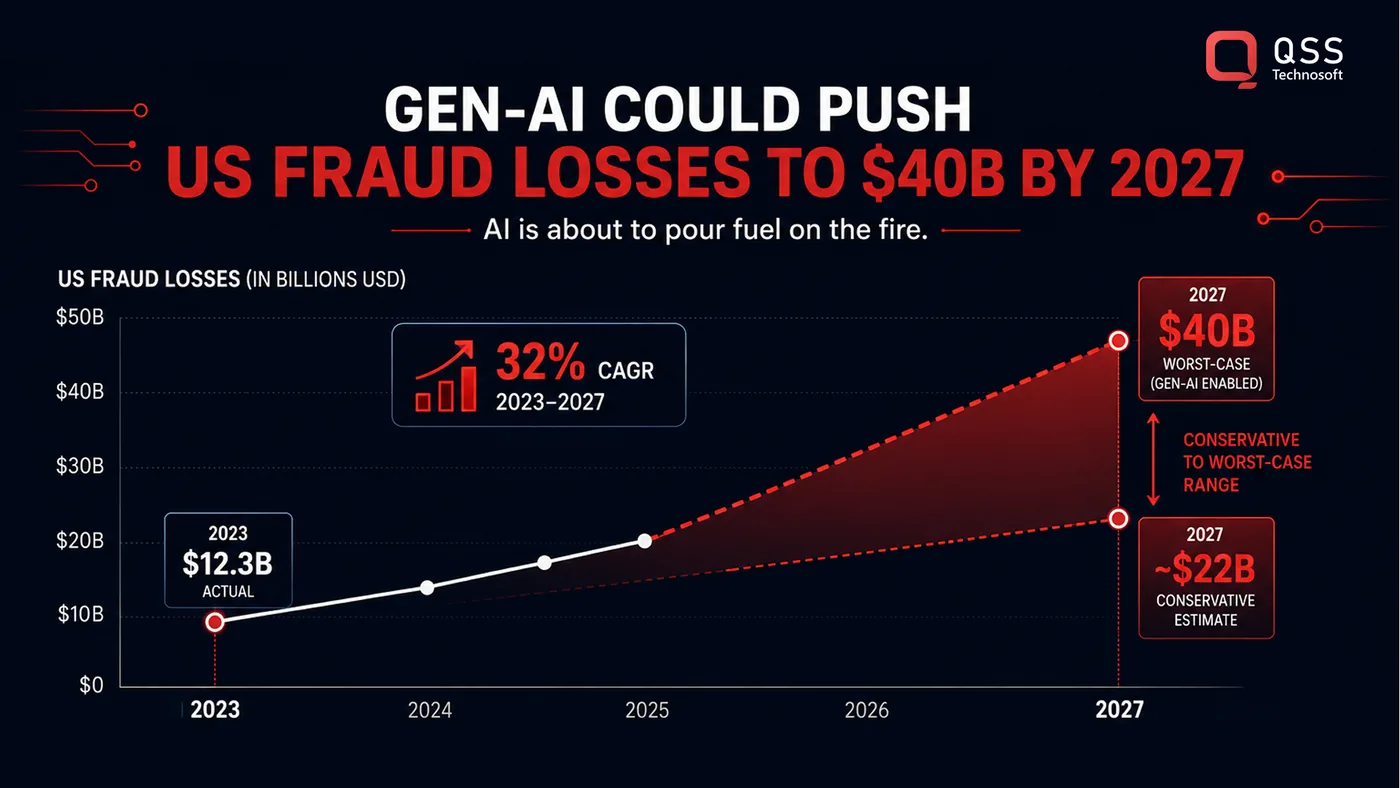
Fraud is entering an AI-versus-AI era. Criminals now use generative AI for deepfakes, synthetic identities, and automated attacks at scale. The defense is evolving just as fast: agentic AI that investigates alerts autonomously, real-time graph intelligence that maps fraud rings on the fly, and federated learning that lets institutions share fraud signals without sharing sensitive data. The organizations that win will be the ones that treat fraud detection as a living, continuously engineered system — not a one-time install.
How QSS Helps
Fighting fraud in real time is an engineering problem as much as a data-science one, and that's exactly where we work. At QSS Technosoft, we bring together AI/ML depth and real, production-grade engineering to build fraud-detection systems that actually run at speed and scale — clean data pipelines, the right blend of models, low-latency serving, MLOps, and the explainability regulators expect. We don't just hand you a model; we ship the real-time system around it, delivered under ISO 27001 and CMMI Level 3, with your team owning all the code and IP.
The Bottom Line
Financial crime is fast, automated, and always changing — and static rules can't keep up. Machine learning shifts the balance back to the defenders, scoring every transaction in real time, adapting as fraud evolves, and cutting the false positives that cost businesses good customers. The technology is proven. The differentiator now is execution: building a system that's fast, explainable, compliant, and always learning.
Ready to stop fraud in real time?
QSS builds production-grade, explainable AI fraud-detection systems that run at the speed your business does. Let's map yours.
Book a fraud-AI consultation →