Computer Vision Solutions That Work in Real Lighting, on Real Cameras, at Real Volume
QSS Technosoft builds computer vision solutions that read photos, video and documents and turn them into decisions your team can act on: listing photos tagged and checked, property damage measured from drone images, defects caught on the line, shelves and sites monitored, and imaging studies prioritized for a clinician to read. We build for the conditions your cameras actually see, deploy on edge devices or in your cloud, and keep the model accurate after launch.
A vision model that works in the demo is easy. One that works on a rainy Tuesday is the job.
Glare, motion blur, new camera angles, a product the model has never seen: real conditions break vision systems that looked perfect on sample images. We treat the model as one part of a production system that also includes the data, the cameras, the deployment, the people who review results and the loop that retrains it.
From Pilot Images to Production Vision
400+
Projects delivered to production
250+
In-house engineers
95%
Client repeat-business rate
4.9/5
Client rating on Clutch
WHERE VISION PROJECTS GET STUCK
What you're up against, and how we get your vision system into production
Most computer vision projects stall for the same reasons: training images that don't look like the real site, too few examples of the rare thing you care about, hardware that can't keep up, and no plan for the day accuracy slips. Here is where we see teams get stuck, and how we get them unstuck.
Problem
It worked on sample images, not on site
How we solve it
We collect images from your own cameras, lighting and angles in the first weeks and build the test set from them before any training starts.
Accuracy measured where the system will actually run.
Problem
Too few examples of what matters
How we solve it
Targeted labeling, augmentation and synthetic images for rare defects, damage types and edge cases, checked against real samples.
A model that recognizes the rare cases, not just the common ones.
Problem
Inference is too slow or too costly
How we solve it
Model compression, quantization and the cheapest hardware that meets your latency budget, on edge devices, on premises or in the cloud.
Results at line speed without a GPU bill you can't defend.
Problem
Results sit in a dashboard nobody opens
How we solve it
Outputs written straight into the systems that act on them: listing tools, claims systems, PLCs, worklists, task apps and ERPs.
Every detection triggers a decision or a task.
Problem
Accuracy drops quietly after launch
How we solve it
Drift monitoring from day one, with retraining triggered by measured accuracy loss rather than a fixed calendar.
Problems found by the monitor, not by a customer.
Problem
Privacy and consent questions block the rollout
How we solve it
Privacy by design: face and plate blurring, no face recognition unless the use case and the law allow it, retention limits and documented consent flows.
A system your legal team can sign off.
Have images or video you want to put to work, or a vision pilot that never reached production?Tell us about it and we'll show you the fastest safe path from sample images to a live system.
Computer Vision Development Services What We Build
Eight services, one team, from the first feasibility check to a model running on your cameras. When the job is generating text or images rather than reading them, see our generative AI development services.
SERVICE
Vision consulting & feasibility
Before anyone labels a single image, we check whether the problem can be solved with vision, what accuracy is realistic and what it will cost to run.
Use-case scoringValue, data readiness and risk for each idea.
Data auditYour images and video checked for quality and coverage.
Feasibility pilotA working model on your data in weeks.
Run-cost forecastHardware, cloud and labeling costs before you commit.
Real estate AI that reads property images: listing photos tagged and checked, floor plans read, condition and damage measured, and construction progress tracked against plan.
Listing photosRoom and feature tags, quality checks and cover-photo picks.
Floor plansRooms, dimensions and layout read from plan images.
Condition and damageRoofs, facades and interiors from photos or drones.
Construction progressSite images compared with the schedule.
Imaging AI that supports clinicians: triage, measurement and quality checks on DICOM studies, with every result reviewed by a clinician and logged to a model version. For viewers, PACS and archives, see our medical imaging software development team.
DICOM pipelinesStudies in from PACS, results back as overlays or structured reports.
Triage supportStudies that may need a faster read moved up the worklist.
De-identificationHeader and pixel anonymization for training data.
Clinician reviewDecision support only; the clinician reads and decides.
See what our computer vision systems see, and where the result goes
Pick a use case to see the image the system receives, the analysis it returns, how confident it is, whether a person reviews it, the model behind it and the system the result is sent to.
Vision analysis · Illustrative example
Real estate listing photo analysis
Listing upload
24 photos of a three-bedroom house. Tag the rooms and features and flag any photos that need retaking.
Rooms found: kitchen, living room, three bedrooms, two bathrooms, backyard. Features tagged: hardwood floors, kitchen island, fireplace, stainless steel appliances. Three photos flagged: one blurred, one underexposed, one duplicate. Suggested cover photo: front exterior, photo 2.
Confidence 0.94Agent review: optional
ModelRoom and feature classifier + photo quality check
Output toListing draft · CRM
Vision analysis · Illustrative example
Property damage inspection
Drone survey
38 drone images of a residential roof taken after a hailstorm.
Possible hail impacts on two of four roof planes, most on the south plane, with each mark outlined. One lifted shingle near the ridge. Gutters and flashing look intact. A marked-up image set and summary are ready for the inspector.
Confidence 0.88Human review: required
ModelDamage detection and segmentation
Output toInspection report · Claims or work-order system
Vision analysis · Illustrative example
Medical image triage support (DICOM)
From PACS
Adult chest X-ray, emergency department order, received in DICOM.
Region highlighted for a possible finding that may need a faster read. The study has been moved up the reading worklist with an overlay. This is decision support only; the radiologist reviews the image and makes the diagnosis.
One frame of a machined aluminum housing on the conveyor.
Surface scratch on the top face, longer than the allowed limit. Part sent to the reject lane and the image saved to the quality log with station, shift and time.
Confidence 0.97Latency: within budget
ModelDefect detection on an edge device
Output toPLC reject gate · Quality dashboard
Vision analysis · Illustrative example
Retail shelf monitoring
Store camera, aisle 7
Snack shelf image captured at 10:40 a.m.
Four empty facings, two products in the wrong slot and one shelf label that doesn't match the planogram. Restock task created for aisle 7 with the shelf image attached.
Confidence 0.92Restock task: created
ModelProduct detection + planogram comparison
Output toStore task app · Inventory system
Vision analysis · Illustrative example
Document and ID OCR
Application upload
A photographed driver's license and two scanned pay stubs attached to a rental application.
Name, date of birth, license number and expiry date read from the license. Employer, pay period and gross pay read from both pay stubs. The license expires within 30 days, so the file is flagged for the leasing team.
Six workers detected. One is not wearing a hard hat near the edge zone. Harness use can't be confirmed from this angle. Alert sent to the site supervisor; faces are blurred in the stored clip.
Confidence 0.91Supervisor alerted
ModelPPE detection (no face recognition)
Output toSafety dashboard · Supervisor app
Vision analysis · Illustrative example
Vehicle damage assessment
Claimant's phone
Six photos of a sedan after a parking-lot collision.
Dent and scratches on the rear left door and quarter panel; rear bumper cracked; no glass damage found. A draft parts and repair list is ready for the estimator.
Confidence 0.89Estimator review: required
ModelVehicle part and damage segmentation
Output toClaims system · Repair estimate
Vision analysis · Illustrative example
Agriculture crop health
Drone survey
Multispectral images of a 40-acre corn field, week 9 of the season.
A stress zone of about three acres in the northeast corner, with a pattern consistent with water stress, and two small patches of possible leaf disease. A zone map is ready for the agronomist to check in the field.
Confidence 0.86Field check: recommended
ModelVegetation index + leaf disease classifier
Output toFarm management system · Field map
Illustrative examples of computer vision outputs. Confidence scores are examples. Models, review rules and outputs are designed for each project.
WHY QSS
Why Businesses Choose QSS as Their Computer Vision Company
Plenty of firms can train a model on a sample dataset. Fewer can make it hold up on your cameras, run it on affordable hardware, connect it to the systems that act on it and keep it accurate. We are an engineering firm of 250+ that does all four.
01
Production engineering, not lab work
Every engagement is built and tested on your real images and conditions, with the retraining loop designed in from the start.
Our healthcare practice has built DICOM viewers, PACS integrations and imaging-AI workflows, including the QSS DICOM/PACS Viewer, with HIPAA controls and FDA SaMD awareness.
NVIDIA Jetson, Google Edge TPU, industrial PCs, on-premises GPUs, AWS, Azure and Google Cloud. We pick the cheapest setup that meets your latency and privacy needs.
Code, models, training data, labels and pipelines are yours, protected by NDAs and clear IP terms. CMMI Level 3, ISO 27001 and ISO 9001 processes, with 4.9/5 on Clutch.
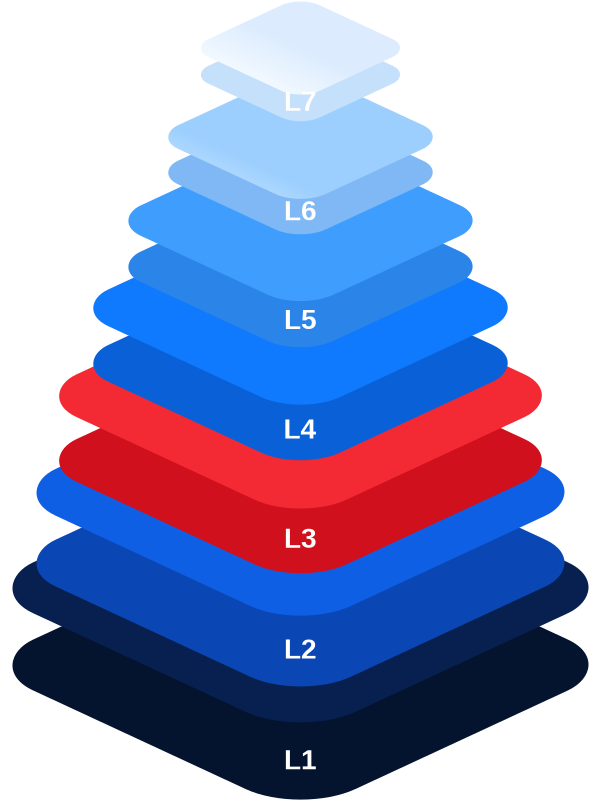
What sits behind a computer vision system you can rely on
The model gets the attention, but it is one layer of seven. We engineer every one of them.
Most vision failures are data and conditions problems, not model problems. We spend more time on your images, cameras and test set than on the architecture choice.
Monitoring, drift & retrainingAccuracy tracked live, with retraining and regression tests when it slips.
Business rules & human reviewConfidence thresholds, review queues and the decisions people keep.
Inference runtimeOptimized models on edge devices, on premises or in the cloud, inside a latency budget.
ModelsDetection, segmentation, OCR and vision-language models, chosen per task.
Data, labeling & synthetic imagesCollection from your sites, labeling, augmentation and rare cases generated and checked.
Cameras & image sourcesIP and industrial cameras, drones, phones, scanners and DICOM modalities.
BUILD CHOICES
Vision API, vision-language model, custom model or edge system which do you need?
Not every vision problem needs a custom model. General vision APIs and vision-language models now handle many tasks out of the box; custom models still win when precision, speed or cost per image matters. We start with the simplest option that meets your accuracy target.
Pretrained vision API
Best forCommon tasks such as general OCR, labels or object tags at modest volume
Speed to launch2 to 4 weeks
Trade-offLimited control over accuracy on your specific images, and per-call fees at scale
Vision-language model with rules
Best forOpen-ended questions about images, such as describing condition or checking a photo against a list
Speed to launch3 to 6 weeks for a pilot
Trade-offSlower and costlier per image; needs checks to keep answers consistent
Custom-trained model
Usual start
Best forDefects, damage, rooms, products or findings specific to your business, where precision matters
Speed to launch6 to 8 weeks to a feasibility pilot, 10 to 16 weeks to production
Trade-offNeeds labeled images from your environment and a retraining plan
Edge vision system
Best forReal-time results on site, with no video leaving the premises
Speed to launch10 to 16 weeks, plus hardware rollout per site
Trade-offHardware to buy, install and manage across sites
SUCCESS STORIES
Imaging and document AI we've shipped
QSS has not yet published a computer vision case study. These are the closest work on our site: a medical imaging product we built and run, and two AI platforms that read and analyze documents. Each links to the full story.
QSS DICOM/PACS Viewer
A web and desktop medical imaging viewer built by QSS for radiologists, clinicians and diagnostic specialists. It supports multi-modality DICOM studies, structured reporting, DICOM export and secure patient-data access, and integrates with PACS, HIS, RIS and EHR/EMR systems.
Tech used
DICOM · DICOMweb · HL7 · FHIR · Web and desktop
Results
Browser-basedZero-install access from any device
Multi-modalityStructured reporting and DICOM export
A German enterprise struggled with slow, expert-dependent analytics. We built a GenAI analytics platform with conversational queries and automated analysis across CSV and PDF data.
Computer vision built for the images and rules of your industry
What a camera needs to see, how fast the answer must come and who has to check it differ by industry. We design for the images, systems and regulations you actually work with.
REAL ESTATE & PROPERTY
Property photos, plans and sites, read at listing speed
For brokerages, property managers, developers and inspectors, this is the most practical place real estate and AI work together: the images you already collect. We tag rooms and features in listing photos, check photo quality, read floor plans, measure condition and damage from photos or drones, support virtual staging with room and surface outlines, track construction progress against schedule and count occupancy and footfall without identifying anyone.
Imaging AI that supports the clinician, never replaces them
Triage support, measurement and quality checks on DICOM studies, pathology slides and clinical photos, with results returned into the reading workflow and every one reviewed by a clinician. Built with HIPAA controls and FDA SaMD awareness, alongside our DICOM and PACS team.
Surface and assembly inspection, predictive quality, PPE and restricted-zone monitoring, on line-scan and IP cameras, with results sent to the PLC and the quality team.
Shelf and planogram monitoring, inventory recognition, checkout assistance and product image tagging for catalogs, with footfall counted without identifying shoppers.
Damage measured from the photos customers already send
Vehicle and property damage assessment from phone and drone images, document and ID reading for claims intake, with an adjuster or estimator approving every outcome.
Label and document reading, package damage checks, dock and yard monitoring and proof-of-delivery photo checks, connected to your warehouse and transport systems.
Crop health, disease and stress mapping from drone and multispectral images, plus fruit and yield counts, delivered as zone maps for agronomists to check.
Site safety, progress tracking and as-built checks for general contractors.
Document, check and ID reading for onboarding and lending.
Records digitization and infrastructure inspection with human review.
Drone inspection of lines, panels and assets.
RESPONSIBLE AI
The guardrails we build into every vision system
Cameras see people, homes, patients and workplaces. These eight controls keep what a vision system collects limited, its results fair and checkable, and a person in charge of the decisions that matter.
EU AI ActIllinois BIPAGDPRHIPAANIST AI RMFISO/IEC 42001ISO 27001
Accuracy checked across skin tones, ages, property types, neighborhoods, lighting and camera types, so the system works equally well for everyone it sees.
Faces, license plates and screens blurred where identity isn't needed, processing on site where possible, and only the frames you need kept.
Clear signage and notices for camera use, and written consent before any biometric data is collected where laws such as Illinois BIPA require it.
We do not build facial recognition unless the use case, the jurisdiction and your counsel allow it. Uses the EU AI Act bans, such as untargeted scraping of facial images and emotion recognition at work or school, are out of scope.
Retention periods you set for images, video and labels, with automatic deletion and logs that show it happened.
Confidence thresholds and review queues for decisions about people, property value, claims or health. In medical imaging, a clinician reviews every result.
Accuracy tracked live against a reference set, with alerts and retraining when cameras, seasons, products or patients change.
Encrypted storage and streams, role-based access, and every result logged to the model version, image and reviewer.
Our computer vision development process
Discovery & data scope
We agree the decision the system must support, the accuracy and speed it needs, and collect sample images and video from your real sites in weeks 1 to 2.
Feasibility pilot
A first model on your data, measured against a test set built from production conditions, so you know what accuracy is realistic before you scale.
Labeling & model build
Labeling, augmentation and synthetic images for rare cases, then training, tuning and compression for the target hardware.
Integration & review rules
Outputs connected to the systems that act on them, with confidence thresholds and human review queues agreed with your team.
Edge or cloud deployment
Rollout to devices, sites or cloud, one site or line first, with monitoring live from the first day.
Monitoring & retraining
Drift monitoring, retraining when accuracy drops, regression tests on every model update, or a documented handover to your team.
Ways to work with us
Fixed-scope build
A defined vision use case taken to production with a fixed price, timeline, milestones and documentation.
Dedicated AI team
A named team of computer vision, data and MLOps engineers working as an extension of yours.
Hire computer vision developers
Full-time, part-time or project-based developers with skills in detection, segmentation, OCR, video analytics and edge deployment, ramped in weeks.
Build-operate-transfer
We build and run your vision system, then transfer the team, models and pipelines to you.
OUR TECHNOLOGY STACK
Our computer vision technology stack
Model-agnostic and hardware-agnostic. We recommend what fits your images, your speed target and your budget.
Computer vision development cost, and how long it takes
The model is rarely the biggest line item. Image collection, labeling, hardware, integrations and the review workflow drive most of the cost, so we scope them up front and forecast running costs before you commit.
Vision feasibility pilot
One use case, a model trained and tested on your own images, and a clear accuracy and cost read before you scale
◷6–8 weeks
◉$25,000–$55,000Typical investment
Production vision system
One use case in production, on edge or cloud, with integrations, human review, monitoring and retraining
◷10–16 weeks
◉$60,000–$140,000Typical investment
Enterprise vision platform
Several use cases, multi-camera and multi-site, with video analytics, edge fleets and enterprise governance
◷5–8 months, phased
◉$140,000–$300,000+Typical investment
Cameras, edge hardware, cloud usage and third-party API fees are billed separately and depend on volume; we forecast them during the pilot. Ongoing support and retraining typically run 15–20% of the build cost a year. You leave the first call with a range specific to your project.
A 30-minute call with an engineer from a computer vision company that builds and runs what it designs. Bring sample images, a camera feed or a vision pilot that stalled, and leave with a first read on feasibility, the right build choice, the hardware it needs and a cost range.
Straight answers about computer vision: what it can do, cost, timelines, accuracy, hardware, privacy and support.
Our computer vision solutions cover object detection and tracking, classification and segmentation, visual inspection and defect detection, video analytics, document AI and OCR, real estate and property image analysis, and medical imaging AI that supports clinicians. We take each one from a feasibility pilot on your images to a system running on edge devices or in your cloud.
A feasibility pilot on your own images typically costs $25,000–$55,000, a production vision system for one use case $60,000–$140,000, and an enterprise multi-site platform $140,000–$300,000 or more. Cameras, edge hardware and cloud usage are extra, and support with retraining usually runs 15–20% of the build cost a year. Labeling, hardware and integrations drive computer vision development cost more than the model does.
A feasibility pilot takes 6 to 8 weeks, a production system for one use case 10 to 16 weeks from the start of the pilot, and a multi-site enterprise platform 5 to 8 months in phases. The main variables are how quickly we can collect representative images and how many systems the results feed.
Mostly on the images they already have. Real estate AI built on computer vision tags rooms and features in listing photos, checks photo quality, reads floor plans, measures roof and facade condition from photos or drones, supports virtual staging, tracks construction progress against schedule and counts occupancy and footfall without identifying anyone. Results go straight into the listing, CRM, property management or inspection system you use.
Computer vision reads images and video: it finds, measures, classifies and reads what is in them. Generative AI creates new content such as text or images. Vision-language models sit between the two, answering questions about an image in plain language. Many projects use both, for example a vision model that measures damage and a generative model that drafts the report. See our generative AI development services for the second part.
That is the first thing we test. We collect images from your own cameras, lighting, angles and seasons in the first weeks and build the test set from production conditions before training starts, so the accuracy you see in the pilot is the accuracy you get on site.
Not always. Many models can be compressed to run on a small edge device or a CPU. We size the hardware to your latency budget and volume and recommend the cheapest option that meets them.
Drift monitoring starts on day one. We track accuracy against a reference set and trigger retraining when it drops, rather than on a fixed schedule, and every retrained model passes regression tests before it goes live.
Yes. We work with DICOM PACS, RTSP streams, IP and line-scan cameras, drones, scanners and proprietary camera SDKs. There is no need to replace the cameras or systems you already run.
Yes, as decision support with clinician review. We build triage, measurement and quality-check models on DICOM studies and return results into the reading workflow. For the viewers, PACS and archives themselves, our medical imaging software development team builds on the QSS DICOM/PACS Viewer; see our DICOM and PACS page.
It depends on the task and the images. Well-defined tasks on consistent images, such as defect detection on a fixed line, can reach very high accuracy; open scenes with changing light are harder. We agree an accuracy target and test it on your own images in the pilot before you commit to production.
Often less than teams expect. Pretrained models need a few hundred to a few thousand labeled images per task to adapt, and synthetic images and augmentation fill gaps for rare cases. The pilot shows whether your data is enough.
Only when the use case, the jurisdiction and your counsel allow it, with written consent where laws such as Illinois BIPA require it. We do not build uses the EU AI Act prohibits, and most of our projects, from footfall counting to site safety, are designed to work without identifying anyone.
On the edge when you need results in milliseconds, have limited bandwidth or don't want video to leave the site. In the cloud when volumes vary, results can wait a few seconds or you want one place to manage models. Many systems use both.
Yes. OCR combined with layout models reads invoices, contracts, claims, applications, IDs and forms, extracts the fields you need and sends low-confidence fields to a person for review.
You do. Code, models, training images, labels and pipelines are yours, protected by NDAs and clear IP terms.
Ask how they test on your real conditions, how they handle rare cases, what hardware they would choose and why, how results reach your systems and how they monitor accuracy after launch. A good computer vision company will show you a test set built from your images, not just a demo.
Yes. Our computer vision development services can be delivered as a fixed-scope build, a dedicated AI team, individual developers full-time or part-time, or build-operate-transfer.