LLM Fine Tuning & AI Model Training Services That Prove the Gain
QSS Technosoft adapts language models to your data, your format and your voice through LLM fine-tuning, preference tuning and small models built for one job. We build the evaluation set first, measure the base model against it, then train with LoRA or full fine-tuning and ship only when the scores show the tuned model is better, cheaper or both.
Anyone can fine-tune. Few can prove it got better.
Most teams point a script at a dataset, watch the loss drop and ship, then find the model is no better than the base model on real inputs, or worse at something it used to do well. We do it the measured way: a baseline, data that moves the needle, the right technique and an evaluation every release has to pass.
From Base Model to Proven, Production Model
400+
Projects delivered to production
250+
In-house engineers
99.9%
Production uptime
4.9/5
Client rating on Clutch
WHERE FINE-TUNING PROJECTS GO WRONG
What you're up against, and how we get a tuned model you can trust
Fine-tuning LLMs is easier to start than ever and just as easy to get wrong. The failures are rarely in the training run. They sit in the data, the evaluation and the decision to fine-tune at all. Here is where we see teams get stuck, and how we get them unstuck.
Problem
Fine-tuning a problem RAG would solve
How we solve it
We check first whether the gap is knowledge, behavior or cost. Knowledge gaps go to retrieval; fine-tuning is for format, tone, domain language and running cost.
No training spend on a problem a better prompt or retrieval fixes.
Problem
No proof the model got better
How we solve it
A golden evaluation set and a base-model score before any training, then the same tests on every run.
A number for the gain, not a feeling.
Problem
Training data nobody checked
How we solve it
Data curation first: duplicates, errors, personal data and licensing reviewed, with gaps filled by labeled or synthetic examples you approve.
Cleaner training data and fewer surprises in production.
Problem
Better at one task, worse at others
How we solve it
Regression and safety tests on the skills the base model already had, run alongside the target task.
Gains in one area without a quiet loss in another.
Problem
A large model bill for a narrow job
How we solve it
For classification, extraction and fixed formats, we test a small fine-tuned or distilled model against the large one on your eval set.
Lower cost per call and faster answers where the small model holds up.
Problem
Stuck on a model you can't move
How we solve it
Your data, eval set and training recipe stay portable, so you can retrain on a new base model or another provider when it pays.
No lock-in to one model family or one vendor.
Not sure fine-tuning is the right move?Sometimes better data or retrieval wins for far less. We'll tell you plainly in a free 30-minute model assessment.
LLM Fine-Tuning and AI Model Training Services What We Build
Eight LLM fine-tuning services, one team, from the first assessment to a tuned model in production. For RAG assistants and LLM applications, see our generative AI development services.
SERVICE
Fine-tuning assessment & model selection
We start with the question most vendors skip: should you fine-tune at all? We test strong prompts and retrieval against your target, pick the base model by task, budget and privacy needs, and hand you a plan with an engineer's estimate.
Approach decisionPrompting, RAG, fine-tuning or a mix.
Base model choiceOpen-weight or hosted, sized to the task.
Baseline scoreThe base model measured on your examples.
Cost forecastTraining, compute and running cost per call.
The single biggest lever on model quality. We collect, clean, label and balance the examples your model learns from, remove personal data, check you have the rights to use each source, and add synthetic examples only where they pass review.
CollectionTickets, documents, chats and records turned into examples.
CleaningDuplicates, errors and personal data removed.
LabelingGuidelines, reviewers and agreement checks.
Synthetic dataGenerated examples, filtered and approved by your experts.
Supervised fine-tuning on your input and output pairs, usually with parameter-efficient methods such as LoRA and QLoRA, so training is fast and affordable and one base model can carry several small adapters. Full fine-tuning when the evaluation shows it is worth the extra compute.
SFTTask, format and domain behavior learned from examples.
LoRA and QLoRASmall adapters, lower GPU memory, quick iteration.
Hyperparameter searchSystematic runs, tracked and compared.
Full fine-tuningFor deep specialization when it pays.
When "correct" is not enough and the answer has to sound right, follow policy or rank better than the alternatives, we tune on preferences: pairs of better and worse answers rated by your reviewers, using DPO or RLHF.
Preference dataChosen and rejected answers from your experts.
DPODirect preference tuning without a separate reward model.
RLHFReward-model training where the task needs it.
Policy alignmentTone, refusals and escalation rules learned.
For narrow, high-volume jobs, a small model trained for one task can match a much larger one on your evaluation set, at a fraction of the running cost and latency. We distill from a larger teacher model and test the result before anything switches over.
SLM fine-tuningSmall open-weight models trained for one job.
DistillationA large model's answers used to train a small one.
QuantizationSmaller memory footprint for cheaper serving.
Edge and private hostingModels that run in your own environment.
The evaluation harness is the asset that proves the model improved, and it outlives any single base model. Golden sets, automated scoring, LLM-as-judge checked against human reviewers, and safety and regression suites every release must pass.
Golden setReal examples with approved answers.
LLM-as-judgeAutomated scoring calibrated against your reviewers.
Regression suiteSkills the base model already had, protected.
Safety and biasRed-team prompts and fairness checks.
Tuned models served on your cloud, in your data center or through a managed platform, with versioning, rollback, cost tracking and monitoring for drift once real traffic arrives, and connected to the systems where people use the answers.
ServingSelf-hosted inference or managed endpoints.
VersioningEvery model, adapter and dataset tracked.
MonitoringQuality, drift, latency and cost per call.
IntegrationAnswers delivered into your apps and workflows.
Custom AI model training for cases a fine-tune cannot reach: continued pre-training on large domain text, training task-specific models from scratch, and multi-model programs with shared data pipelines and a retraining schedule. We recommend it only when the evaluation and the business case both support it.
Continued pre-trainingDomain language learned from large text sets.
Task-specific modelsTrained for one job, end to end.
Retraining pipelineNew data and new base models, on a schedule.
Model documentationData, tests, limits and owners recorded.
Pick a use case and compare the base model with the tuned one
Choose a use case. The window shows the prompt, what a general base model returns, what the fine-tuned model returns, how the evaluation scored them, which method did the work and which base model it started from.
Before / after fine-tuning viewer · Illustrative example
Support reply in brand voice
Prompt
Customer: "My order arrived with a cracked lid. Can I get a replacement?"
Base model answer: "I'm sorry to hear that. Please contact the seller for assistance with returns or replacements."
"Sorry about the cracked lid, Jordan. A replacement ships today at no cost, and there's no need to send the old one back. You'll get tracking within the hour."
Eval score 0.71 to 0.92Policy followed in 96% of test replies
MethodSFT with LoRA on approved past replies
Base modelOpen-weight 8B model (Llama family)
Before / after fine-tuning viewer · Illustrative example
Clinical note summarization
Prompt
Summarize this de-identified visit note for the follow-up team.
Base model answer: A long paragraph that repeats the note and misses the medication change.
"Reason for visit: follow-up for blood pressure. Change: dose of the current medication increased. Next steps: home readings for 2 weeks, return visit in 1 month. Flag for clinician: patient reports dizziness on standing."
Clinician-rated accuracy 0.68 to 0.89Draft only, clinician reviews before use
MethodSFT with QLoRA on de-identified notes and clinician-written summaries
Base modelOpen-weight 8B model, self-hosted
Before / after fine-tuning viewer · Illustrative example
Legal clause extraction
Prompt
Find the termination, renewal and liability-cap clauses in this supplier agreement.
Base model answer: Finds termination, misses the auto-renewal buried in a definitions section.
"Termination: 60 days' written notice (s. 14.2). Renewal: automatic for 12 months unless notice is given 90 days before the end date (s. 1.7, definitions). Liability cap: fees paid in the prior 12 months (s. 11.1)."
Clause recall 0.74 to 0.94Every answer cites a section
MethodSFT with LoRA on attorney-labeled contracts
Base modelOpen-weight 14B model (Qwen family)
Before / after fine-tuning viewer · Illustrative example
Insurance claim triage
Prompt
Route this first notice of loss: water damage in a kitchen, a burst pipe, photos attached, policy active.
Base model answer: "This appears to be a water damage claim. Please review it."
"Category: property, sudden water damage. Priority: standard. Route to: property desk. Missing: plumber's report. Fraud indicators: none found."
Routing accuracy 0.79 to 0.95Adjuster makes the final decision
MethodSFT with LoRA on historical claims routed by adjusters
Base modelOpen-weight 7B model (Mistral family)
Before / after fine-tuning viewer · Illustrative example
Invoice data to structured JSON
Prompt
Extract the vendor, invoice number, date, line items and total from this invoice as JSON.
Base model answer: Valid JSON in 82% of test runs, with dates in mixed formats.
MethodSFT with LoRA on labeled invoices and your target schema
Base modelSmall open-weight 3B model
Before / after fine-tuning viewer · Illustrative example
Code assistant for a private codebase
Prompt
Add a retry to the payment client using our internal helper.
Base model answer: Writes a generic retry loop and ignores the team's helper library.
Calls the team's own retry helper with the house backoff settings, adds the standard log line and writes a matching unit test in the project's test style.
Tests passed 0.58 to 0.81Code stays in your environment
MethodContinued pre-training on the repository, then SFT with LoRA
Base modelOpen-weight code model, self-hosted
Before / after fine-tuning viewer · Illustrative example
Sales email in brand tone
Prompt
Write a follow-up to a facilities manager who downloaded our energy-savings guide.
Base model answer: Generic, 220 words, opens with "I hope this email finds you well."
"Hi Priya, thanks for grabbing the energy guide. Page 6 has the checklist most facilities teams start with. Want a 15-minute walkthrough for your site next week?"
Brand-tone score 0.62 to 0.90Rep edits and sends
MethodSFT on approved emails, then DPO on reviewer-preferred pairs
Base modelHosted model with managed fine-tuning
Before / after fine-tuning viewer · Illustrative example
Multilingual product descriptions
Prompt
Write the product description for a stainless water bottle in Spanish, French and German, using our style guide.
Base model answer: Literal translations, inconsistent product terms across languages.
Three descriptions in the house style, with the approved term for each product feature in every language and the same length per market.
Glossary match 0.70 to 0.96Native reviewer signs off
MethodSFT with LoRA on approved multilingual catalog copy
Base modelOpen-weight multilingual 9B model (Gemma family)
Before / after fine-tuning viewer · Illustrative example
Classification SLM replacing a large model
Prompt
Classify this support ticket into one of 24 categories.
Base model answer: A large hosted model gets 0.91 on the test set, at a much higher cost per call.
"Category: billing, refund request. Confidence 0.94." The small model scores 0.93 on the same test set.
Cost per 1K calls: lowerLatency: faster
MethodDistillation from a larger teacher model, then SFT
Base modelSmall open-weight 1B model, self-hosted
Illustrative examples with sample numbers. No client data is shown. Methods, base models and scores are chosen and measured for each use case, and outputs that affect people are reviewed by your team.
WHY QSS
Why teams choose QSS for LLM fine-tuning and model training
Plenty of firms can run a training script. Fewer can tell you when not to, prove the gain with numbers, ship the model into production and keep it improving. We are an engineering firm of 250+ that does all four.
01
Evaluation first
We prove improvement with scores on your own examples, measured before training and on every run, not with a demo.
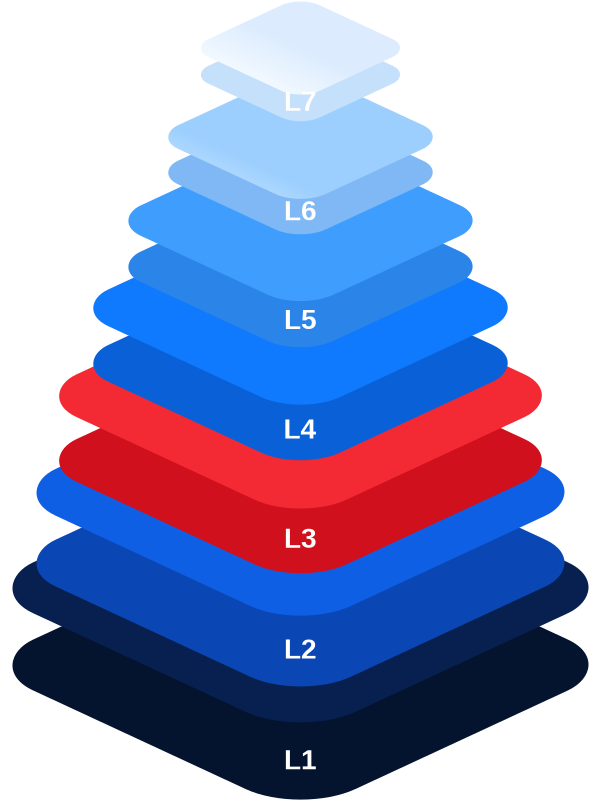
The training run is one layer of seven. We engineer all of them, which is why a tuned model can be retrained, compared and replaced without starting over.
Base models change every few months. The evaluation set and the cleaned training data are what last, so we build them first and treat the model as the part you will replace.
Serving, monitoring & retrainingSelf-hosted or managed serving, cost and quality tracked, and new data folded into the next run.
Evaluation gate & releaseTarget, regression and safety tests; only a model that beats the current one ships.
TrainingSFT, LoRA or QLoRA, DPO, distillation or full fine-tuning, with every run tracked.
Base model selectionOpen-weight or hosted, sized to the task, budget, latency and privacy needs.
Evaluation set & baselineA golden set of real examples, scoring rules and the base model's score before training.
Data sources & rightsTickets, documents, chats, code and records, each checked for licensing, consent and permitted use.
BUILD CHOICES
Prompting, RAG, fine-tuning or a custom model which does your problem need?
Most teams arrive asking about fine-tuning LLM vs RAG. The honest answer starts with the gap. If the model lacks your knowledge, retrieval usually fixes it faster and keeps answers current. If it knows enough but answers in the wrong format, tone or domain language, or costs too much per call, fine-tuning is the better tool. Good prompts sit under every option, and many systems combine RAG with a tuned model.
Prompt engineering
Best forEarly tests, low volume and tasks a strong base model already handles well
Speed to launchDays
Trade-offLong prompts raise cost per call; behavior can drift when the base model is updated
Best forNarrow, high-volume tasks, private or edge hosting, and deep domain language
Speed to launchMonths, phased
Trade-offHighest upfront cost and effort; worth it only at volume or under strict data rules
SUCCESS STORIES
LLM systems we've taken from data to production
We have not yet published a case study that is purely a fine-tuning project. These three AI platforms are built on large language models and show the same engineering: data preparation, evaluation, deployment and results measured after launch. Each links to the full case study.
AI-Powered Legal Case Analysis Platform
An AI solution that lets law firms analyze legal documents, map statutes and collaborate on investigations, securely and at scale.
Tech used
AI document analysis · Statute extraction · Case mapping · Secure AI infrastructure
A German enterprise struggled with slow, expert-dependent analytics that limited self-service insights. We built a GenAI analytics platform with conversational queries and automated analysis, supporting CSV and PDF analytics.
A US technology services firm needed to modernize sprawling legacy codebases without disrupting operations. We built an AI-native platform combining code analysis, LLM-powered BRD generation and collaborative review on AWS.
Domain-tuned models for the language your industry speaks
Every industry has its own vocabulary, document formats and rules about what data can be used for training. We tune for the constraints you actually work under.
HEALTHCARE & LIFE SCIENCES
Clinical language, tuned and reviewed
Domain-tuned models for clinical documentation, coding support and summarization, trained on de-identified data in your environment and built to draft for clinicians, not decide for them. HIPAA requirements are handled per use case.
Fine-tuned models for document analysis, claims triage, compliance review and customer replies that follow policy wording, documented and tested for the model reviews regulated firms run.
Models specialized on contracts, policies and regulatory text: clause extraction, obligation tracking and first-pass review, trained on attorney-labeled examples and always reviewed by your lawyers.
Tuned models for product descriptions in many languages, search and recommendation, support replies and marketing copy that follow your style guide and glossary.
Self-hosted models for sensitive government data, trained and served inside your environment, with documentation, human review and audit logs built in.
Small tuned models that extract fields from bills of lading, invoices and customs forms into structured data, and classify shipment exceptions for the right team.
Tutoring and grading assistants tuned to your curriculum and rubrics.
Travel and hospitality: guest replies and listings in your brand voice.
Energy and utilities: assistants tuned on field procedures and safety manuals.
Listing copy and lease extraction tuned to local terms.
RESPONSIBLE AI & TRAINING DATA GOVERNANCE
The controls we build into every training run
A tuned model learns whatever is in its data, including the mistakes, the bias and the records it should never have seen. These eight controls keep training data lawful, outputs safe and every model traceable.
EU AI ActNIST AI RMFISO/IEC 42001GDPRHIPAAISO 27001
Every training source is checked for ownership, license terms, consent and permitted use before it enters a dataset, and the check is recorded.
Names, contact details, health and financial identifiers are found and removed or masked before training, with HIPAA and GDPR requirements handled per use case.
No model ships unless it beats the current one on the target task and holds its score on the skills it already had.
Harmful, off-policy and prompt-injection tests run on every candidate, with refusals and escalation rules checked.
Outputs compared across groups and languages where the task affects people, with results recorded.
Base model, data sources, method, scores, limits and owners written up for each release.
When you fine-tune a general-purpose model for the EU market, we record the training compute and changes so your counsel can assess whether you take on provider duties.
Every model, adapter, dataset and eval result versioned, so any release can be traced, compared or rolled back at once.
Our LLM fine-tuning process
Assess the approach
Test prompting and retrieval first, and confirm fine-tuning is the right tool before any training spend.
Frame & baseline
Define the task and the success metric, build the evaluation set and score the base model.
Data curation
Gather, clean, label and license-check the examples that matter, with personal data removed.
Train
Apply the right technique, SFT, LoRA or QLoRA, preference tuning or distillation, with every run tracked.
Evaluate
Benchmark against the baseline, plus regression, safety and bias checks, and decide go or no-go on the numbers.
Deploy & monitor
Ship securely, watch real-world quality and cost, and retrain as new data and base models arrive.
Ways to work with us
Fixed-scope project
A defined fine-tuning or training deliverable, from a pilot to a production model, with scope, timeline and price agreed up front.
Dedicated AI pod
An embedded team of ML engineers, data specialists and MLOps engineers for ongoing model work and retraining.
Staff augmentation
Senior ML and LLM engineers added to your team and tooling, ramped in weeks.
Model audit & evaluation
An independent read on whether your model, or a vendor's, is actually better: an evaluation set, a baseline and a written verdict.
OUR TECHNOLOGY STACK
Our training and fine-tuning stack
Model-agnostic and cloud-agnostic. We choose the base model and platform per task and keep your data, adapters and eval sets portable.
What AI model training costs, and how long it takes
The training run is rarely the big line item. Data preparation, evaluation and integration drive most of the cost of fine-tuning LLMs, so we check your data and score the base model before we quote.
Fine-tuning pilot
One task, an evaluation set, a base-model baseline, one LoRA run on your data and a go or no-go decision on the numbers
◷4–6 weeks
◉$18,000–$40,000Typical investment
Production fine-tuned model
Curated training data, SFT or LoRA plus preference tuning where needed, an evaluation and regression harness, deployment, monitoring and a retraining plan
◷8–14 weeks
◉$50,000–$120,000Typical investment
Enterprise custom AI model training or SLM program
Several tuned models or a distilled small model, continued pre-training where it pays, self-hosted serving, a retraining pipeline and model documentation
◷4–8 months, phased
◉$130,000–$350,000+Typical investment
GPU compute, hosted training fees, inference hosting and large-scale labeling are billed separately at cost and estimated during the pilot. A LoRA run on a small open-weight model often costs hundreds of dollars in GPU time, not thousands; larger models and full fine-tuning cost more. Ongoing support and retraining typically run 15–20% of the build cost a year. You leave the first call with a range specific to your data and use case.
A free 30-minute model assessment with an engineer from a team that offers LLM fine-tuning services and runs what it builds. Tell us the task, and leave with a straight answer on whether to fine-tune, the data you'll need and how we'll prove it works.
Fine-Tune or NotData You'll NeedClear Cost & Timeline
Straight answers about LLM fine-tuning and AI model training: cost, timelines, RAG, data, ownership, evaluation and regulation.
LLM fine-tuning is the process of training an existing large language model further on your own examples, so it learns a task, a format, a tone or a domain vocabulary that the general model does not handle well. Most projects use parameter-efficient methods such as LoRA, which train a small adapter instead of the whole model. The model's broad knowledge stays; its behavior on your task changes.
A fine-tuning pilot typically costs $18,000–$40,000, a production fine-tuned model $50,000–$120,000, and an enterprise custom training or small-model program $130,000–$350,000 or more. GPU compute and hosting are extra and often small for LoRA runs. Data preparation, not the training run, is usually the biggest driver of AI model training cost, and we price each engagement up front with no open-ended billing.
It depends on the gap. If the model lacks your knowledge or facts that change often, RAG retrieves them at answer time and is usually faster and cheaper to launch. If the model knows enough but gets the format, tone or domain language wrong, or costs too much per call, LLM fine-tuning is the better fix. Many production systems use both, and we test strong prompts and retrieval before recommending any training.
A pilot with an evaluation set and a first LoRA run takes 4 to 6 weeks. A production fine-tuned model takes 8 to 14 weeks, and an enterprise program 4 to 8 months in phases. Data readiness and the number of iterations needed to hit the target score move the timeline most; the training runs themselves often take hours.
Yes, entirely. The weights or adapters, training data, evaluation sets and training code are yours on delivery, under NDA from day one, and we can deploy them in your environment. Where a hosted provider's terms limit how a tuned model can be exported, we tell you before you choose it.
Examples of the task done well: past support replies, labeled documents, approved summaries, code or records, usually a few hundred to a few thousand to start, plus a way to tell good output from bad. We clean, label and license-check the data with you, remove personal data, and tell you plainly if there is not enough or what to collect.
Yes. We support secure, self-hosted training so data never leaves your environment, de-identify personal and health data before training, and deliver under ISO 27001 and CMMI Level 3 processes. For regulated data we build to HIPAA and GDPR requirements.
We build a golden evaluation set from your real examples before training and score the base model on it. Every training run is scored on the same set, plus regression tests for skills the model already had and safety tests. Automated scoring, including LLM-as-judge, is checked against your reviewers, and a model ships only if it beats the current one.
LoRA (low-rank adaptation) trains a small set of added weights instead of the whole model, and QLoRA does the same on a compressed model to save GPU memory. Both are faster and much cheaper than full fine-tuning and are enough for most tasks. Full fine-tuning is worth testing when LoRA plateaus below the target score on your evaluation set.
The smallest one that reaches your target score on your evaluation set, within your privacy and hosting rules. We usually compare an open-weight model such as Llama, Mistral, Qwen or Gemma with a hosted option, and weigh accuracy, cost per call, latency, license terms and whether the data can leave your environment.
Often, yes. A small model fine-tuned or distilled for one narrow job can match a much larger model on that job, at a lower cost per call and with faster answers, and a tuned model needs shorter prompts. We measure both models on your evaluation set and switch only when the small one holds up.
Both tune a model on preferences: pairs of better and worse answers judged by people. DPO learns from those pairs directly; RLHF trains a reward model first. You need them when "correct" is not enough, for example when tone, policy or ranking between acceptable answers matters. Many projects start with supervised fine-tuning and add DPO later.
Where the provider still offers it, yes. Managed fine-tuning is available for selected models on platforms such as Amazon Bedrock, Google Vertex AI and Azure AI Foundry, but providers change which models they support, and some are winding down self-serve fine-tuning. We confirm what is available at the start, and we keep your data and eval set portable so you can move to an open-weight model if a service closes.
It can. Obligations for providers of general-purpose AI models have applied since August 2, 2025. If you modify such a model and place it on the EU market, you may become a provider of the modified model when the change is significant; the Commission's guidelines use training compute above one-third of the original model's as an indicative threshold. Most LoRA projects use far less, but your counsel should confirm your role. We record the compute and changes to support that review.
It can fill gaps, not replace the real thing. We use a larger model to generate extra examples for rare cases, formats or languages, then filter them and have your experts approve a sample. The evaluation set always stays real, so the scores reflect the inputs your model will actually see.
Because the evaluation set, training data and recipe are kept, we can retrain on the new base model and compare scores in days or weeks, not start over. Sometimes the new base model with a good prompt beats your old tuned model, and we will tell you if it does.
With a free model assessment. We review the task and a sample of your data, then propose the approach, data needs, timeline and an engagement model: a fixed-scope project, a dedicated AI pod, staff augmentation or a model audit and evaluation. Most clients begin with a fine-tuning pilot.
Ask how they decide whether to fine-tune at all, how they build the evaluation set, how they protect skills the base model already had, who owns the weights and data, and how compute is billed. Strong AI model training services start with your data and your success metric, and a good partner should be willing to tell you when RAG or a better prompt is enough.