AI Implementation Roadmap A Plan That Ships, Not Just a Slide Deck
A roadmap is only good if it ships. Our AI implementation roadmap turns your AI strategy into a phased, costed and de-risked plan from pilot to production, with the architecture, team, milestones, governance gates and success metrics to actually get there.
Most AI roadmaps are optimistic timelines with no architecture, no sequencing and no plan for the work that happens around the model. Ours are written by the engineers who would be asked to deliver them, so every phase carries a real estimate, a named team and an exit test.
From Strategy to Production
250+
In-house engineers who estimate and build
95%
Client repeat-business rate
4.9/5
Client rating on Clutch
14 days
From signing to an engineering team in place
WHERE AI PLANS GET STUCK
A pile of AI ideas isn't a plan
Knowing what to build is half the battle. The other half is getting there without stalled pilots, runaway cloud bills or a model that never reaches users. The strategy tells you what; the AI roadmap gets you there. Here is where we see AI implementation plans break, and how we fix them.
Problem
The pilot worked, then nothing happened
How we solve it
Every pilot in our roadmap has a production path planned before it starts: the integration, security review, owner and budget for the next phase, plus a go or no-go test with numbers.
Pilots that graduate, or stop early and cheaply.
Problem
The timeline had no architecture behind it
How we solve it
We design the target architecture across data, models, MLOps, integration and security first, then sequence the phases around it.
Dates that hold because the work behind them is known.
Problem
The data work was never in the plan
How we solve it
Data sourcing, quality fixes, access and permissions get their own workstream, with effort and owners, starting before the first build sprint.
No surprise data project halfway through delivery.
Problem
Run costs nobody forecast
How we solve it
Cloud, model usage, monitoring and support costs are estimated next to the build cost for every phase, with a cost-per-transaction target where it matters.
A budget for running AI, not just for launching it.
Problem
Security and legal joined too late
How we solve it
Governance gates are built into the AI roadmap: risk classification, data approval, security review and launch approval, each with a named approver.
Approvals planned in, not discovered at launch.
Problem
Nobody owns it after go-live
How we solve it
The plan names a team and operating model for every phase, in-house, a dedicated pod or a capability center, including who runs the system after launch.
An owner for every phase and every model.
Have a strategy but no path to production?We'll draft your phased, costed roadmap in a focused engagement.
Pick a phase to see its scope, the team, how long it takes and the test it must pass before the next phase starts. This example is a customer-support knowledge assistant taken from approved strategy to scale.
Align & baseline
What happens in this phase?
Confirm goals, scope and the strategy inputs; measure today's handling time, cost per ticket and answer quality.
1–2 weeksProduct owner, AI lead
Exit criteriaSponsor signs off goals, baseline and budget envelope
DeliverableScope note and baseline metrics
Data foundation
What happens in this phase?
Connect the help center, past tickets and policy documents; fix quality gaps; carry permissions through.
2–4 weeksData engineer, AI engineer
Exit criteriaPriority sources indexed with access control intact
DeliverableData pipelines and source inventory
Target architecture
What happens in this phase?
Choose the approach (RAG first), model, hosting, integrations and security controls.
1–2 weeksSolution architect, security lead
Exit criteriaArchitecture approved by IT and security
DeliverableArchitecture blueprint and build-or-buy decisions
Proof of value
What happens in this phase?
A working assistant on your real data, tested against a golden set of real questions.
4–8 weeksAI engineers, QA
Exit criteriaAccuracy and cost per answer meet the agreed targets
DeliverableEvaluation report and go or no-go decision
MVP build
What happens in this phase?
Production engineering: user interface, guardrails, logging and a release every two to three weeks.
6–10 weeksFull delivery pod
Exit criteriaPasses user acceptance and pre-launch evaluation
DeliverableProduction-ready MVP
Integration & security
What happens in this phase?
Connect the CRM and ticketing tool, complete the security review, PII redaction and audit logs.
Runs alongside the MVPIntegration and security engineers
Exit criteriaSecurity sign-off and integration tests passed
DeliverableSecurity review pack and live integrations
Pilot rollout
What happens in this phase?
Launch to one support team with human review, feedback capture and live monitoring.
4–6 weeksPod plus your support leads
Exit criteriaPilot hits its handling-time and quality targets
DeliverablePilot results against baseline
Scale & LLMOps
What happens in this phase?
Roll out to all teams and channels, with monitoring, cost controls, re-indexing and rollback.
2–4 monthsMLOps engineers, support owner
Exit criteriaStable quality, latency and cost at full volume
DeliverableRunbooks and an operating dashboard
Measure & re-plan
What happens in this phase?
Compare results with the business case and re-rank the next use cases on the roadmap.
QuarterlySponsor, AI lead
Exit criteriaValue confirmed and next phase funded
DeliverableUpdated AI roadmap for the next two quarters
Typical total for this example: 6–9 months from approved strategy to full scale.
Many firms will write an AI roadmap. Fewer will estimate it with the engineers who would build it, and then build it. We are an engineering firm of 250+ that does both.
01
We've walked the path
Our roadmaps are grounded in production delivery of AI and generative AI systems, not theory.
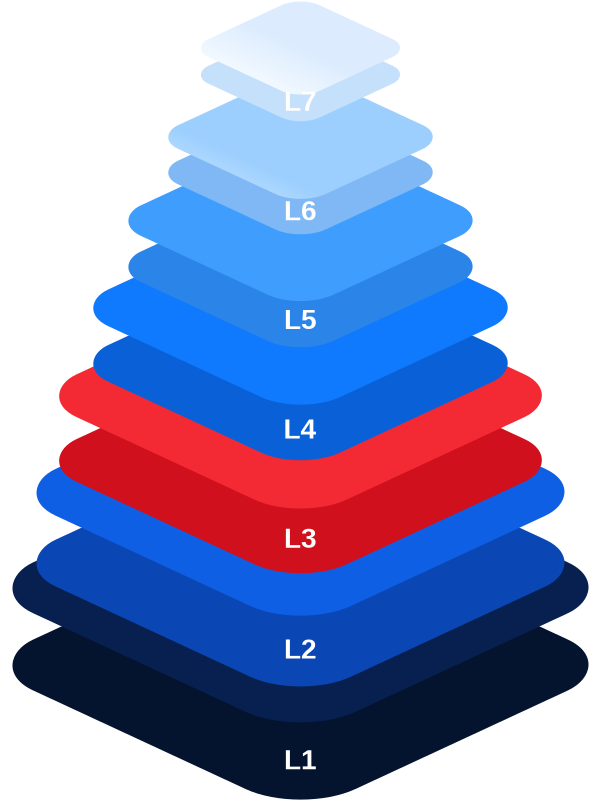
MLOps & LLMOpsEvaluation, deployment, monitoring, cost control and rollback.
Models & AI approachPrompting, RAG, fine-tuning, machine learning or agents, chosen per use case.
Platform & infrastructureCloud, hosting, environments and data residency choices.
Data & integrationSources, pipelines, quality, permissions and connections to your systems.
Business outcomes & metricsThe goals, baselines and targets every later layer is measured against.
ROLLOUT CHOICES
Pilot-first, big-bang, platform-first or buy-and-integrate which AI roadmap fits?
The sequence matters as much as the use cases. We recommend one approach per program, and often mix them by use case.
Pilot-first
Usual start
Best forA validated use case and a sponsor who needs proof before scaling
Time to first value2–4 months
Trade-offNeeds a planned production path, or the pilot stalls
Big-bang rollout
Best forA narrow, well-understood workflow with a hard deadline
Time to first value6–12 months
Trade-offHighest risk; problems surface late and all at once
Platform-first
Best forSeveral use cases that share the same data and controls
Time to first value4–8 months
Trade-offUpfront spend before the business sees results
Buy-and-integrate
Best forWorkflows a proven product already covers
Time to first valueWeeks to 3 months
Trade-offLicense costs at scale, data terms and vendor lock-in
SUCCESS STORIES
AI systems we've taken to production
Real AI and generative AI systems we have shipped, with the results published in each case study.
AI · LEGACY MODERNIZATION
GenAI-Powered Legacy Code Modernization
A US technology services firm needed to modernize sprawling legacy codebases without disrupting operations or scaling team collaboration. We built an AI-native platform combining code analysis, LLM-powered BRD generation and collaborative review on AWS.
Tech used
LangChain · Llama 2 · React, with BRDs generated directly from legacy code
A German enterprise struggled with slow, expert-dependent analytics that limited self-service insights. We built a GenAI analytics platform with conversational queries and automated analysis, supporting CSV and PDF analytics.
An AI solution enabling law firms to analyze legal documents, map statutes and enhance investigative collaboration, securely and at scale. It covers AI document analysis, automated statute extraction and case mapping, and collaboration tools on a scalable, secure AI infrastructure.
Tech used
AI document analysis · Automated statute extraction · Case mapping · Secure AI infrastructure
AI tutors, content generation and learner support, phased by term and cohort.
Listing content, lease extraction and buyer assistants.
Trip planning assistants and booking support.
AI features planned into your product roadmap.
RESPONSIBLE AI
Governance gates and risk controls, built into the roadmap
Every phase in your AI roadmap ends at a gate with a named approver and a test it must pass. What you fund is what you can run and defend.
EU AI ActISO/IEC 42001NIST AI RMFOWASP LLM Top 10HIPAAGDPRISO 27001
Each use case is classified for regulatory tier, data sensitivity and human impact before it enters the plan.
Data owners approve sources, permissions, residency and PII handling before any build starts.
IT and security sign off the hosting, access control and integration design.
A go or no-go on accuracy, cost and business value against agreed targets.
Golden-set testing, red-teaming and prompt-injection checks against the OWASP Top 10 for LLM applications.
Human review and approval steps for high-impact decisions and for agents that take actions.
Quality, drift, bias and cost measured continuously, with a tested rollback plan.
Decisions, approvals and model changes logged, and the roadmap reviewed every quarter.
How we build your AI implementation roadmap
Align
Confirm goals, scope and the strategy inputs that feed the plan, and measure today's baseline.
Architect
Design the target state across data, models, deployment, integration and security.
Sequence
Break the work into phases with clear milestones, dependencies and exit criteria.
Cost & resource
Attach realistic budgets, timelines and the right team model to every phase.
De-risk & govern
Surface risks with mitigations, and set the governance gates and success metrics.
Hand off or deliver
Present the plan to leadership, then execute it with us or hand it cleanly to your team.
Ways to work with us
Roadmap sprint
A fixed-scope engagement that ends in a phased, costed AI implementation plan for one validated use case or a short list.
Roadmap + delivery
We plan it, then build it, with the same team carrying the estimate into delivery.
Embedded delivery lead
A senior lead who drives the roadmap inside your team, runs the gates and reports to your sponsors.
Roadmap & architecture review
An independent review of an existing plan, with a clear remediation list.
OUR TECHNOLOGY STACK
The platforms your roadmap plans around
Model-agnostic and cloud-agnostic. We recommend what fits each use case, including tools we don't sell, and name model families rather than versions because they change quickly.
What an AI implementation roadmap costs, and how long it takes
A fixed, predictable fee scoped up front, and far cheaper than a stalled or misarchitected build. Price depends on the number of use cases, systems and business units in scope, not on hours.
Roadmap sprint
One validated use case: phased plan, target architecture, team, costed timeline, risk register and success metrics
◷2–4 weeks
◉$9,000–$22,000Typical investment
Program roadmap
Three to six use cases across teams, a shared platform plan, governance gates and a 12-month delivery plan
◷4–8 weeks
◉$22,000–$52,000Typical investment
Roadmap plus proof of value
The roadmap sprint, then a working proof of value of phase one on your data, with accuracy and cost measured
◷6–12 weeks
◉$27,000–$65,000Typical investment
Already have a roadmap? An independent roadmap and architecture review typically costs $6,000–$12,000 over 1–2 weeks. An embedded delivery lead is quoted monthly. You leave the discovery call with a fixed price for your scope.
Tell us where you're trying to take AI, and we'll map the phased, costed, de-risked path to get there. A 30-minute call with an engineer who plans and builds AI systems: bring a strategy, a stuck pilot or an existing AI roadmap, and leave with a first read on sequence, team and cost.
Answers about AI implementation roadmaps: what they include, cost, timelines, governance and what happens after the plan.
An AI implementation roadmap is a phased plan that takes an approved AI strategy into delivery. It sets out which use cases go first, the target architecture, the team, the cost and timeline for each phase, the risks and the success metrics that decide whether each phase moves forward. Where a strategy says what to build, the roadmap says how and in what order.
A roadmap sprint for one validated use case typically costs $9,000–$22,000, a program roadmap covering three to six use cases $22,000–$52,000, and a roadmap plus proof of value $27,000–$65,000. Every engagement is a fixed, predictable fee scoped up front, and far cheaper than a stalled or misarchitected build.
A focused roadmap sprint typically takes 2 to 4 weeks to a phased, costed plan with target architecture. A program roadmap across several teams takes 4 to 8 weeks. Adding a proof of value of the first phase brings it to 6 to 12 weeks.
A phased delivery plan, a target architecture blueprint covering data, models, MLOps, integration and security, a costed plan and milestone timeline, a risk register, a governance model with approval gates, success metrics, build-or-buy decisions and a team and operating-model recommendation.
An AI strategy decides where AI will create value and which use cases are worth funding. An AI roadmap takes those use cases and plans their delivery: the sequence, architecture, team, budget, risks and gates. If you have not yet chosen your use cases, start with our AI strategy consulting; if you have, the roadmap is the next step.
Yes. We're an engineering firm first, so we can carry the plan straight into delivery with the same team that estimated it, or hand it to your own team or another partner.
They're estimated by the senior engineers who would actually build the system, drawing on 16+ years of production delivery and 400+ projects, not sales optimism. Each phase carries its own estimate, buffer for known risks and an exit test.
Yes. We offer an independent roadmap and architecture review, typically 1 to 2 weeks, ending in a clear remediation list covering sequencing, architecture gaps, missing costs and governance.
Usually for reasons outside the model: data that was never prepared, unclear business value, rising costs and weak risk controls. Gartner predicted in July 2024 that at least 30% of generative AI projects would be abandoned after proof of concept by the end of 2025 for those reasons. A roadmap plans the production path, owner and budget before the pilot starts, so a good pilot can move forward.
Not always. If you are unsure whether your data, systems and teams can support AI, an AI readiness assessment comes first. If you already have a validated use case, an owner and a budget, you can go straight to the roadmap, and we check data readiness for that use case inside it.
Most plans follow align and baseline, data foundation, target architecture, proof of value, MVP build with integration and security, pilot rollout, scale with LLMOps or MLOps, and a regular measure-and-re-plan review. Each phase ends at a gate with agreed exit criteria.
We pick the use case with clear business value, data that is ready or close to ready, manageable risk and a sponsor who will own it. It should prove value within a few months and build foundations that later use cases reuse.
Usually pilot-first, with a production path planned in advance. Big-bang rollouts suit only narrow, well-understood workflows with hard deadlines. Platform-first makes sense when several use cases share data and controls, and buying and integrating fits workflows a proven product already covers.
Every phase ends at a governance gate with a named approver: risk classification, data approval, architecture and security review, proof-of-value decision, pre-launch evaluation and launch approval. Controls are aligned to the EU AI Act, ISO/IEC 42001 and NIST AI RMF, plus HIPAA and GDPR where they apply.
Yes. We plan generative AI copilots, RAG knowledge assistants, AI agents and chatbots as well as machine learning, predictive analytics and computer vision, choosing the approach per use case and planning the evaluation, guardrails and run costs each needs.
A business sponsor owns the outcomes and budget, and a product or AI lead owns delivery. The roadmap names both, plus the decision rights for scope, spend and launch. If you have no AI lead yet, an embedded delivery lead from QSS can fill the role while you hire.
Review it every quarter. Results from each phase, new models and changing costs all shift priorities, so we re-rank the remaining use cases and update estimates at each quarterly review.
You do. The roadmap, architecture blueprint, risk register and estimates are yours, written so your in-house team, another partner or QSS can deliver them, with no lock-in.