Problem
Models stuck in notebooks
How we solve it
Training code turned into a tested, repeatable MLOps pipeline that runs the same way every time, on your cloud.
Models reach production in weeks, not quarters.
Most models never make it out of the notebook, and many that do slowly get worse. QSS Technosoft builds the MLOps around your models: pipelines, CI/CD, a model registry, serving, monitoring and retraining, plus LLMOps for the LLM, RAG and agent systems now in production. Machine learning operations that keep accuracy, latency and cost where you set them, with an audit trail for every release.
TRUSTED PARTNERS
A model that works in a notebook is the easy part. The hard part is everything around it: data that changes, releases nobody can repeat, drift nobody notices and a cloud bill nobody owns. We build and run that operational layer, so models reach production, stay accurate once they're there and can be traced when someone asks why.










From Notebook to a Model You Can Run
WHERE PRODUCTION ML BREAKS
Production models rarely fail on the day they ship. They fail weeks later, quietly, when the data shifts, a manual release goes wrong or the inference bill doubles. Here is where we see teams get stuck, and how we get them unstuck.
Problem
How we solve it
Training code turned into a tested, repeatable MLOps pipeline that runs the same way every time, on your cloud.
Models reach production in weeks, not quarters.
Problem
How we solve it
CI/CD for models: automated tests, a model registry, approval gates and one-click rollback.
Every release is repeatable and reversible.
Problem
How we solve it
ML model monitoring on inputs, predictions and outcomes, with drift alerts at thresholds you set.
Problems caught before a business number drops.
Problem
How we solve it
LLMOps tracing, evaluation sets and cost tracking on every prompt, retrieval step and tool call.
You know why an answer was wrong, and what it cost.
Problem
How we solve it
Autoscaling, right-sized instances, batching, quantization and caching, measured per model.
Lower cost per prediction at the same quality.
Problem
How we solve it
Lineage from data to model to decision, with versions, approvals and logs kept to your policy.
Any prediction traced back to its model and data.
OUR SERVICES
Eight MLOps services, one team, from the first maturity assessment to models we monitor for you. To build the models themselves, see our machine learning development services.
SERVICE
Our MLOps consulting services start with where you are: how models are trained, released, watched and retrained today, scored against a maturity scale. You get a gap list, a target MLOps architecture and a plan sized to the number of models you actually run, not a platform you'll never use.
SERVICE
MLOps pipelines that take a model from raw data to a tested release without manual steps: data validation, training, evaluation against the current model, packaging and deployment, all versioned and triggered by code changes, new data or a schedule.
SERVICE
One place that records every model, its training data, code, metrics and approval status, plus feature stores that serve the same features in training and in production, so a model never sees data shaped differently from what it learned on.
SERVICE
Machine learning model deployment as real-time APIs, batch jobs, streaming or edge, with canary and shadow releases, autoscaling and the inference tuning that keeps latency and GPU spend in check: batching, quantization, caching and right-sized instances.
SERVICE
ML model monitoring on what goes in, what comes out and what happened next: data quality, feature and prediction drift, accuracy against real outcomes, latency and cost. When a threshold is crossed, the pipeline retrains, tests the new version against the live one and waits for approval.
SERVICE
LLMOps applies the same discipline to language models, where "accuracy" is harder to measure and every call costs money. We version prompts, run evaluation sets on every change, trace each request through retrieval and tool calls, watch cost and latency per call, and add guardrails for unsafe or off-policy output. For AI agents, AgentOps adds step-level tracing and limits on what an agent can do.
SERVICE
Governance built into the pipeline, not written up afterwards: a model inventory, lineage from data to decision, approval records, model cards and logs kept to your retention policy, ready for model risk reviews and AI regulation.
SERVICE
MLOps as a service for teams that want models in production without building an operations team: we run the platform, watch your models, handle alerts, retrain on schedule, review cost every month and report on model health, under an agreed service level.
MODEL HEALTH DASHBOARD
Choose a model. The window shows the alert or status the monitoring raised, what the pipeline did about it, two health readings, what was being watched and the action taken. Classic ML, LLMOps and AgentOps examples sit side by side.
Production model health · Illustrative example
Feature drift detected on income_band, PSI 0.27 (threshold 0.20).
Retrained on the last 90 days of applications, shadow-tested v14 against v13 for one week, then promoted after the model risk owner approved it.
Production model health · Illustrative example
Forecast error up from 8% to 13% in two regions after a promotion calendar change.
Added the new promotion feature, backtested on 52 weeks and released v7 to the two regions first.
Production model health · Illustrative example
New fraud pattern: share of flagged card-not-present transactions down 40% in 3 days.
Analyst-labeled cases added to training, retrained v22 scored on the new pattern and released as a canary to 10% of traffic.
Production model health · Illustrative example
Click-through on recommendations down 6% after 1,200 new products were added.
Refreshed product embeddings nightly, ran an A/B test of v31 against v30 and promoted the winner.
Production model health · Illustrative example
Groundedness score on the weekly evaluation set fell from 0.91 to 0.82 after a policy document update.
Traced failing answers to stale chunks, re-indexed the new documents, released prompt v9 and reran the evaluation set before go-live.
Production model health · Illustrative example
Prediction drift after a scheduling system change; one clinic's appointment types are now coded differently.
Data-quality check blocked the bad feed, the mapping was fixed, and the model was recalibrated and checked for fairness across patient groups before release.
Production model health · Illustrative example
Healthy. No drift; 0.4% of documents sent to human review this week.
Weekly evaluation passed on fresh labeled samples; next scheduled retrain in 21 days.
Production model health · Illustrative example
Margin guardrail triggered: proposed prices in one category fell below the floor after a competitor feed failed.
Automatic rollback to v18, the feed was quarantined, and the pricing team was alerted before any price went live.
Production model health · Illustrative example
Tool-call failure rate rose to 7% after the ticketing API changed a field name.
Step traces pinpointed the failing tool call; the tool schema was updated, the agent's regression suite rerun and a step budget added to stop retry loops.
Illustrative examples with sample numbers. No client data is shown. Thresholds, metrics and approval steps are set with your team for each model, and changes that affect people are approved by a person.
WHY QSS
Plenty of firms can stand up a tool. Fewer can design the MLOps around your models, run it, keep it affordable and pass an audit. We are an engineering firm of 250+ that does all four.
We treat data, pipelines, serving and monitoring as one system, because a model is only as reliable as the weakest step around it.
Learn moreClassic ML, LLMs, RAG and agents run on the same release, evaluation and monitoring habits, by one team.
Learn moreSageMaker, Vertex AI, Azure ML, Databricks or open-source on Kubernetes, chosen for your stack, not ours.
Learn moreLineage, approvals and audit logs from the first pipeline, delivered under CMMI Level 3, ISO 27001 and ISO 9001 processes.
Learn moreCost per model and per call tracked from day one, with GPU and autoscaling tuned against real traffic.
Learn morePipelines, infrastructure as code and runbooks are yours on delivery, under NDA from day one, with 4.9/5 on Clutch.
Learn moreARCHITECTURE
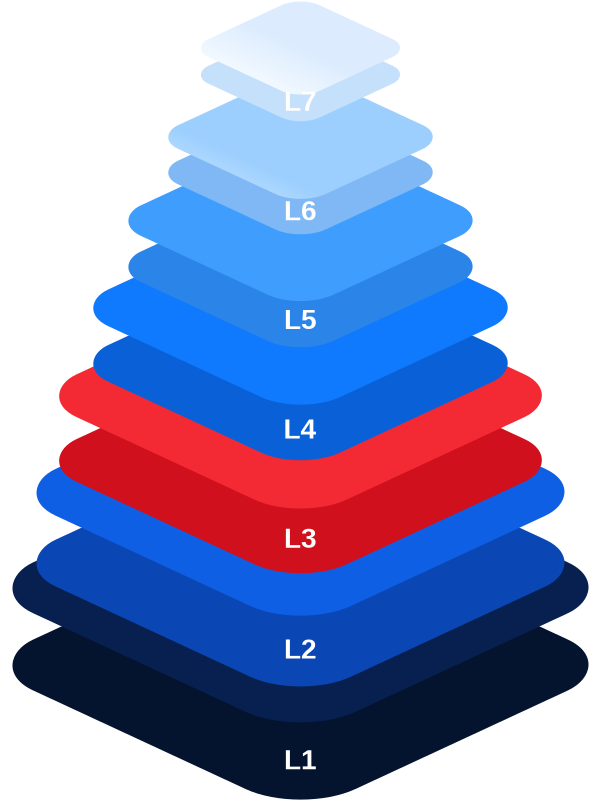
The model is one layer of seven. We engineer all of them, so the MLOps lifecycle runs from new data to a monitored release without anyone copying files by hand, and any layer can be swapped without rebuilding the rest.
Models get replaced. The pipeline, the registry, the evaluation set and the monitoring are what last, so we build them first and treat each model as a version that will be retired.
BUILD CHOICES
There is no single best MLOps solution. The right MLOps platform depends on where your data already lives, how many models you run and who will operate it after launch. For most teams already on one cloud, that cloud's managed service is the fastest honest start; LLMOps tooling plugs into any of the four.


SUCCESS STORIES
We have not yet published a case study that is purely an MLOps engagement. These three AI platforms show the production side of our work: release pipelines, deployment on cloud infrastructure and results measured after launch. Each links to the full case study.

A US technology services firm needed to modernize sprawling legacy codebases without disrupting operations. We built an AI-native platform combining code analysis, LLM-powered BRD generation and collaborative review on AWS.
Tech used
LangChain · Llama 2 · React · AWS
Results

A German enterprise struggled with slow, expert-dependent analytics that limited self-service insights. We built a GenAI analytics platform with conversational queries and automated analysis, supporting CSV and PDF analytics.
Tech used
LangChain · Llama 2 · GPT-4
Results

An AI solution that lets law firms analyze legal documents, map statutes and collaborate on investigations, securely and at scale.
Tech used
AI document analysis · Statute extraction · Case mapping · Secure AI infrastructure
Results
INDUSTRIES
What you monitor, how fast you retrain and what you must log differ by industry. We run models under the constraints you actually work under.

BANKING, FINANCIAL SERVICES & INSURANCE
Model inventories, challenger models, ongoing monitoring and validation evidence for credit, fraud, pricing and claims models, mapped to the revised US model risk guidance (SR 26-2) with your risk team.
Learn More
HEALTHCARE & LIFE SCIENCES
Monitoring and retraining for no-show, readmission, coding and documentation models, with data-quality checks on feeds from clinical systems, fairness checks across patient groups and HIPAA requirements handled per use case.
Learn More
RETAIL & ECOMMERCE
Demand forecasting, recommendation and pricing models retrained on fresh sales data, tested by A/B experiments and protected by business guardrails before prices or rankings change.
Learn More
LOGISTICS & SUPPLY CHAIN
Models for arrival times, routing and inventory watched for seasonal and network changes, with batch and real-time serving sized to peak volumes.
Learn More
MANUFACTURING & INDUSTRIAL
Predictive maintenance and quality-inspection models deployed to the cloud or edge devices, with sensor-drift monitoring and over-the-air model updates.
Learn More
PUBLIC SECTOR
Self-hosted MLOps for sensitive data, with access controls, approval records and audit logs kept inside your environment.
Learn More
REAL ESTATE
Property valuation and lead-scoring models monitored against closed sales and conversions, and retrained as local markets shift.
Learn MoreEnrollment and student-success models monitored for fairness term by term.
Travel and hospitality: demand and pricing models retrained for each season.
Energy and utilities: load forecasts and asset-health models watched for sensor drift.
RESPONSIBLE AI & MODEL GOVERNANCE
Regulators and auditors now ask what a model did in production, not only how it was built. These eight controls, part of our MLOps best practices, produce that evidence as the models run.
Every production model listed with its owner, purpose, data and risk tier, kept current by the registry rather than a spreadsheet.
Each version linked to the data, code, features and settings that produced it, so any result can be rebuilt.
No model reaches production without passing its tests and an approval recorded by a named person.
Inputs, outcomes and group-level results watched after launch, with alerts before accuracy or fairness slips.
Prompts, retrieved context, tool calls and outputs traced, with filters for unsafe, off-policy or leaked content.
For high-risk systems, automatic event logs, retention to the required period and a post-market monitoring plan, ready ahead of the December 2027 and August 2028 deadlines.
Monitoring results, validation records and change logs organized for model risk reviews under SR 26-2.
Instant rollback to a known-good version, logs kept to your policy and access limited by role.
A fixed-price review of your models, pipelines and tooling, with a maturity score, a target architecture and a costed plan.
A defined MLOps platform or set of pipelines, delivered with scope, timeline and price agreed up front, and handed over with runbooks.
We run and monitor your production models for a monthly fee: alerts, retraining, upgrades and a monthly model health and cost report.
An embedded team of MLOps, ML and data engineers, or senior engineers added to your own team, ramped in weeks.
OUR TECHNOLOGY STACK
Cloud-agnostic and tool-agnostic. We use the MLOps tools that fit your stack and keep pipelines, models and configuration portable.
The tooling is rarely the big line item; most of it is open-source or billed by your cloud. The cost sits in engineering the pipelines, monitoring and governance around your models, so we review your current setup before we quote.

A maturity assessment, a target MLOps architecture and one model moved onto an automated pipeline with a registry, monitoring and rollback
3–6 weeks
$18,000–$40,000Typical investment

CI/CD for models, a model registry and feature store, serving with autoscaling, drift monitoring and retraining for your first group of models, plus LLMOps tracing and evaluations where you run LLMs
8–16 weeks
$50,000–$120,000Typical investment

A multi-team MLOps and LLMOps platform with governance, audit logging and cost controls, followed by managed MLOps as a service
4–8 months, phased
$130,000–$300,000+then $3,500–$12,000 a month for managed operationsTypical investment
Cloud, GPU and inference hosting, and any commercial tool licenses, are billed separately at cost and estimated during the assessment. The managed retainer depends on the number of models, environments and support hours, and can also be taken on its own for models you already run. You leave the first call with a range specific to your models and platform.
A free 30-minute MLOps assessment with an engineer from a team that builds and runs production ML. Tell us what you have in production or stuck in a notebook, and leave with a straight read on what to fix first, which platform fits and what it will cost.
Straight answers about MLOps services and LLMOps: cost, timelines, platforms, drift, GPU spend, ownership and regulation.
MLOps, short for machine learning operations, is the set of practices and tools that take a model from training to production and keep it working there: automated pipelines, versioning, testing, deployment, monitoring and retraining. It does for models what DevOps does for software, with the added work of watching data and accuracy, which change after launch.
An MLOps assessment with a pilot pipeline typically costs $18,000–$40,000, an MLOps platform build $50,000–$120,000, and an enterprise platform $130,000–$300,000 or more. Managed MLOps runs $3,500–$12,000 a month depending on the number of models. Cloud, GPU and tool licenses are billed separately, and we price each engagement up front with no open-ended billing.
LLMOps is MLOps for large language model systems such as chatbots, RAG assistants and AI agents. The release, monitoring and governance habits are the same, but the details change: you version prompts and retrieval settings as well as models, measure quality with evaluation sets and LLM-as-judge instead of a single accuracy score, trace every step of a request, and track cost per call and per token, which classic ML rarely needs.
A first model on an automated pipeline with monitoring takes 3 to 6 weeks. An MLOps platform for a group of models takes 8 to 16 weeks, and an enterprise platform 4 to 8 months in phases. The state of your data, the number of models and how much of your current tooling we can reuse move the timeline most.
Not always. With one or two models, a lean setup, an automated pipeline, a registry, monitoring and a retraining plan, is usually enough. A full MLOps platform pays off once several teams ship models, or when regulators expect lineage and audit logs. We size it to the models you run today and the ones planned for the next year.
DevOps automates how code is built, tested and released. MLOps adds what code alone doesn't cover: data and model versioning, training pipelines, evaluation against the live model, and monitoring for drift once real data arrives. A model can fail without a single line of code changing, so MLOps watches data and outcomes as well as uptime. Most teams extend their DevOps CI/CD rather than replace it.
Yes. We start from what you run, whether that is SageMaker, Vertex AI, Azure ML, Databricks or open-source MLOps tools such as MLflow and Kubeflow, and add only what is missing. We don't force a rebuild, and we tell you when a tool you pay for is going unused.
A managed MLOps service covers running and watching your production models: monitoring and alert handling, scheduled or drift-triggered retraining with your approval, platform upgrades and security patches, and a monthly report on model health, drift and cost. You keep ownership of the models and platform, and can take operations in-house at any time with our runbooks.
ML model monitoring compares live inputs and predictions with the training data and, when outcomes arrive, accuracy with the launch baseline. When drift crosses a threshold you set, we alert your team, retrain on fresh data, test the new version against the live one in shadow or canary mode and promote it only after approval. Every step is logged.
The MLOps lifecycle runs in a loop: prepare and validate data, train and track experiments, evaluate against the current model, register and approve, deploy, monitor, and retrain when monitoring says so. The loop is what makes it MLOps; a one-off deployment without monitoring and retraining is only the first half.
We measure cost per model and per call first, then apply what pays: autoscaling that scales down when traffic drops, right-sized or spot instances, request batching, quantized models, efficient LLM serving such as vLLM, response caching and routing simple requests to smaller models. Each change is checked against your evaluation set so quality does not drop with the bill.
With LLMOps tooling that traces each request through prompts, retrieval and tool calls, scores answers on evaluation sets and samples of live traffic, and tracks latency and cost per call. For agents, AgentOps adds step-level traces, tool-error tracking and limits on steps and spend. Guardrails catch unsafe or off-policy output before it reaches users.
Usually the managed service of the cloud you already use: SageMaker on AWS, Vertex AI on Google Cloud or Azure Machine Learning on Azure. Databricks fits teams whose data already lives there. Open-source MLflow and Kubeflow on Kubernetes suit multi-cloud, on-premises or strict data-residency needs, if you can staff them. We compare them on your models and costs in the assessment.
Yes, entirely. Pipelines, infrastructure as code, configuration, dashboards and runbooks are yours on delivery, under NDA from day one, and they run in your cloud accounts. If we run your platform as a managed service, you keep full access and can move it in-house whenever you choose.
It can. If a model is part of a high-risk AI system used in the EU, the Act requires automatic event logging, log retention and post-market monitoring. Under the Digital Omnibus on AI, the main high-risk obligations now apply from December 2, 2027, and those for AI inside regulated products from August 2, 2028. We build the logging and monitoring in; your counsel confirms which duties apply to you.
Lineage, versioning, approval workflows and audit trails are built into the pipeline. For banks, the revised US model risk guidance (SR 26-2), which replaced SR 11-7 in April 2026, still expects inventories, validation and ongoing monitoring, and our monitoring produces that evidence. State laws such as Colorado's SB 26-189, effective January 1, 2027, add duties for some AI decisions; your legal team confirms scope.
With a free MLOps assessment. We review your models, pipelines and tooling, then propose the platform, a first scope and an engagement model: an MLOps assessment, a fixed-scope platform build, managed MLOps or a dedicated pod. Most clients begin with the assessment and a pilot pipeline, the same starting point our MLOps consulting work uses.
Ask how they decide how much platform you need, how they monitor drift and outcomes, how they handle LLMOps for language models, how they control GPU cost, who owns the pipelines afterward and whether they will run them for you. A strong MLOps company shows you MLOps best practices on your own models and prices its MLOps services before you commit.