GCC-as-a-Service: Is It Right for Your Business? A Comparison with Traditional Offshore Models
 By Rashmi Kanti
Sr. Marketing Specialist
July 2, 2026
9 min read
Last Updated on July 9, 2026
By Rashmi Kanti
Sr. Marketing Specialist
July 2, 2026
9 min read
Last Updated on July 9, 2026
Quick Answer
GCC-as-a-Service (GCCaaS) lets you stand up your own captive offshore team — owned, controlled, and aligned to your business — in weeks instead of years, without the risk of building one from scratch. Traditional offshore outsourcing rents you a vendor’s service. Choose GCCaaS for long-term, IP-sensitive, innovation-led work; stick with outsourcing for short-term, transactional, SLA-bound tasks.
Stop renting talent — start owning it, without the multi-year build risk.
The Shift From Renting Talent to Owning It
For two decades, “going offshore” meant one thing: hand a scope of work to a vendor and pay for delivery. That model built the outsourcing industry — but it's no longer where ambitious enterprises are heading. In 2026, the fastest-growing global-delivery model isn't outsourcing at all. It's the Global Capability Center (GCC): a captive team you own and control, increasingly stood up through a managed model called GCC-as-a-Service.
This guide breaks down what GCCaaS actually is, how it compares to traditional offshore outsourcing across the dimensions that matter, and a simple framework to decide which is right for your business.
What Is a GCC — and What Is GCC-as-a-Service?
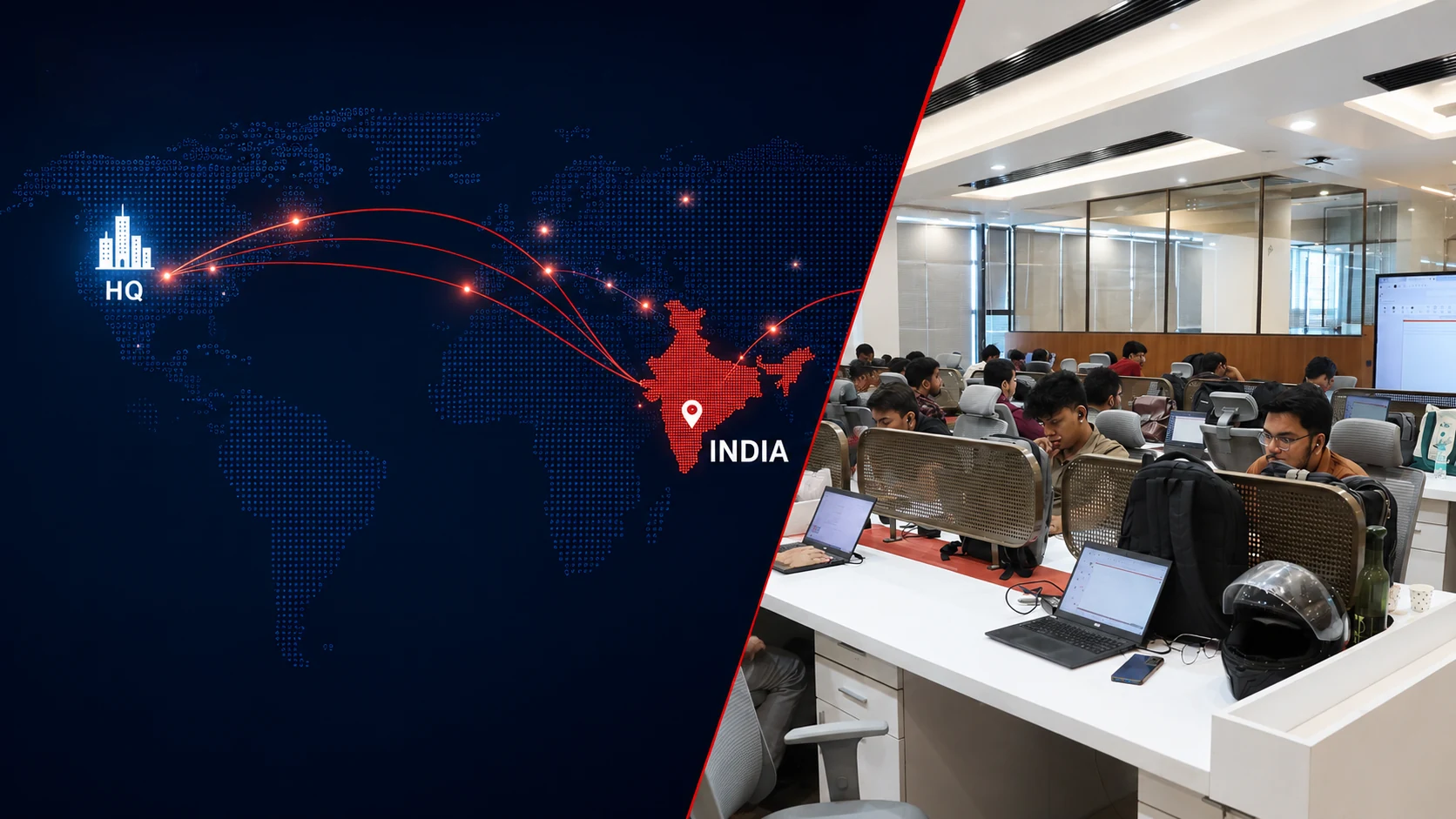
A Global Capability Center (GCC) is a captive offshore unit wholly owned by your company. The people, processes, and intellectual property stay inside your corporate ecosystem — it's your team, in a lower-cost location, working only on your priorities. Historically, GCCs were the preserve of Fortune 500 giants because building one meant navigating hiring, legal entities, real estate, compliance, and culture in an unfamiliar market — a multi-year, high-risk undertaking.
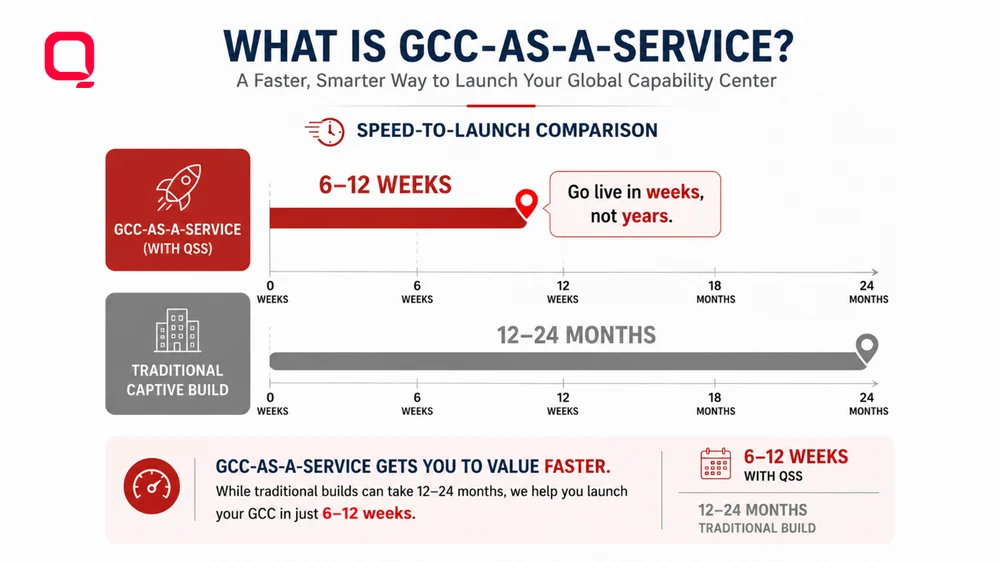
GCC-as-a-Service (GCCaaS) removes that barrier. A specialist partner sets up and operates your capability center on proven foundations — talent, infrastructure, compliance, and governance — so you get a live, owned team in weeks, not years. Many organizations report going operational in 6–12 weeks, versus 12–24 months for a traditional build. When you're ready, ownership can transfer fully to you through a Build-Operate-Transfer arrangement.
What Is the Traditional Offshore Model?
Traditional offshore outsourcing means delegating work to a third-party vendor who owns the team, the process, and the delivery. You sign an SLA, pay for output or headcount, and the vendor manages everything else. It became popular for one compelling reason: speed and cost. You could scale a support desk or a maintenance team quickly, cheaply, and with minimal management overhead.
That model still works well for defined, transactional work. But it comes with trade-offs that matter more as the work becomes strategic: you don't own the team, the vendor's margin is baked into every hour, IP and knowledge live outside your walls, and the vendor's incentive is process volume — not your business outcomes.
GCC-as-a-Service vs Traditional Offshore
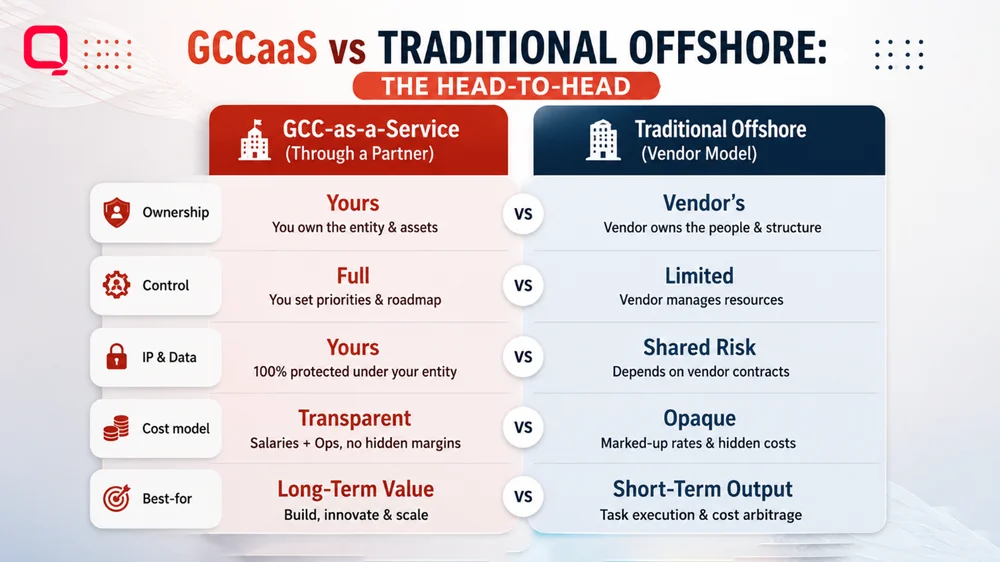
The pattern is clear: outsourcing optimizes for short-term cost and speed on defined work, while a GCC optimizes for control, IP, and long-term value on strategic work. GCCaaS gives you the GCC advantages without the traditional cost of entry.
Cost & ROI: Which Actually Pays Off?
On a spreadsheet, outsourcing usually looks cheaper on day one — there's little upfront investment, and you pay as you go. A GCC requires more setup investment. But that comparison flips over time.
With outsourcing, you pay the vendor's margin on every hour, forever, and costs rise as you scale. With a GCC, once the foundation is in place you gain cost transparency, stop funding vendor profit, and benefit from compounding efficiency as your own team grows more productive and domain-expert year over year. Beyond the first year, the economics of a well-run GCC often pull ahead — especially for teams doing continuous, high-value work.
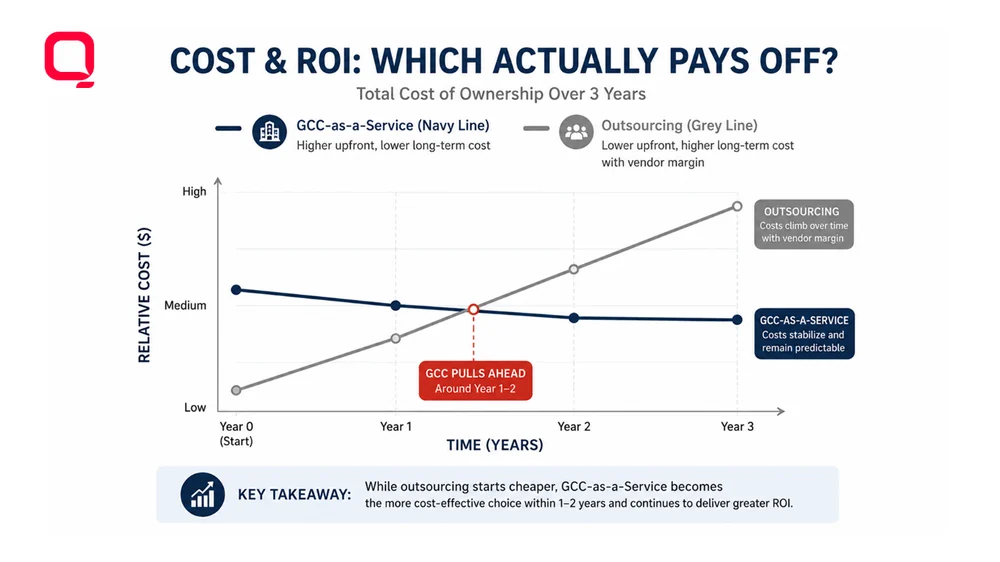
The honest rule of thumb: for short-term or purely transactional needs, outsourcing can be more cost-effective. For sustained, strategic work, a GCC typically delivers better ROI.
Not sure which model fits your budget?
We'll model the 3-year cost of a GCC vs. outsourcing for your specific scope — free, no obligation.
Book a GCC cost assessment →GCCaaS vs BOT vs Captive Build: Clearing the Confusion
These terms get used interchangeably, so here's the ladder from least to most ownership:
- Outsourcing / ODC — a vendor delivers work; you own nothing.
- Build-Operate-Transfer (BOT) — a partner builds and runs your team, then transfers full ownership to you on an agreed timeline.
- GCC-as-a-Service — a partner sets up and continuously operates your captive center as a managed model, with an optional path to ownership.
- Full captive build — you set up and run everything yourself from scratch.
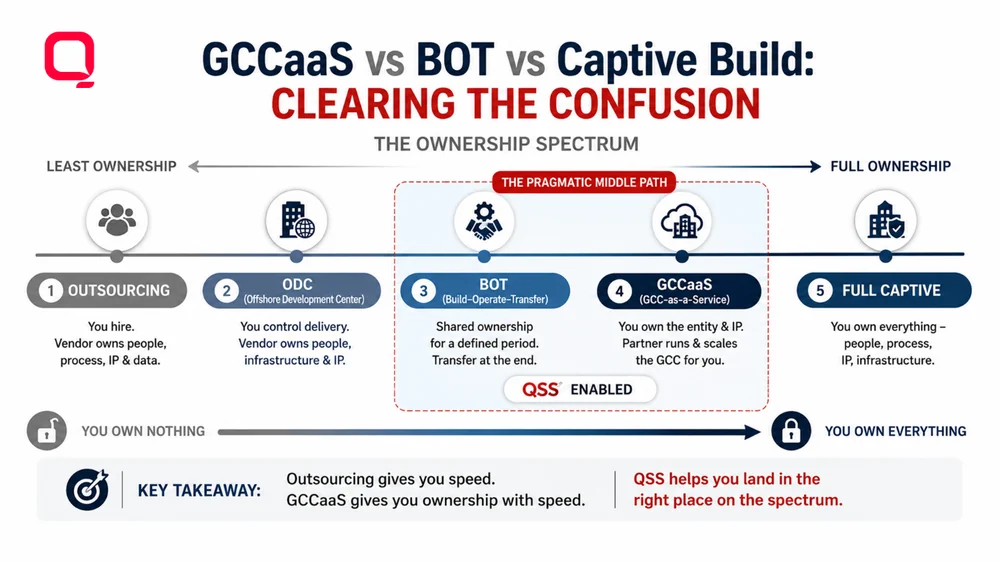
In practice, GCCaaS and BOT are the pragmatic middle path: you get an owned, aligned team fast and de-risked, and you decide how much of the operation to eventually bring in-house.
When Is GCC-as-a-Service Right for You?
GCCaaS isn't for every situation.
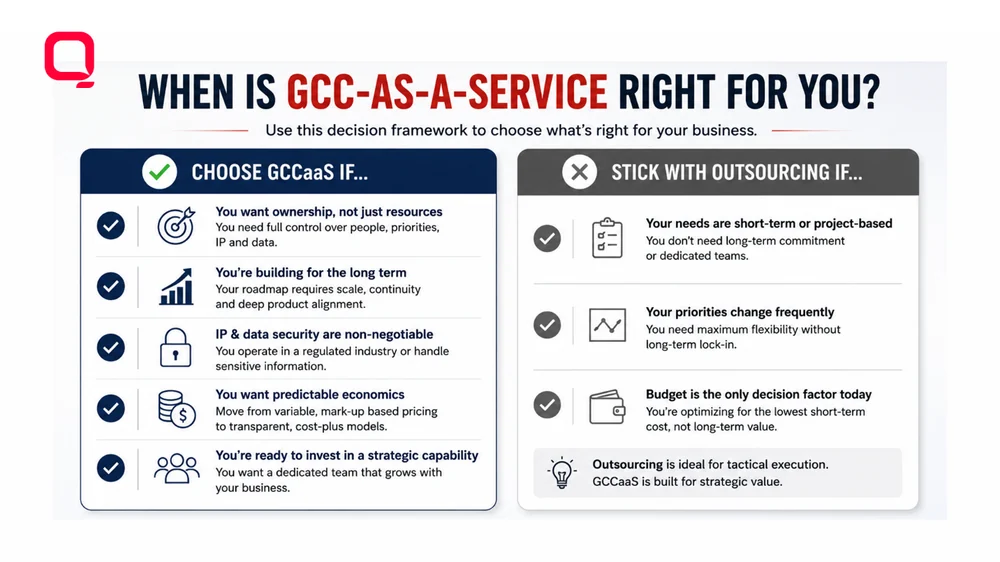
Choose GCC-as-a-Service if you:
- Have a long-term horizon, not a one-off project
- Work on core IP, product, or innovation
- Want control over talent, culture, and roadmap
- Plan to scale a team of engineers over time
- Need alignment to business outcomes, not just tickets closed
Stick with traditional outsourcing if you:
- Need well-defined, transactional work done (helpdesk, maintenance, processing)
- Have a short-term or fixed-scope requirement
- Value minimal management overhead over strategic control
Six signals you’re ready for a GCC: rising outsourcing bills · scaling engineering headcount · IP or compliance sensitivity · frustration with vendor churn · a multi-year product roadmap · a need for tighter control and alignment.
Why India — and Why Location Flexibility Matters
India remains the world's leading GCC destination for good reason: a vast, deep engineering talent pool, strong cost advantage, a mature delivery ecosystem, widespread English fluency, and workable time-zone overlap with the US and Europe. The India GCC wave shows no sign of slowing in 2026.
That said, the right partner shouldn't lock you into one geography. Depending on your talent, cost, and data-residency needs, your capability center might belong in India — or somewhere closer to your market. What matters is a partner who can build it where it makes sense for you.
How QSS Delivers GCC-as-a-Service — Modeled on Our Own Center
Most GCC providers pitch a model. We run one.
QSS Technosoft operates a full-fledged 250+ engineer capability center in India — so when we set up yours, we're not theorizing, we're replicating something that already works. Through our GCC-as-a-Service and Build-Operate-Transfer model, we recruit, run, and govern your captive team — in India or your preferred location — and transfer full ownership to you on your timeline.
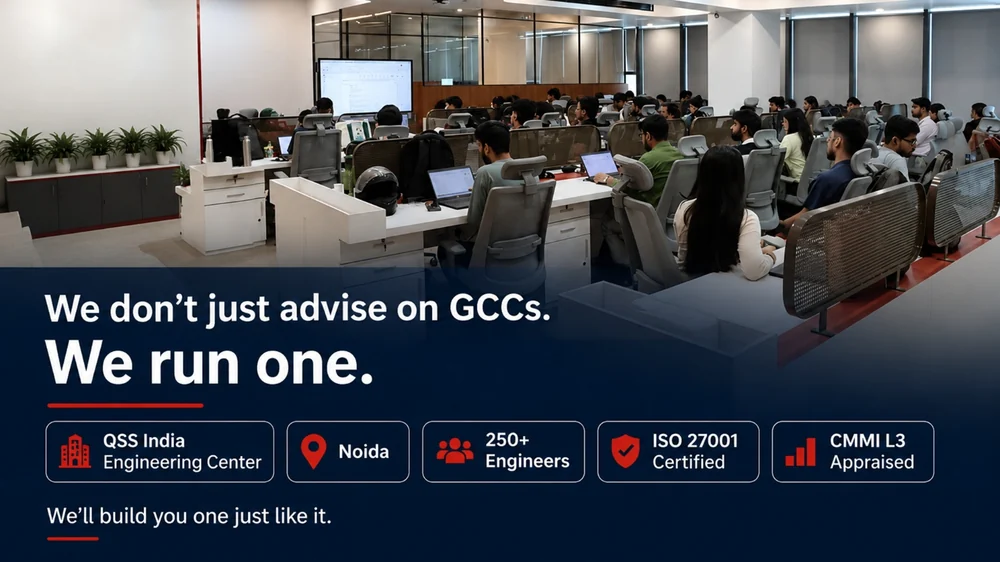
- We run our own center — that's your proof, not a slide.
- De-risked setup — hiring, legal, infrastructure, and compliance handled.
- Your control, your IP, your culture — throughout and after transfer.
- CMMI Level 3 · ISO 27001 delivery, with healthcare and AI engineering depth.
- You own it all — the team, the operations, and the IP.
The Bottom Line
Traditional offshore outsourcing was built for a world where offshore meant cost-cutting on non-core work. That world is fading. As offshore teams take on strategic, IP-rich, innovation-led work, ownership and alignment win — and GCC-as-a-Service makes that ownership achievable in weeks, without the multi-year risk. If your offshore work is becoming central to how you build and compete, it's time to stop renting and start owning.
Thinking about your own capability center?
QSS runs a 250+ engineer center in India — and we'll build you one just like it, in the location that fits your business. Book a consultation and we'll map your GCC path.
Book a GCC consultation →