Outsourced Application Development for Mobile Apps, With a US Team Accountable for Every Release
Outsource mobile app development to QSS Technosoft and get a senior iOS, Android and cross-platform team that works to your roadmap, reports to a US-based lead, and hands you the code, the accounts and the IP from day one.
Team deployed within 14 days of signing | 250+ in-house engineers | US-headquartered in Bloomington, MN
iOS · Android · Cross-platform
Native, Flutter and React Native
400+ Projects delivered
Since 2010
CMMI Level 3
ISO 27001 · ISO 9001
14 days
From signed agreement to deployed team
TRUSTED PARTNERS
Trusted by enterprises, scale-ups and public-sector teams
Outsourced application development fails when the vendor disappears between demos. Ours is built the other way: a named team, a US point of contact, a build you can install every sprint, and code that lives in your repository from the first commit.
Your Roadmap. Our Engineers. Your Code.
400+Projects delivered to production
250+In-house engineers, no freelancers
95%Client repeat-business rate
4.9/5Client rating on Clutch
WHERE OUTSOURCED APP PROJECTS GET STUCK
The risks of outsourcing, and what changes when you work with us
Most companies that hesitate to outsource mobile app development have been burned before, or know someone who has. The problems are predictable, which means they can be designed out. Here is where we see teams get stuck, and how we get them unstuck.
Problem
Communication breaks down across time zones
How we solve it
A US-based client lead working US business hours, a fixed overlap window with the engineering team every working day, a shared Slack or Teams channel, and a written sprint summary every two weeks.
Questions answered the same day, not the next week.
Problem
Quality only shows up at the end, and it is bad
How we solve it
An installable build every sprint through TestFlight and Google Play internal testing, code review on every pull request, automated tests in the pipeline and QA engineers on the team from sprint one.
You judge the app on working software, every two weeks.
Problem
You are not sure you own what you paid for
How we solve it
NDA before discovery, IP assignment in the master agreement, code in your Git repository and app store, cloud and analytics accounts created under your organization.
Full ownership of code, designs and data from the first commit.
Problem
Security and compliance are an afterthought
How we solve it
ISO 27001 and CMMI Level 3 processes, least-privilege access, encrypted repositories, secure coding checks against the OWASP Mobile Top 10, and HIPAA or PCI DSS controls where your app needs them.
A security review you can pass, not a list of findings after launch.
Problem
The low quote turns into a high bill
How we solve it
A written estimate that splits design, engineering, QA, DevOps and launch, change requests priced before they are built, and a monthly burn report against budget.
No surprise invoices.
Problem
You are locked in to a vendor you want to leave
How we solve it
Documentation, architecture decisions and runbooks kept in your repository as we go, plus a knowledge-transfer plan agreed at the start, not at the end.
You can switch teams, or bring the app in-house, whenever you choose.
Been burned by an outsourced project before? Bring the app or the brief, and we’ll show you how we would run it differently.Talk to Our US Team
THE DECISION
Should you outsource mobile app development or hire in-house?
Outsourcing is not right for every company. Here is the honest version of the decision, based on what we see with clients.
Outsourcing usually fits when
Speed mattersYou need to start this quarter, not after months of recruiting.
The skills are missingYou need iOS, Android, backend, QA and DevOps together, and you have one or two of them.
Demand changes by phaseA large team for the build, a smaller one for maintenance.
Mobile is not your core businessThe app supports your product or service, but you don't want to run a mobile department.
You want a second opinionAn outside team can review an app or a plan your current team is too close to.
In-house usually fits when
Mobile is the productThe app is your main source of revenue and needs a permanent team.
You already have the leadersA product owner and a tech lead with time to run a team every day.
The work never stopsA steady roadmap with years of work at the same team size.
Many clients do both: they outsource the build, then use a build-operate-transfer model to move the team in-house once the product is stable.
OUR SERVICES
Outsourced application development services: what you can hand to us
Outsource the whole app or just the part you can't staff. Each service can run as a fixed-scope project, a dedicated team or added engineers.
Full App Development
Strategy, UX, iOS and Android apps, backend, APIs, QA, store release and support, from one team with one plan.
One planStrategy through store release.
One teamDesign, mobile, backend, QA and DevOps.
One backlogYour product owner sets the priorities.
One reportSprint summary, burn and risks every two weeks.
Mobile app development outsourcing models compared
The model decides who manages the work, how you pay and how much control you keep. Pick the one that matches how much product leadership you already have.
Project-based (fixed scope)
Best forA defined app or MVP with a clear feature list.
Who manages the workQSS, against agreed milestones.
How you payFixed price per milestone.
Your controlScope agreed up front; changes go through change requests.
Typical lengthWeeks to a few months.
Dedicated team
Best forAn ongoing product roadmap without an in-house mobile team.
Who manages the workA QSS delivery lead, with your product owner setting priorities.
How you payMonthly per team member.
Your controlHigh; you own the backlog.
Typical lengthSix months or more.
Staff augmentation
Best forAdding iOS, Android, Flutter, React Native or QA skills to a team you already run.
Who manages the workYou.
How you payHourly or monthly per engineer.
Your controlFull; engineers join your rituals and tools.
Typical lengthAny, from one month.
Build-operate-transfer
Best forCompanies that want their own mobile team eventually, without building it from zero.
Who manages the workQSS builds and runs the team, then transfers it to you.
How you payMonthly during build and operate, with transfer terms agreed up front.
Your controlGrows with each phase.
Typical lengthOne to three years.
Not sure which fits? Many clients start with a fixed-scope MVP and move to a dedicated team after launch. We help you pick on the first call.
DELIVERY LOCATION
Onshore, nearshore, offshore or US-led hybrid?
Location changes the rate, the hours you overlap and how much management the work needs. Here is how the four options compare for a US company.
Onshore (US-based team)
Cost: highest. Overlap: full. Best for work that needs daily in-person time or US-only data access.
Watch out for budgets that buy a smaller team for the same money.
Nearshore (Latin America or Canada)
Cost: medium. Overlap: most of the US working day. Best for teams that want real-time collaboration at a lower rate.
Watch out for a smaller talent pool for niche mobile skills.
Offshore (Asia or Eastern Europe)
Cost: lowest. Overlap: a few hours a day. Best for well-defined work with clear specifications.
Watch out for slow answers and weak accountability when nobody local owns the relationship.
US-led hybrid (the QSS model)
Cost: close to offshore. Overlap: a US-based client lead during US business hours, and engineering that overlaps with US mornings every working day.
Make sure the US lead is real and stays on your account, which is why we name the lead in the proposal.
Your contract is with QSS Technosoft Inc., a US company headquartered in Bloomington, Minnesota, and your engineers work from our delivery centers in the USA, India and Dubai.
YOUR OPTIONS
Outsourcing application development: how the options compare
Hourly rates are the easiest number to compare and the least useful. Compare who is accountable, how fast you can start and what happens when someone leaves.
In-house
Time to startMonths of recruiting.
Skills coveredWhat you can hire.
AccountabilityYours.
If someone leavesYou rehire.
IP and securityUnder your policies.
CostSalary, benefits, tools and management time.
Freelancer
Time to startDays.
Skills coveredUsually one.
AccountabilityIndividual, with no backup.
If someone leavesWork stops.
IP and securityDepends on the contract.
CostLowest headline rate.
Typical agency
Time to startA few weeks.
Skills coveredA full team.
AccountabilityThe vendor, often through an account manager.
If someone leavesDepends on the vendor.
IP and securityVaries.
CostVaries widely by region.
QSS
Time to startTeam deployed within 14 days of signing.
Skills coverediOS, Android, cross-platform, backend, UX, QA and DevOps from 250+ in-house engineers.
AccountabilityA named US-based lead and a delivery manager, with CMMI Level 3 processes.
If someone leavesQuick replacement from the same team, with documentation kept current.
IP and securityIP assigned to you, NDA, ISO 27001 processes, code in your repository.
CostOffshore-level rates with a US contract.
What the first 30, 60 and 90 days look like
Days 0–14: Signed to deployed
NDA and master services agreement with IP assignment. Your Git repository, App Store Connect, Google Play Console and cloud accounts set up under your organization. Named team confirmed, senior architect onboarded, scope finalized and Sprint 1 kicked off, all within 14 days of signing.
Days 15–30: Discovery and first build
User flows and a clickable prototype, an architecture decision record, a prioritized backlog, a CI/CD pipeline, and the first sprint demo with a build you can install on your own phone.
Days 31–60: Steady delivery
Two-week sprints with a demo and written summary each time, test builds through TestFlight and Google Play internal testing, automated tests growing with the code, and the first monthly steering review on scope, budget and risks.
Days 61–90: Release-ready
For a typical MVP scope, the app is feature-complete for its first release, through beta testing and preparing for store submission. For a takeover of an existing app, the code is audited, stabilized and shipping regular updates. Either way, you have a velocity baseline and a plan for the next quarter.
RISK CONTROL
Mobile app development outsourcing without the usual risks
These controls are part of every engagement. They are written into the contract and the delivery plan, not offered as extras.
IP ownershipAll code, designs, documentation and data are assigned to you under contract. Work starts only after an NDA is signed.
SecurityISO 27001 processes, least-privilege access, encrypted repositories, secure SDLC, and checks against the OWASP Mobile Top 10 before each release.
Code qualityPeer review on every pull request, static analysis, automated unit and UI tests, and coding standards your future team can follow.
Communication cadenceDaily stand-up in the overlap window, sprint demo every two weeks, monthly steering review, and a named US-based lead you can call.
ReportingSprint summary with completed work, burn against budget, open risks and decisions needed, plus read access to Jira and the repository.
ContinuityNo single points of failure: knowledge shared across the team, documentation kept current and quick replacement if a team member isn't the right fit.
PARTNER CHECKLIST
Ten questions to ask before you outsource mobile development
Use this checklist with any vendor, including us. A good partner answers every question in writing.
Ask for case studies in your industry and on your platform, with figures you can check.
Meet the engineers named in the proposal, not just the sales team.
Freelancers and subcontractors add risk to quality and IP. Ask for disclosure in writing.
The answer should be "you, from the first commit", stated in the contract.
In your repository and your store accounts, not the vendor's.
Ask for certifications, access controls and how they test against mobile security standards.
Agree overlap hours, meeting cadence, the tools and who your daily contact is.
Look for a written change-request process and a monthly budget report.
Ask how fast they replace people and how knowledge is kept.
A good partner plans the handover from day one. If the vendor won't discuss exit terms, treat it as a warning.
HANDOVER
When you are ready to take the app in-house
Many clients keep working with us for years. Some bring development in-house. Either way, the handover is planned from the start, so leaving costs you weeks, not a rewrite.
Documentation as we goArchitecture decision records, setup guides, API documentation and runbooks kept in your repository and updated every sprint.
Shadowing periodYour engineers pair with ours on real tickets before they take over.
Reverse demosYour team demos features back to us, so gaps show up while we are still there to fill them.
Access checklistEvery account, key, certificate and pipeline confirmed as owned by your organization.
Support after handoverAn optional support period while your team settles in.
Team transferUnder a build-operate-transfer agreement, the team itself can move to you on agreed terms.
What it costs to outsource mobile app development
Rates vary by region and model, but the rate is only part of the cost. Management time, rework and handover decide what you really pay.
Discovery sprint
Requirements, user flows, clickable prototype, architecture and a fixed estimate for the build
◷2–3 weeks
◉$6,000–$15,000Typical investment
Fixed-scope MVP
One app on iOS and Android (cross-platform), core features, backend, QA and store release
◷10–16 weeks
◉$15,000–$40,000Typical investment
Dedicated mobile team
A named, US-led team with mobile engineers, QA and a delivery manager, working to your roadmap
◷Monthly, scale up or down
◉$26–$45 / hour, blendedTypical investment
Staff augmentation
iOS, Android, Flutter, React Native or QA engineers added to your team
◷Deployed within 14 days of signing
◉$20–$38 / hourTypical investment
Store fees, third-party services and cloud hosting are billed separately at cost. For a full breakdown by app type, features and platform, see our mobile app development cost guide. You leave the discovery call with a range specific to your app.
Mobile apps we built for clients who chose to outsource
Real apps for US clients, each with its published result. Each links to the full case study.
HEALTHCARE · MOBILE
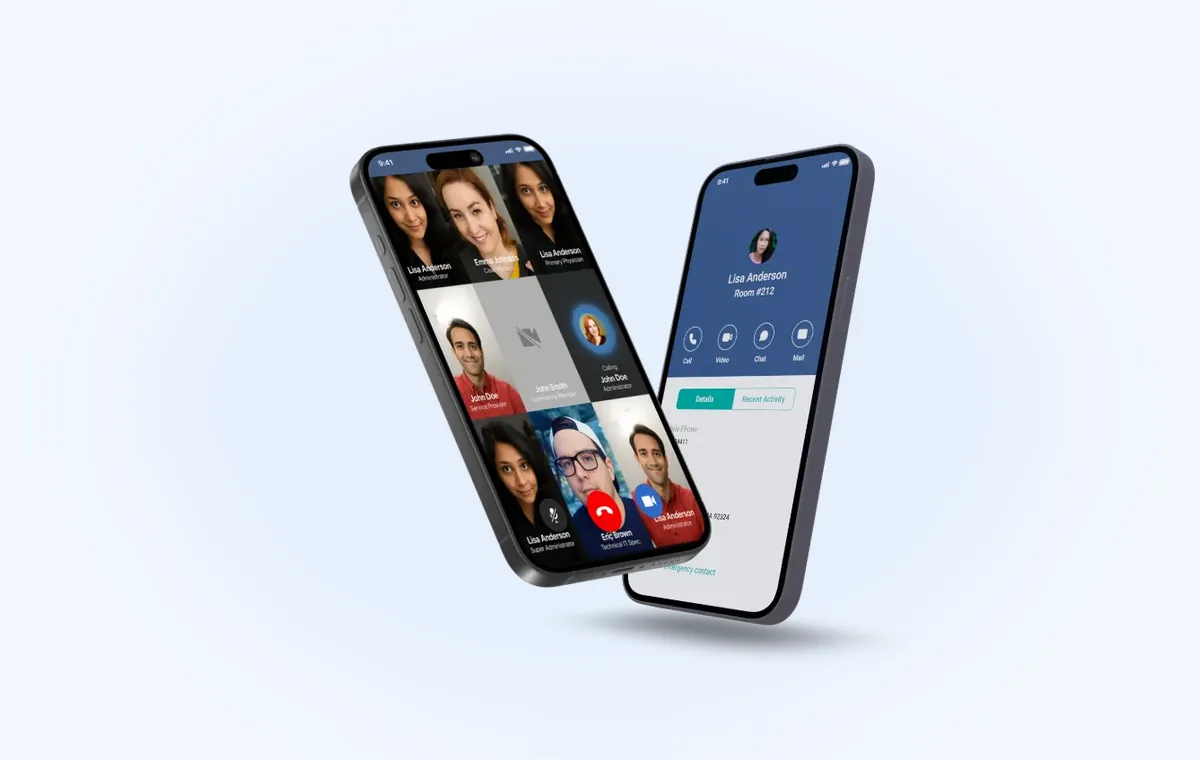
Community Care Communication App
Patients struggled to reach their doctors in real time. We built a HIPAA-compliant communication app with one-to-one and group video calls, instant chat, appointment scheduling and integration with existing systems for e-prescriptions and health records.
Tech used
React Native · Swift · Java · OpenTok · FCM · SQL Server
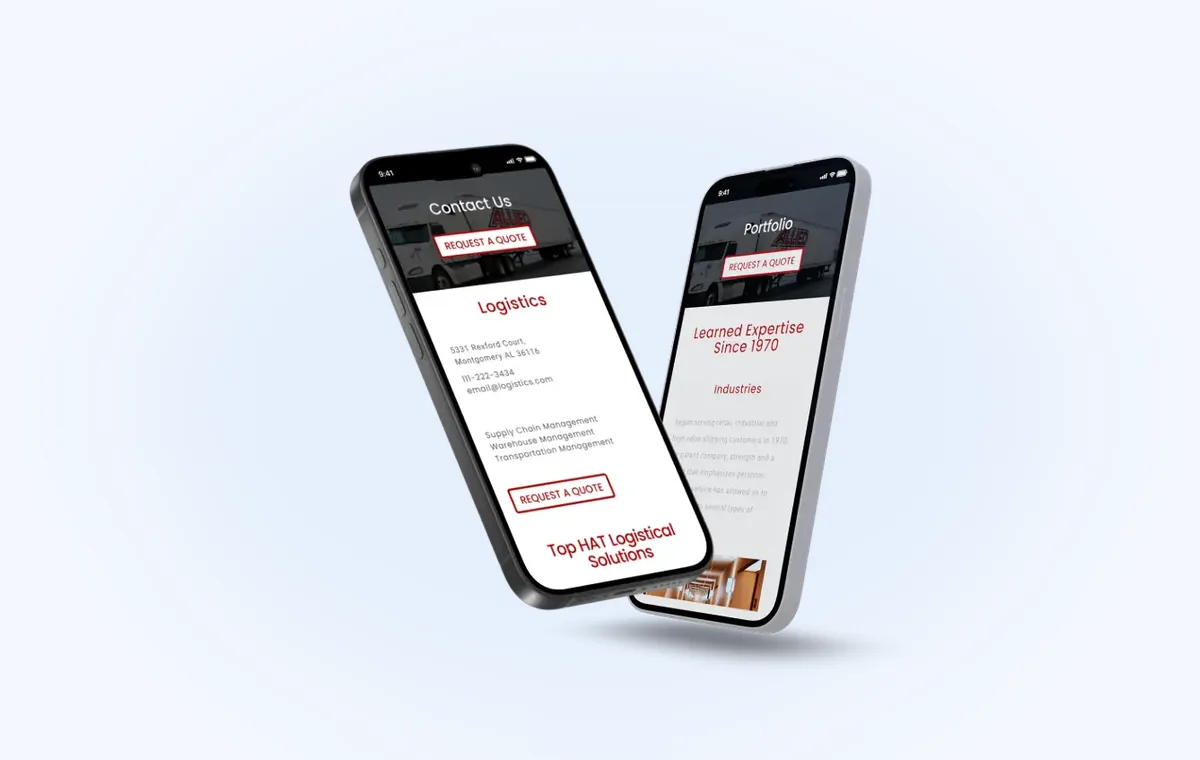
A US logistics company was held back by manual paperwork, limited tracking and failed first-time deliveries. We built a final-mile app with real-time tracking, route optimization, customer engagement tools and automated data handling.
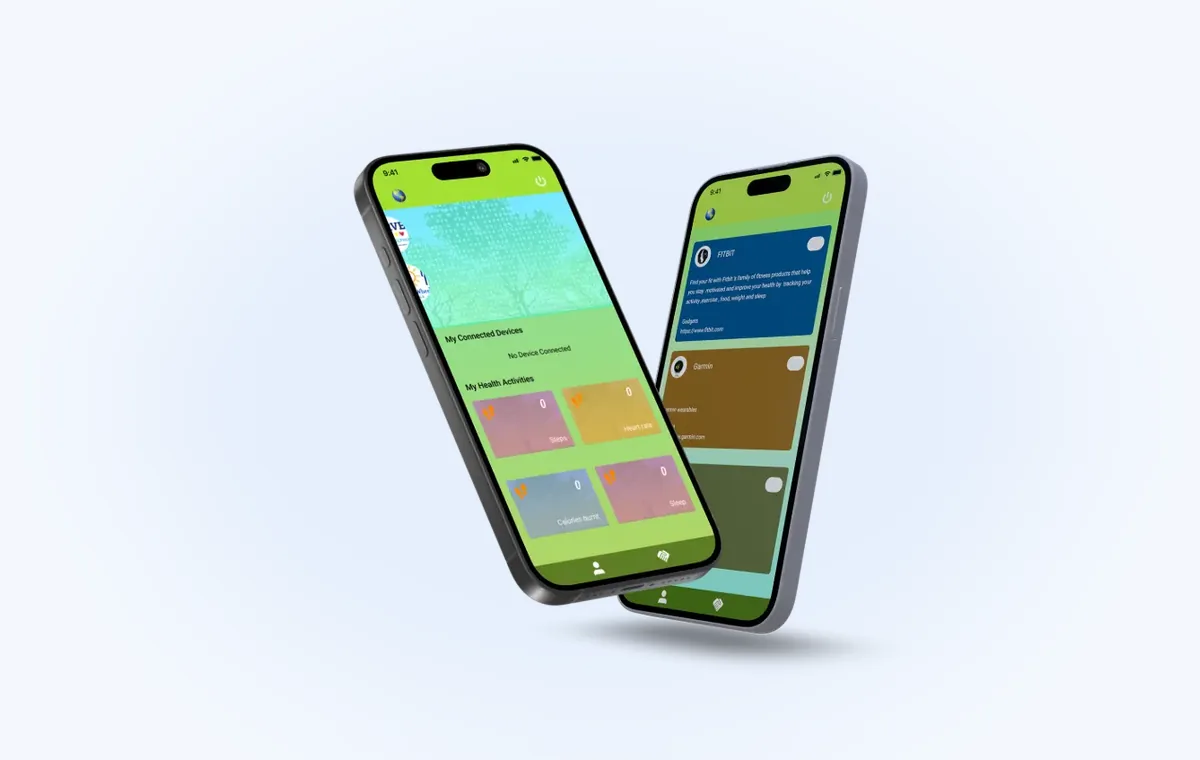
A cross-platform fitness app that tracks activity, calories, sleep and workouts, syncs with wearables, and sends reminders for medication and water intake.
Tech used
React Native · Node.js · AWS · Apple Watch · Garmin · Google Fit
Why companies choose QSS for outsourced application development
Plenty of vendors can write mobile code. Fewer give you a US contract, a named team, offshore-level rates and a clean exit if you ever need one. We do all four.
01
A US company, with a US point of contact
Your contract is with QSS Technosoft Inc. in Bloomington, Minnesota, and your client lead works US business hours.
Ready to outsource mobile app development without the usual risks?
A 30-minute call with our US team. Bring an app idea, a brief or an app that needs a new team, and leave with a recommended model, a team shape and a cost range.
Right-Fit ModelNamed Team PlanClear Cost & Timeline
Answers about outsourcing mobile app development: models, cost, IP, security, timelines and handover.
Outsourced application development means hiring an outside company to design, build, test or maintain your software instead of doing it with your own staff. For mobile apps, that can be the whole app, one platform, or a single part such as design or QA. You set the goals and own the result; the partner supplies the team, the process and the delivery.
Published 2026 rates run from about $20–$50 an hour in India and South Asia to $100–$150 an hour in the US. At QSS, a discovery sprint typically costs $6,000–$15,000, a fixed-scope MVP $15,000–$40,000, and dedicated team members $26–$45 an hour blended. For a full breakdown by app type and feature, see our mobile app development cost guide.
Yes, when the partner's contracts and processes protect you. Before you outsource mobile development, look for an NDA before discovery, IP assigned to you in the contract, code in your own repository, certified security processes and in-house engineers. We work under ISO 27001 and CMMI Level 3 processes, and your app's accounts are created under your organization from day one.
You do, fully. All source code, designs, documentation and data are assigned to you under contract. We work under NDA and hand over complete ownership with no lock-in.
Outsource when you need to start quickly, need several skills at once or expect team size to change by phase. Build in-house when the app is your core product and you already have the leaders to run a team every day. Many companies outsource the build and later move the team in-house through a build-operate-transfer model.
A fixed-scope project suits a defined app or MVP. A dedicated team suits an ongoing roadmap when you have no in-house mobile team. Staff augmentation suits teams that already have mobile leadership and need more engineers. Build-operate-transfer suits companies that want their own team in the end. We help you choose on the first call.
Onshore gives full overlap at the highest rate, nearshore gives most of the working day at a medium rate, and offshore gives the lowest rate with less overlap. A US-led hybrid, which is how QSS works, combines offshore-level rates with a US contract and a US-based client lead working US business hours.
Check relevant case studies, meet the engineers who will do the work, confirm they are employees, get IP ownership and exit terms in writing, ask how they handle security and communication, and look for a written change-request process. Our ten-question checklist on this page covers each point.
With QSS, two weeks. We move from signed agreement to deployed engineering team in under 14 days, including senior architect onboarding, scope finalization and Sprint 1 kickoff.
A focused MVP typically takes 10 to 16 weeks after a 2 to 3 week discovery sprint. Larger apps with many integrations take longer and are released in phases. You get an installable build every two weeks, so you see progress from the first month.
Your main point of contact is our US-based client team, working US business hours. Our India engineering team overlaps with US mornings every working day for stand-ups, reviews and handovers. You also get a sprint demo every two weeks and a monthly steering review.
Poor communication, quality problems found late, unclear IP ownership, weak security, hidden costs and vendor lock-in. Each one can be controlled through the contract and the delivery process: NDA and IP assignment, code in your repository, a build every sprint, priced change requests and a handover plan agreed at the start.
Yes. Outsourced application development does not have to be all or nothing. Clients outsource UI/UX design, one platform such as Android, QA and test automation, backend and APIs, or ongoing maintenance, while keeping the rest in-house. Our engineers join your tools and rituals when they work alongside your team.
Yes. We audit the code, the build pipeline and the store accounts, fix critical issues first, then plan improvements or modernization. If access, keys or documentation are missing, we help you recover them from the previous vendor.
Documentation is kept in your repository as we work, so there is no last-minute scramble. Before handover, your engineers shadow ours on real tickets, demo features back to us and confirm every account and key is in your name. Under a build-operate-transfer agreement, the team itself can move to you.
Fixed price fits a clear, stable scope and gives you a set budget. Time and materials, or a dedicated team, fits an app whose features will change as you learn from users. Many clients use a fixed-price discovery and MVP, then move to a monthly team after launch.
Yes. Senior engineers lead every engagement. We staff each project with experienced architects and mobile specialists, and if a team member isn't the right fit, we replace them quickly.
Most clients keep a smaller team for OS updates, crash fixes, store compliance and new features, on a monthly plan. You can scale the team up for a new release, hand the app to your own team, or both. We monitor stability after launch so issues are fixed before users report them. Button: View All FAQs