How to Choose a Telemedicine Software Development Company for a Healthcare Product
 By Ashwani Rana
QSS Technosoft
October 7, 2026
13 min read
By Ashwani Rana
QSS Technosoft
October 7, 2026
13 min read
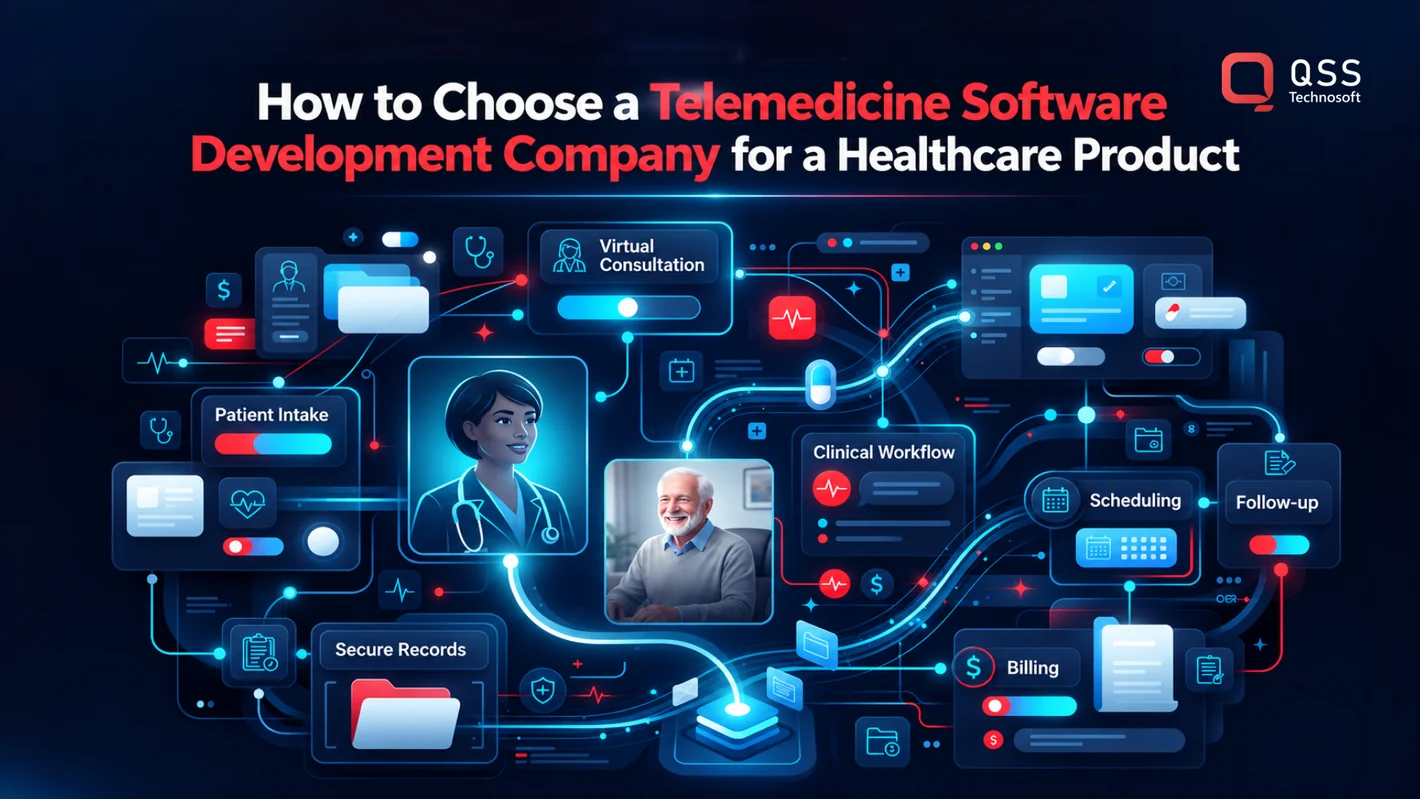
A polished video demo can hide the hardest part of a telemedicine product: making the visit fit into real clinical work. Choosing a telemedicine software development company based on feature lists alone can leave patient intake, provider workflows, EHR connections, and administrative tasks stitched together poorly. The call may work. The product still may not.
It’s reasonable to expect a development partner to deliver more than video. But comparing vendors is difficult when they describe different approaches with the same feature names, and shallow discovery can push integration, privacy, and production issues into later stages. That’s where delays and rework take root.
This guide gives you a practical framework for assessing partners against product, engineering, and operational criteria. You’ll compare custom development with configurable or connected solutions, map the patient, provider, and administrative workflows your product needs to support, and plan a first release with integrations, security, testing, and ongoing operations in view. The goal is a product that works beyond the demo, in the clinical environment it’s built to serve.
Quick Answer
Choose a telemedicine software development company by how it handles the whole care journey, not by its video demo. A strong telehealth software development company maps patient, provider, and administrator workflows (intake, scheduling, consultation, documentation, follow-up, and exceptions like cancellations or failed connections) before it designs the architecture. Compare custom telehealth software development with configurable platforms and connected point solutions on workflow fit, integration control, customization, and long-term ownership. Then ask for evidence: architecture decisions, EHR/EMR and HL7/FHIR integration plans, test scenarios for failure paths, and a post-launch support plan. Treat HIPAA as project-specific engineering and operational work, not a blanket guarantee from any telemedicine app development company or custom healthcare software development company.
What Should a Telemedicine Software Development Company Build Beyond Video Calls?
A telemedicine software development company should shape a product around the full care journey, not just its video connection. For US healthcare providers, hospitals, clinics, and health-tech product teams, that means coordinating patient access, visits, communication, clinical workflows, and follow-up. The product scope should reflect how care is delivered and managed in practice.
- Define the patient, provider, and administrator tasks the product needs to support.
- Map the visit from intake and scheduling through documentation and follow-up.
- Prioritize essential first-release workflows before adding enhancements.
- Plan for exceptions such as incomplete intake, cancellations, and failed connections.
Telemedicine software coordinates remote care workflows, while video-conferencing software primarily connects people for a live conversation.
Which users and workflows belong in the product scope?
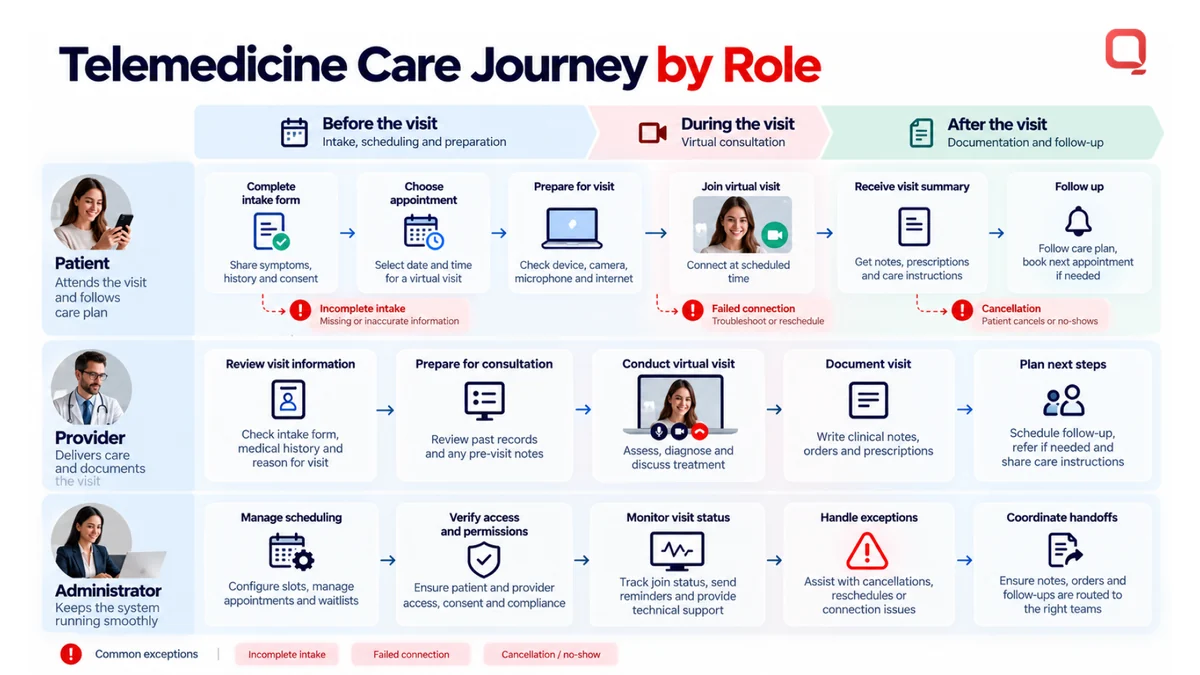
Start by tracing each role’s work before, during, and after a visit. A patient may complete intake, choose an appointment, prepare for the consultation, and receive follow-up messages. A provider may review visit information, conduct the consultation, document it, and coordinate next steps. Administrators manage scheduling, permissions, notifications, and handoffs between teams.
Map the steps and the information each one needs. For example, an appointment change should reach the patient and the staff responsible for the schedule. A completed visit should lead into documentation and the appropriate follow-up process. Use buyer priorities to separate workflows the first release must support from later enhancements. That keeps the initial scope focused without pretending every feature belongs in the first build.
Why is video only one part of virtual care?
A dependable visit relies on connected steps around the call: scheduling, identity, permissions, notifications, and access to relevant records. The broader context of what telehealth encompasses helps explain why remote care involves more than a video encounter. Product teams need to define how each step hands information and responsibility to the next.
Real visits rarely follow a perfect sequence. A patient may cancel, arrive with incomplete intake, or lose connection. The product needs clear handling for these cases, such as communicating a schedule change, preserving work already completed, and making the next step visible to the right user. Otherwise, staff may have to repair the workflow manually.
Video matters. But a video component alone doesn’t manage access, records, or follow-up. Define the workflow around the call, then build the call into it.
How Does a Telemedicine Software Development Company Turn Workflows into a Product?
Workflow discovery informs product architecture by showing who needs to do what, which information each step depends on, and what happens when the expected path breaks. A telemedicine software development company can use that map to design the right system boundaries, integrations, and release scope before implementation locks in assumptions.
Start with patient and provider journeys, operational ownership, visit states, data boundaries, system dependencies, and failure paths. Record which system is the source of truth for key information, such as appointment status or visit documentation. Establish integration ownership during discovery so teams know who is responsible for each connection, its data, and its failure handling.
How should discovery define the first release?
Build a coherent workflow, not a disconnected feature list. A first release might prioritize the path from appointment booking through visit preparation, consultation, documentation, and follow-up. Document who owns each operational handoff, what data moves between steps, and what assumptions still need decisions. Keep unresolved dependencies visible before development begins; otherwise, they tend to reappear as delays or rework.
Use this sequence to turn discovery into delivery:
- Discover workflows. Map patient and provider journeys, administrator tasks, visit states, and exception paths.
- Define architecture. Assign system responsibilities, data boundaries, permissions, and sources of truth.
- Integrate systems. Map required EHR/EMR, scheduling, messaging, and video connections, including ownership and failure handling.
- Build releases. Deliver prioritized workflow slices, then expand based on product needs and operational learning.
- Validate operations. Test whether users and connected systems can complete the workflow under expected and failure conditions.
How do integrations and testing shape the architecture?
Integration planning should identify which systems exchange information, what each connection needs to support, and where errors must surface. HL7 and FHIR are standards that help healthcare systems exchange information. Interface development connects systems and moves data; it is not itself a patient-facing feature. That distinction matters when teams estimate work and define what users will actually see.
Test more than the successful path. Check permissions by role, transitions between visit states, notification delivery, incomplete or repeated data, vendor failures, and mobile behavior. A connection that works in a controlled demonstration may still fail when an external system is unavailable or a user changes devices. The American Medical Association’s telehealth vendor evaluation guidance can also inform operational questions during planning.
For a telemedicine product, architecture and workflow decisions need to hold together from discovery through production. QSS Technosoft can discuss how to frame those decisions around your product’s workflows and integrations through a healthcare software planning discussion.
Custom Telemedicine Software or a Configurable Platform: Which Approach Fits?
There’s no universally best approach. The right choice depends on how closely existing capabilities match your clinical workflows, how much control your product strategy requires, and who will own the system over time. A telemedicine software development company can help compare the trade-offs, but the decision should start with workflow fit, not a preference for building or buying.
| Consideration | Custom development | Configurable platform | Connected point solutions |
|---|---|---|---|
| Workflow fit | Can be shaped around distinctive workflows and product requirements. | Fits workflows that align with available configuration options. | Addresses specific needs, while the wider workflow depends on how components connect. |
| Integration control | The product team directs integration design and priorities. | Control depends on the platform’s available integration options. | Each connection and data handoff needs to be planned across systems. |
| Customization | Product behavior and user experience can be designed for defined needs. | Changes are bounded by configuration capabilities. | Customization may differ between components, creating seams to manage. |
| Operational ownership | The organization owns ongoing product and architecture decisions. | Ownership is shared across the organization’s workflow and the platform’s capabilities. | Teams coordinate responsibility across connected systems and their dependencies. |
| Likely maintenance | Plan for testing, maintenance, and continued product development. | Plan for configuration upkeep and managing platform dependencies. | Plan for connection monitoring, data exchange, and changes across components. |
When does custom telemedicine software make sense?
Custom development is worth considering when a distinctive care model or product requirement cannot be met through configuration. It gives the product team room to direct architecture, integrations, user experience, and release priorities as one connected system. That control comes with responsibility: the organization must plan for testing, maintenance, and ongoing product decisions. Custom means ownership, not a one-time build.
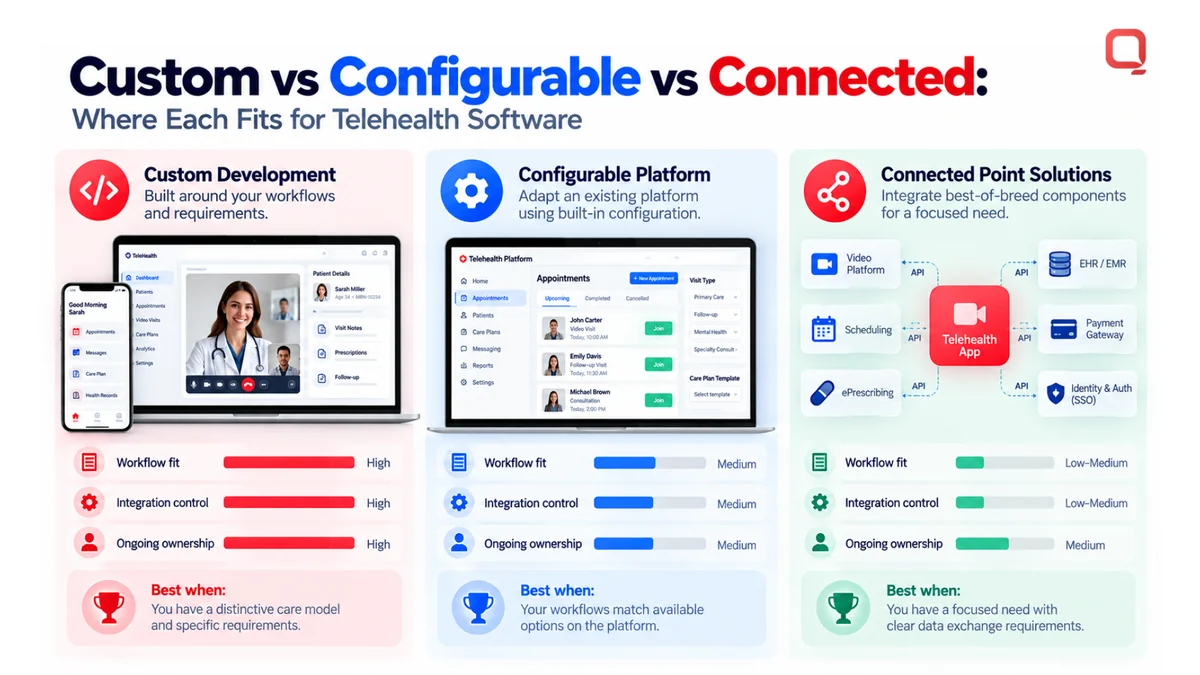
When can a configurable or connected solution be more practical?
Configuration can be a sensible fit when established workflows align with available capabilities and the product’s constraints. A connected point solution may also address a focused need, provided it can exchange the required data with the wider product. Before choosing either route, map dependencies, data boundaries, workflow gaps, and operational ownership.
Look for the seams. Who handles a failed data exchange? Where does a user go when one system can’t complete its part of the workflow? If those responsibilities are unclear, a collection of capable components can still create a fragmented care experience. Choose the approach that supports the workflow and makes its trade-offs manageable over time.
How Can Buyers Evaluate a Telemedicine Software Development Company?
Assess delivery evidence and engineering decisions, not demonstrations alone. A polished demo shows a product on its best path. To evaluate a telemedicine software development company, look for how its team discovers clinical workflows, handles system dependencies, tests failure paths, and plans for ownership after launch.
Use this checklist to focus discussions on how the product will be built and operated:
- Clinical workflow discovery: Can the team map patient, provider, and administrator tasks, including exceptions and operational handoffs?
- Architecture: Can it explain system boundaries, data flows, user roles, and how decisions support the product’s requirements?
- Integrations: Are EHR/EMR and other system connections, dependencies, and responsibilities clearly defined?
- Quality assurance: Does the test plan cover permissions, workflow state changes, failed dependencies, and notifications?
- Post-launch ownership: Are deployment, monitoring, maintenance, and responsibility for ongoing product decisions part of the delivery plan?
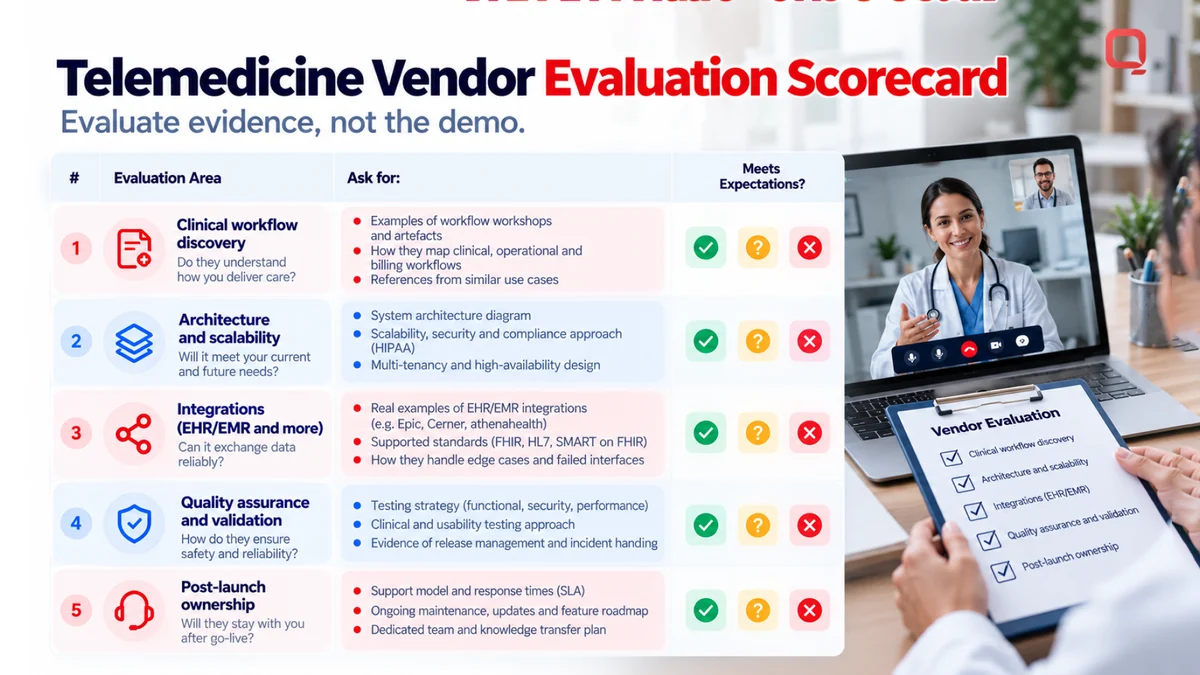
Ask the team to walk through what happens when a patient’s intake is incomplete, an external system is unavailable, or requirements change after development starts. Strong answers explain the decision path, the affected users, and how the team will identify and address the issue. Vague assurances don’t tell you how the product will behave under pressure.
What technical evidence should a buyer request?
Request a review of architecture decisions, data boundaries, API plans, and integration responsibilities. Then examine representative test scenarios, including role-based permissions, visit-state changes, failed connections, and notifications that don’t arrive. Ask how releases move through deployment, how issues are monitored, and who maintains the product after launch. The aim isn’t to collect documents for their own sake. It’s to see whether the team can connect design choices to real operating conditions.
Production readiness means tested workflows, verified integrations, practical monitoring, and clear ownership after launch.
How can buyers assess healthcare and security experience?
Discuss how the team approaches HIPAA requirements as project-specific engineering and operational considerations, not as a blanket compliance guarantee. Look for experience with HL7/FHIR, EHR/EMR integration, and the workflow constraints that shape how healthcare information moves between users and systems. Ask how security controls, access decisions, and supporting documentation are incorporated into design and delivery.
Use the answers to compare substance, not presentation quality. To discuss how these evaluation criteria apply to your telemedicine product, talk with QSS Technosoft.
How Does QSS Technosoft Approach Telemedicine Software Development?
QSS Technosoft provides telemedicine software development for healthcare providers, hospitals, clinics, and health-tech teams. The work starts with the product’s intended users and care workflows, then translates those requirements into a clear scope for development. This keeps the discussion focused on what the product needs to support, rather than treating a video call or feature list as the whole solution.
For a product team, useful early decisions include which users the first release serves, how patients move from intake to follow-up, which provider tasks belong in the product, and how administrative work fits around the visit. Mapping those journeys helps expose dependencies and unanswered questions before they become implementation issues. It also gives the team a practical basis for prioritizing features and evaluating custom, configurable, or connected approaches.
How do healthcare engineering capabilities support virtual care?
A telemedicine product may need to work alongside EHR/EMR systems and other healthcare software. Define which information should move between systems, where the source of truth sits, and what users should see when a connection fails. These requirements shape the product’s boundaries and help teams plan integrations as part of the workflow, rather than as an afterthought.
Mobile app development can support patient-facing tasks such as preparing for a visit, while provider workflows may call for different screens, permissions, and information. Those experiences shouldn’t be treated as one interface with different labels. Product requirements should determine what each role needs to see and do.
HIPAA requirements should be considered as part of the project’s design and operations, including access decisions, security expectations, and supporting documentation. Treat these as project requirements to define and address, not as a blanket guarantee of regulatory compliance. Responsibilities depend on the project and the organizations involved.
What should a first project conversation establish?
Start with the decisions that shape scope. Identify target users, the first-release workflow, existing systems, and integration boundaries. Then discuss architecture, security expectations, quality assurance, deployment, and who will own maintenance and product decisions after launch. A useful conversation makes assumptions visible and distinguishes essential release needs from later priorities.
Bring the workflow, the constraints, and the open questions. QSS can use that context to frame a telemedicine product around its users and requirements. Discuss your telemedicine software project.
Build a Telemedicine Product Ready for Real Care
The right telemedicine software development company helps turn clinical workflows into a product that works across patient access, provider tasks, connected systems, and follow-up. Choose an approach based on your actual requirements, then assess how the team handles integrations, testing, security, and ownership after launch. A convincing demo is only a starting point. The engineering decisions behind it matter just as much.
QSS Technosoft provides telemedicine software development for healthcare providers and health-tech teams. Its work can begin with a clear view of the users, first-release workflow, and systems the product needs to connect. That gives product teams a basis for planning scope around virtual-care workflows and the requirements that surround them.
Start with the users, the first-release workflow, and the systems your product needs to connect. Make the hard questions visible early, and build from clear priorities rather than a feature list. Discuss your telemedicine software project with QSS Technosoft and take the next step toward a product designed around real care delivery.
Map Your First-Release Telemedicine Workflow With Our Engineers
Bring your target users, care workflow, and the systems your product must connect. QSS Technosoft is a software development company in USA, based in Bloomington, Minnesota, and a custom healthcare software development company offering custom telehealth software development, healthcare app development services, EHR/EMR and HL7/FHIR integration, and post-launch support for providers and health-tech teams.
Discuss your telemedicine software project →