Cloud Computing - Delivery and Deployment Models
 By Rashmi KantiCloud Engineering TeamJune 6, 20199 min read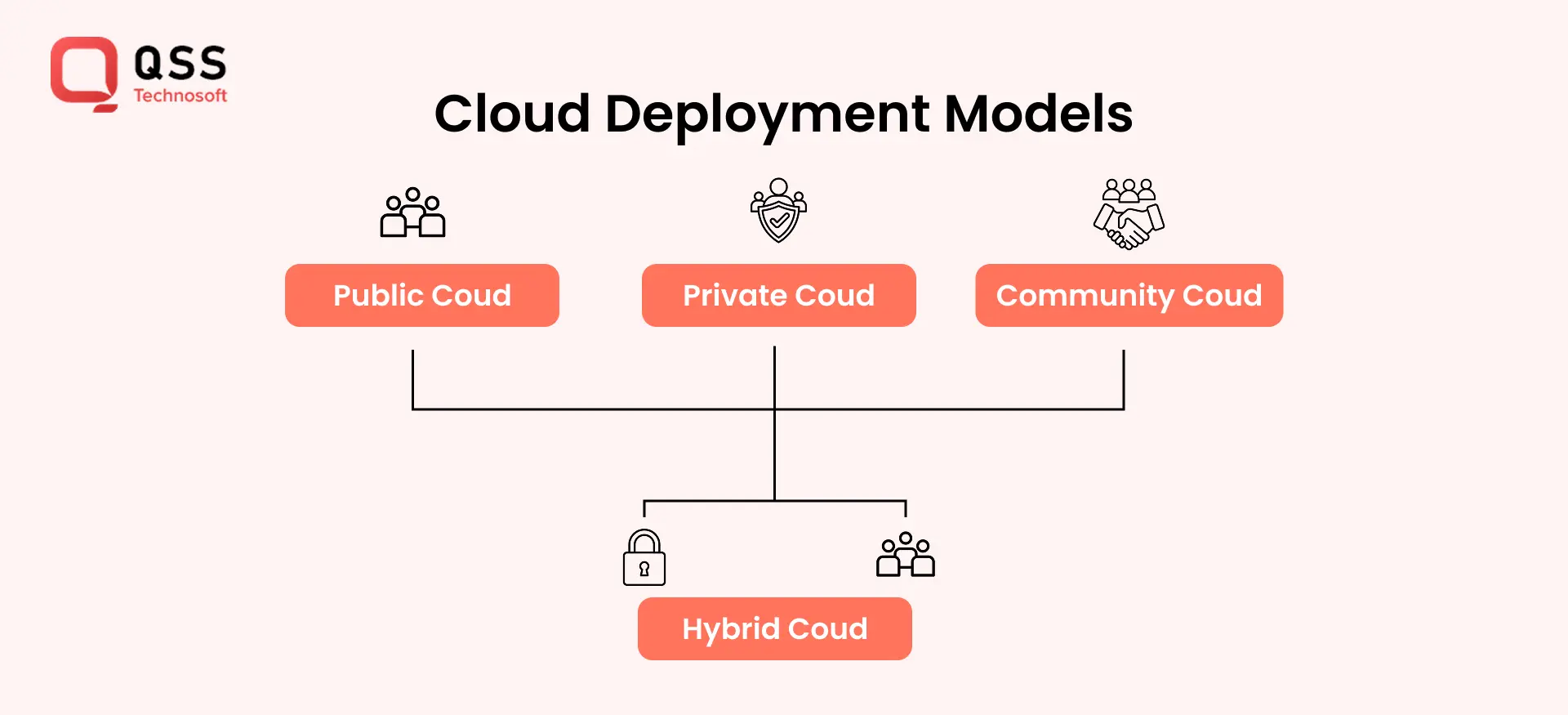
Quick Overview of the Blog
From a business perspective, cloud computing has changed how companies store their data and deploy applications as well as scale their operations. Rather than making significant investments in a physical infrastructure and a data center, an organization today can use a cloud environment to leverage computing resources, storage, and software - all of which are provided as a service over the internet.
This blog will help you to understand the various Cloud Computing delivery and deployment models available, and how businesses can determine which model best suits their operational needs, security requirements, and scalability goals.
In this blog you will discover:
- What cloud computing is and how it has changed modern business
- The trend of companies moving from traditional infrastructure to cloud-based environments
-
The three primary service models offered with cloud computing:
- SaaS (software as a service) - ready to use applications available via the web
- PaaS (platform as a service)- a development platform for building and deploying applications
- IaaS (infrastructure as a service) - on demand virtualized computing resources -
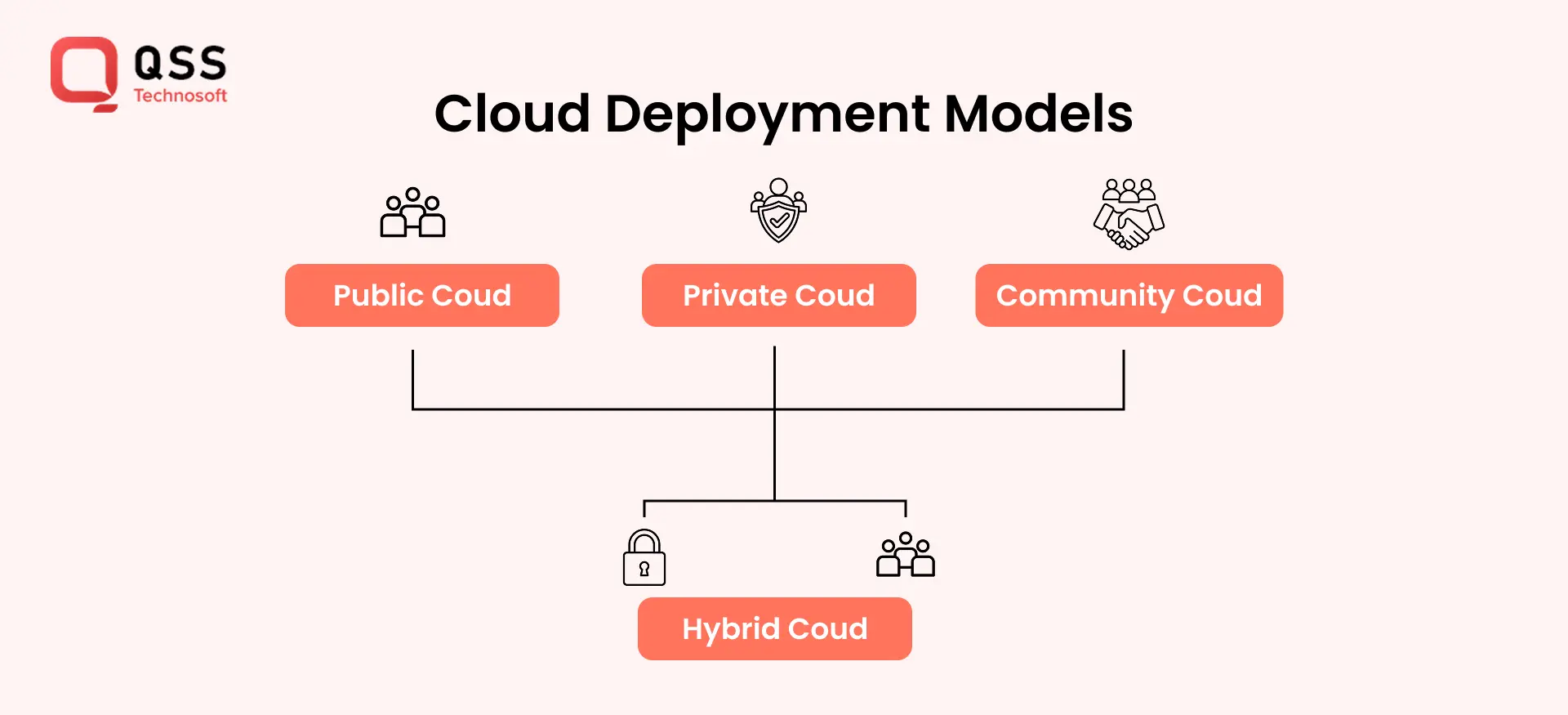
The four infrastructure deployment models used with cloud computing:
- Public Cloud
- Private Cloud
- Community Cloud
- Hybrid Cloud - The key advantages of adopting cloud computing: cost efficiency, scalability, accessibility, and flexibility.
This article provides readers an overall perspective regarding what each type of cloud model does, how they differ, and a basic level on which to help businesses determine which cloud model will provide them with opportunities for growth, efficiency, and digital transformation. While this blog is geared toward newcomers to cloud migrations, it will also assist companies actively making decisions regarding their cloud strategies.
Abstract - Cloud Computing
This article is about Cloud Computing and its several models. This article will give you a general understanding of the cloud environment and state its benefits in today’s tech world, where organizations compete with each other. As it is totally a business model so it has given great advantages to small-scale industries to efficiently expand their business.
Introduction to Cloud Computing
Cloud Computing can be defined as a pool of resources that is available to anyone as a service over the Internet. This new way of computing has totally changed the organization’s way of managing its business. Cloud computing is more than a service in a remote data canter. It provides several ways that can help organizations quickly and efficiently to add and subtract resources almost in real-time.
Why Cloud Computing?
In the last few decades the amount of data has increased exponentially and because of that data storage as well as its management has become primary concerns of the organization. These organizations spend a lot of money on maintenance of their data centers and servers other than focusing on their core business. Cloud Computing provides a very efficient mechanism for these organizations to maintain their data centers and servers up to date at a very optimum cost.
As Cloud Computing is totally a business model, it has given the liberty to many large and small scale businesses to grow at an exponential rate with limited resources only.
Cloud Computing also offered a flexible environment to these organizations to access any piece of technology, which was traditionally unavailable to them.
The services exposed by cloud provider companies like AWS to host paramount solutions developed by a cloud-based application development company with thoughtful and proven architecture to rightly map the solution hosted against a cloud service offered such as PAAS, DAAS or IAAS.
Cloud Computing Models

1. Service Models
There are three services that generally all cloud providers offer, which are as follows:-
Software as a Service (SAAS)
“SAAS” stands for software-as-a-service. This is just a software distribution model in which the software is used by the end users, and is hosted by the cloud providers over the centralized cloud server. There are lots of software that are provided to the end users in this fashion such as Gmail, Games, CRM, etc.
Platform as a Service (PAAS)
“PAAS” stands for platform-as-a-service. The name itself reflects the idea that this model is providing some platforms. This model is specifically used by developers to create, deploy and manage the application. There are lots of cloud vendors that provide these services such as Google Apps Engine(GAE), Windows Azure, SalesForce.com are examples of PAAS.
Infrastructure as a Service (IAAS)
“IAAS” stands for Infrastructure-as-service. As virtualization is one of the important parts of cloud computing, so based on that this model provides virtualized computing resources to the end users via the Internet.
2. Deployment Models
Based on the deployment Model, the cloud can be divided into the following subcategories, which are as follows:-

1. Public Cloud
As the name suggests, this type of cloud is generally hosted for the client/ users who can access the cloud services very easily. The public cloud is better suited for commercial purposes for load management. This type of cloud is economical due to the very low cost of its services. IBM, Google, Amazon, Microsoft, etc. are examples of companies offering public cloud installations.
2. Private Cloud
As the name suggests this type of cloud is generally hosted on the enterprise’s premises. The idea of this type of cloud came into the picture because many organizations are having concerns regarding the security issues of the public cloud. So they came up with the idea of a private cloud, which is under the control of only specific executives. This type of cloud is also termed corporate or internal.
3. Community Cloud
This type of cloud is very much similar to the private cloud, unlike private cloud this type of cloud is used and maintained by a group of organization that requires similar types of services.
Since organizations have consistent security, privacy, and performance requirements, this multi-tenant data center architecture helps organizations achieve their specific goals. A community model is therefore particularly suitable for organizations working on joint projects. In this case, a central cloud facilitates the development, management, and implementation of the project. In addition, all users share the costs.
4. Hybrid Cloud
This type of cloud is simply the combination of two or more cloud servers, i.e. private, public, or community combined in a single architecture, but which remains a single individual unit. This configuration is commonly used by large companies. Important data is generally preferred in private cloud and public domain support services, such as search, email, blogs, CRM, etc.
Benefits of Cloud Computing
1. Greater Accessibility
Cloud-based software is easily accessible through most browsers and mobile devices.
2. Lower Cost, Greater Freedom for Developers
A cloud-based architecture relieves a significant workload from an organization’s IT teams.
3. Scalability and Flexibility
Cloud Computing is ideal for organizations with growing or fluctuating bandwidth requirements. Organizations can easily increase their cloud capacity by simply changing the usage plan. If an organization wants to reduce its business, the organization’s cloud provider can reduce it.
An established cloud application development services company watchfully recommends its customers choose the right cloud platform such as public, private, community, or hybrid to best fit their current and growing needs.
Lets Talk About :How QSS Technosoft Built Scalable Cloud Platforms for Fintech & Sports Innovation
QSS Technosoft is focused on creating scalable cloud solutions for industries such as fintech and sports through the design and implementation of AWS based platforms that are able to run massive amounts of live data, have millions of users interacting at the same time, and reliably handle transactions in real time during an event that relies on having uninterrupted power sources so the platform is reliable to their customers.
At QSS Technosoft, we design and deploy cloud-native applications that handle real-time data, high concurrency, and mission-critical performance. Below are two impactful case studies that demonstrate how our AWS-powered architectures deliver measurable business outcomes across fintech and sports domains.
1. Cryptocurrency Trading Platform - Secure Real-Time Crypto Exchange
QSS Technosoft has built the largest cryptocurrency trading/social app in the U.S. that provides the ability to trade, buy, and exchange with major cryptocurrencies such as Bitcoin, Ethereum, and Litecoin. The app was built on top of a very robust AWS cloud infrastructure where the app is able to bring in real-time pricing from exchanges around the world, and also allows users to maintain their wallets with their private keys and escrow-back all of their trades through transaction validations.
Measurable Business Results:
- 99.9% uptime during peak trading activity is a result of using AWS managed infrastructure
- Sub-second latency for trade execution allowing users to trade faster than a heartbeat means users are more likely to complete their trades quickly.
- The app has had zero major security breaches due to using an encrypted wallet and escrow framework to ensure that any transaction that occurs on the app is completely secure.
With the app's scalable architecture, up to thousands of users can trade simultaneously. This project proves that cloud-based fintech platforms can provide combined security, scalability, and real-time performance while maintaining the trust of their users.
2. Champions Tour – Cloud-Based Tournament Management App
The Champions Tour Management Application created by QSS Technosoft is a Unified Sports Tournament Management Solution to help modernize the Bass Fishing Tournaments in the United States. The application allows users to receive live score updates, track current standings, access a live dashboard of scores and receive real-time notifications throughout the entire tournament lifecycle.
Measurable Business Results:
- 99.9% availability of system when live tournaments were running using AWS serverless technology
- Achieving 70% quicker processing of scores and real-time updates via AWS Lambda and DynamoDB
- Successfully supported 5,000+ concurrent users during peak tournament broadcasts
- 45% increase in operational efficiency (Via Automated Scheduling and Tournament Standings Management)
This solution demonstrates the ability of serverless architectures to power live data-driven sports experiences at massive scales.
Also, these case study serves as proof that QSS Technosoft continues to build high performance, secure, and scalable cloud applications throughout different industries.
About Author
Suraj Bhushan Pandey: Software Engineer at QSS Technosoft - A Full Stack Developer, works in react, express and graphql. Always interested to learn the latest trends and technologies and taking challenging tasks.
About QSS Technosoft
QSS Technosoft Inc. has a proven track executing web and mobile applications for its esteemed customers. The company has a core competency in developing and delivering enterprise level applications using Cloud Computing Services