Book a Discovery Call

CLOUD POS SOFTWARE DEVELOPMENT

Cloud Based POS System Development for Restaurants, Retail and POS Products

QSS Technosoft builds custom cloud based POS systems that fit how you sell: offline-first terminals, kitchen screens, online ordering, delivery integrations, loyalty and multi-location reporting, for restaurant groups, retailers, franchises and software companies building a POS of their own.

16+ years shipping software 250+ in-house engineers US-headquartered in Bloomington, MN

Restaurant · Retail · Hospitality
Custom and white-label POS
400+ Projects delivered
Since 2010
CMMI Level 3
ISO 27001 · ISO 9001
Offline-first
Designed to keep selling when the internet drops

TRUSTED PARTNERS

Trusted by enterprises, scale-ups and software companies

An off-the-shelf POS works until your menu, your locations or your business model outgrow it. That is where we come in: we build, extend and integrate cloud based POS systems for operators and product companies whose needs a standard subscription cannot meet.

botPLAN Digital Marketing logo
HAL logo
Matrix logo
Eldermark logo
ShiftPixy logo
Sport Clips Haircuts logo
Palo Alto Networks logo
CNH Industrial logo
Mother Dairy logo
TSI logo
botPLAN Digital Marketing logo
HAL logo
Matrix logo
Eldermark logo
ShiftPixy logo
Sport Clips Haircuts logo
Palo Alto Networks logo
CNH Industrial logo
Mother Dairy logo
TSI logo

Built Around How You Sell

400+Projects delivered to production
250+In-house engineers
95%Client repeat-business rate
4.9/5Client rating on Clutch

WHERE POS PROJECTS GET STUCK

What you're up against, and what changes when you work with us

Most POS problems are not about the checkout screen. They come from the systems around it: kitchens, delivery apps, inventory, payments, head-office reporting and the internet connection in the building. Here is where we see operators and product teams get stuck, and how we get them unstuck.

Problem

Your POS makes staff work around it

How we solve it

We map how orders really flow through your front of house, kitchen and back office, then build the screens, modifiers, approvals and rules around that, instead of forcing your process into a generic menu.

Fewer workarounds, faster service and shorter training.

Problem

When the internet drops, sales stop

How we solve it

Offline-first terminals that store orders locally, keep the kitchen running over the local network, and sync to the cloud when the connection returns, with payment fallback rules agreed with your processor.

Service continues through an outage.

Problem

Delivery tablets crowd the counter

How we solve it

Orders from DoorDash, Uber Eats, Grubhub, your website and your app flow into one queue on the POS and kitchen display, with menus and item availability pushed back out from one place.

One order queue and one menu to maintain.

Problem

Head office waits days for numbers

How we solve it

A cloud back office with real-time sales, labor, inventory and item reports across every location, plus exports to your accounting system, ERP and data warehouse.

Same-day decisions across all locations.

Problem

Legacy MICROS POS systems are aging

How we solve it

A migration plan for older MICROS-era terminals: move to Oracle Simphony, to another cloud POS or to a custom system, with menus, reports and integrations carried over and a phased rollout by site.

A planned move instead of an emergency.

Problem

Fees grow with every location you open

How we solve it

A cost model that compares per-location subscriptions, add-on fees and card processing against a custom build, and a processor-neutral design if you want to negotiate your own payment rates.

A decision based on your numbers, not a sales pitch.

Facing similar challenges? Bring your current POS setup and your growth plans, and we’ll show you whether to build, extend or buy.Talk to Our US Team

OUR SERVICES

Cloud Based POS System Development Services

Eight services, one team, from the first workflow review to a POS your team or your customers run every day. Most programs combine several of them.

Custom Cloud POS Development

A cloud based POS system built around your menu, your service model and your locations, on tablets, terminals, kiosks or phones, with a cloud back office your managers can reach from anywhere.

Order screensModifiers, combos, courses, split checks and holds.
DevicesiPad, Android, Windows terminals, handhelds and kiosks.
Back officeMenus, prices, taxes, staff roles and reports in one place.
Multi-locationCentral control with per-site overrides.
Custom software development

RESTAURANT PLATFORM

A cloud based restaurant management system, not just a register

Is your restaurant POS cloud based but still cut off from the kitchen, the delivery tablets and head office? In a restaurant, the POS is the hub, but the work happens around it. A cloud based restaurant management system connects ordering, the kitchen, the floor, stock, staff and guests, so every location runs from the same data. We build the modules you need and integrate the ones you already have.

1. POS and order managementDine-in, takeout, curbside and delivery orders, with modifiers, combos, coursing, split checks and tips.
2. Online orderingBranded web and app ordering, QR order-at-table and self-service kiosks, all priced from the same menu.
3. Kitchen display system (KDS)Orders routed to the right station, with prep timers, item counts, expo screens and ready alerts.
4. Table and reservation managementFloor plans, waitlists, reservations, table status and server sections.
5. Inventory and recipe costingIngredient-level stock, recipes, waste logs, supplier orders and plate-level food cost.
6. Staff scheduling and laborSchedules, time clock, roles and permissions, tip pooling and labor-to-sales reporting.
7. Loyalty and guest profilesPoints, offers, gift cards and order history tied to one guest record.
8. Delivery-platform integrationsDoorDash, Uber Eats and Grubhub orders in one queue, with menus and availability synced back.
9. Payments and PCI DSSCard, tap, mobile wallet and pay-at-table through tokenized, processor-certified terminals, so card data stays out of your system.
10. Offline mode and multi-location reportingTerminals that keep selling during an outage, and a head-office view of sales, labor and stock across every site.


Whether you need one module or all ten, cloud based POS systems for restaurants work best when they share one menu, one guest record and one set of reports. That is the system we design.

BUILD OR BUY

Do you need a custom cloud POS? An honest answer

Many businesses do not need a custom POS. Off-the-shelf cloud POS products are good, quick to set up and come with hardware and support. Here is how we advise clients, including when we tell them to buy.

An off-the-shelf cloud POS is usually enough when

Few locationsYou run one to a handful of sites with a standard menu and service model.
Standard workflowsThe product's built-in features cover how you take orders, pay and report.
No in-house tech teamYou want hardware, payments and support from one provider.
Speed matters mostYou need to open in weeks, and a monthly subscription fits your budget.

A custom or white-label cloud POS pays off when

POS is your productYou are a software company, payment provider or franchisor selling a POS under your own brand.
Your workflow is your edgeYour service model, menu logic or pricing rules are unusual, and the workarounds cost you every shift.
Integrations drive the businessYour POS must talk to an ERP, a loyalty platform, a franchise system or a data warehouse in ways a standard product does not allow.
Fees scale with growthPer-location subscriptions, per-device add-ons and fixed processing rates are a large and growing line item across many sites.
You want controlYou need to own your data, choose your payment processor and decide your own release schedule.
The middle path: extend what you have. Often the best answer is neither. Keep your current POS and build what it lacks: a loyalty app, a cross-location data warehouse, a delivery-order hub or a custom kitchen workflow, connected through its APIs.

What buying costs, so you can compare

Off-the-shelf cloud POS subscriptions for restaurants run from free entry plans to about $400 per location per month, with kitchen screens and kiosks often billed per device on top, and card processing typically around 2.3% to 2.9% plus 10 to 30 cents per in-person transaction. For a few sites, that is hard to beat. For a group with 25 locations on a $150-per-location plan, software alone is about $45,000 a year before add-ons and processing. That is the point where a custom build, or a custom layer around a standard POS, is worth costing.

MICROS & SIMPHONY

Moving on from legacy MICROS POS systems

Many restaurants, hotels, stadiums and campuses still run MICROS-era terminals, such as RES 3700, installed years ago. Oracle bought MICROS Systems in 2014, and its cloud POS for restaurants is now Oracle Simphony. If your MICROS POS system is due for replacement, you have three realistic options, and we can help with any of them.

What has changed for older MICROS sites

Reporting deadline

Oracle has announced that from July 1, 2027, the module that sends RES 3700 data to its Reporting and Analytics cloud will be retired, so those reports stop receiving new data.

Menu maintenance

Oracle retired Enterprise Maintenance Services (EMS), a legacy RES 3700 tool, on July 1, 2026. Sites that used it now maintain menus, prices and taxes inside RES 3700 directly.

Operating systems

Microsoft ended support for Windows 10 on October 14, 2025, and many older POS workstations run it, which adds security and PCI DSS risk.

Your three options

Option 1: Move to Oracle Simphony

You buy Simphony through Oracle or its authorized resellers. We build what sits around it: online ordering, loyalty, reporting, labor and data-warehouse integrations, through the APIs Oracle makes available.

Option 2: Move to another cloud POS

We plan the migration, move menus, items, employees and sales history, rebuild your reports and integrations, and roll out site by site.

Option 3: Build a custom cloud POS

For groups whose needs no packaged product meets. We design it, migrate your data and run the old and new systems side by side during the pilot.

We are independent: QSS Technosoft is not an Oracle partner or reseller, and we do not sell POS licenses or hardware. That lets us recommend the option that fits, including staying on what you have for now.

Oracle, MICROS and Simphony are trademarks of Oracle and/or its affiliates. QSS Technosoft is not affiliated with, endorsed by or a partner of Oracle.

WHY QSS

Why businesses choose QSS to build their cloud based POS system

Plenty of firms can build a checkout screen. Fewer can make it work offline, connect it to delivery platforms, payments and your ERP, roll it out across many locations and support it on a Saturday night. We are an engineering firm of 250+ that does all of that.

01

Independent advice

We do not resell POS products, hardware or payment processing, so our build, buy or extend advice is based on your numbers.

See the build vs buy guide
02

Offline-first engineering

Local order storage, local kitchen routing and conflict-safe sync are designed in from the first sprint, not patched in after the first outage.

See how it works
03

Integration is our core skill

16+ years of connecting business systems, from ERPs and CRMs to payment and logistics platforms, means your POS lands inside your operations, not beside them.

Learn more about POS integration
05

Product thinking for SaaS POS

For software companies, we build the multi-tenant platform, onboarding, billing and partner APIs that turn a POS into a product you can sell.

See white-label POS development
06

You own everything

Code, designs, data models and runbooks are yours, with no license fees to QSS. 95% of our clients return for a second engagement, and we are rated 4.9/5 on Clutch.

Learn more about engagement models

ARCHITECTURE

What sits behind a cloud POS that keeps working on a busy night

A cloud POS that only works with a perfect connection is a liability. We engineer five layers so the store keeps trading when the internet does not.

1. Devices and peripheralsTerminals, kiosks, handhelds, printers, cash drawers, scanners, scales and kitchen screens.
2. Local store layerAn on-device or in-store data store that takes orders, prints tickets and routes the kitchen over the local network during an outage.
3. Sync engineQueued, conflict-safe sync of orders, menus and stock to the cloud when the connection returns.
4. Cloud platformMenus, pricing, users, locations, reporting and integrations, scaled on AWS, Azure or Google Cloud.
5. Integration and data layerAPIs and webhooks for delivery platforms, payments, accounting, ERP and your data warehouse.

Offline card payments depend on the payment processor and terminal, for example store-and-forward limits, so we agree them with your processor during design.

PAYMENTS & SECURITY

Payments and PCI DSS, designed into the build

The safest card data is card data your POS never sees. We design payments so card details are captured by certified terminals and replaced with tokens, which keeps your software out of most PCI DSS scope.

PCI DSS v4.0.1EMVP2PETokenizationOWASP Top 10ISO 27001

Card data goes from the certified terminal straight to the processor; the POS receives only the result and a token.

Integrations with the processor and terminals you choose, so you can negotiate rates.

Contactless cards, mobile wallets, QR payments and handheld pay-at-table.

Manager approvals for voids, refunds and discounts, with every action logged.

Encryption in transit and at rest, network segmentation and least-privilege access.

Locked-down terminals, remote updates and remote wipe for lost devices.

Alerts for unusual voids, refunds and discounts by employee and location.

Logs, data-flow diagrams and documentation for your PCI DSS assessment.

Our cloud POS development process

Discover & decide
We review your locations, service model, current POS, integrations and costs, and give you a build, buy or extend recommendation with a cost range.
Workflow design
We map every order path with your managers and staff, then prototype the screens that matter most: ordering, payment, kitchen and close-out.
Architecture & integrations
We choose devices, the offline approach, payment partners and integration targets, and confirm access to each third-party API.
Build in sprints
A working release every two to three weeks, tested on real hardware with your menu and your data.
Pilot site
We go live in one location, with the team on site or on call, and fix what the first busy shifts reveal.
Roll out & support
Site-by-site rollout with training, data migration and monitoring, then ongoing support or hand-over to your team.

INDUSTRIES

Cloud POS software for your business

A bar, a grocery chain and a stadium all need a POS, but not the same one. We build for the way your business actually sells.

RESTAURANTS & FOOD SERVICE

Front of house to kitchen, one system

Cloud based restaurant POS for quick service, fast casual and full service groups, with kitchen screens, online ordering, delivery integrations and recipe costing.

Kitchen DisplayDelivery SyncRecipe Costing
Learn More

More Businesses We Serve

CafésOrder-ahead, loyalty and fast counter service.
Ghost kitchensMany brands, one kitchen, one order queue.
Salons & spasAppointments, services and retail in one checkout.
Healthcare retailClinic and pharmacy retail counters.
CannabisCompliance tracking and ID checks, where legal.
Pop-upsMobile POS for markets and events.

SUCCESS STORIES

Related work: payments, offline apps and delivery platforms

We have not yet published a POS case study, so here are three shipped projects that use the same building blocks a cloud POS needs: merchant payments, offline-first field apps and real-time delivery operations. Each links to the full case study.

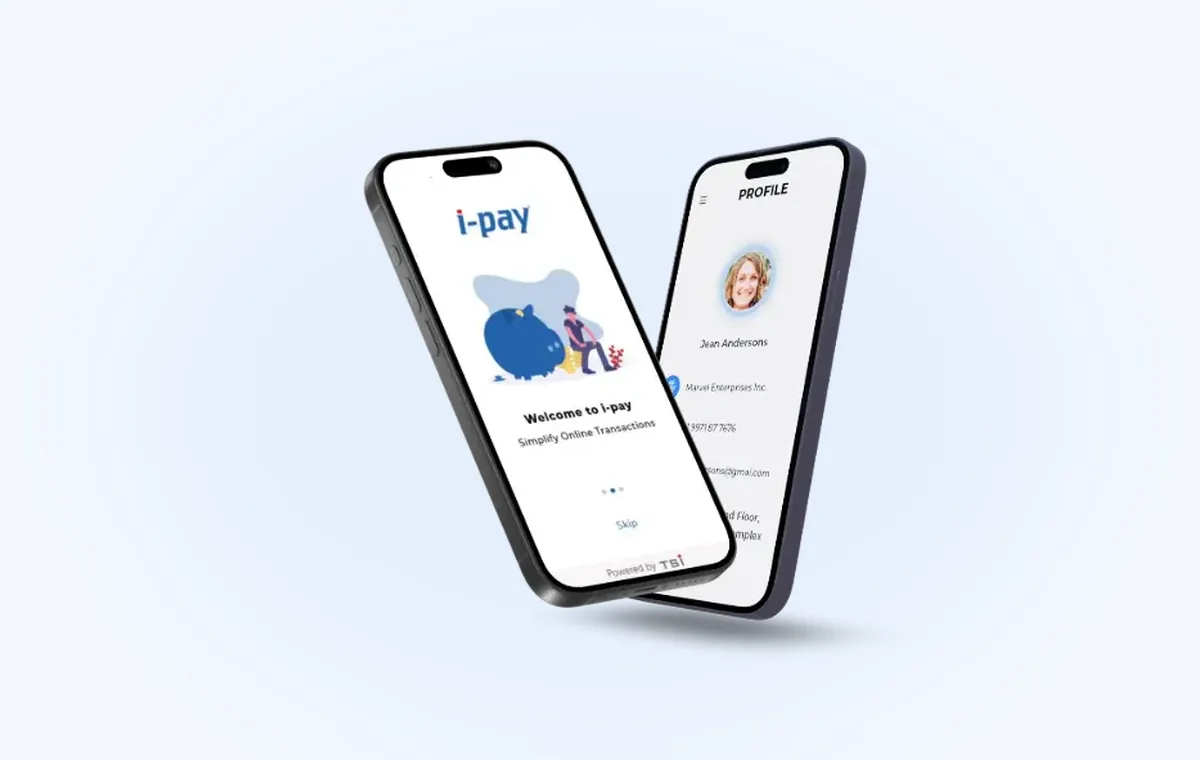
Aadhaar-enabled biometric payment app shown on two phones

AEPS Payment Platform

A financial inclusion initiative needed secure, cardless payments for underserved users. We built an Aadhaar-enabled biometric payment app with multi-bank interoperability, merchant management and PoS support.

Tech used

Java · C# · .NET · MS SQL

Results

  • 40%Lower fraud risk
  • 70%Faster financial inclusion
  • 5+Banks integrated
Read the full success story
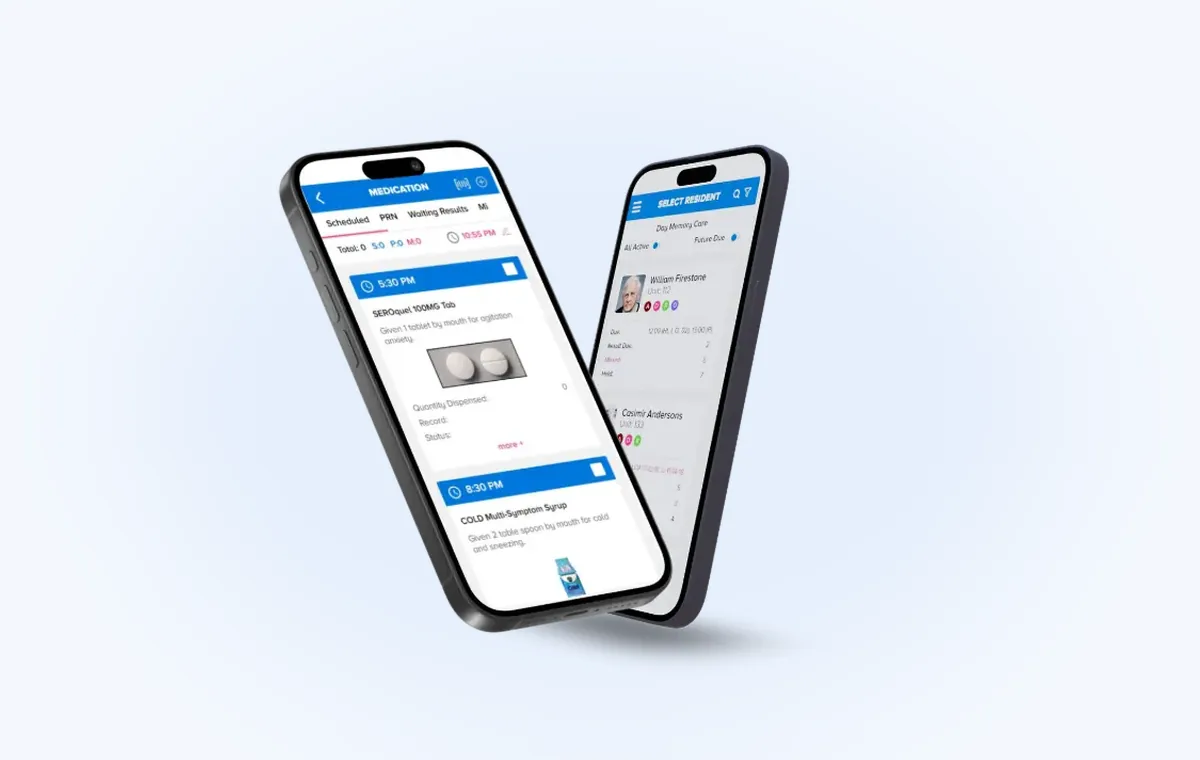
Point of Care mobile app shown on a phone and tablet

Point of Care Platform

Senior living communities lost time to paperwork and disconnected workflows. We built a mobile-first platform for assessments, work orders and payments that works both online and offline.

Tech used

React Native · Node.js · AWS

Results

  • 40%Higher care efficiency
  • 100%Paperless documentation
  • 25%More service revenue
Read the full success story
Last-mile delivery app showing live route tracking

Last-Mile Delivery Optimization

A US logistics company faced inefficient last-mile deliveries due to manual processes and fragmented data. We built a real-time platform with route optimization, live tracking and API integrations.

Tech used

React · Node.js · MySQL

Results

  • 35%Better delivery efficiency
  • 28%Fewer delivery errors
  • 50%Greater customer visibility
Read the full success story

Ways to work with us

Fixed-scope build

A defined POS, module or migration, with fixed price, timeline and milestones.

Dedicated POS team

A named team of POS, mobile, cloud and QA engineers working as an extension of yours.

Hire POS developers

Specific skills ramped in weeks: Android and iOS POS apps, payments integration, offline sync and delivery-platform APIs.

Build-operate-transfer

For SaaS POS products: we build and run the platform, then transfer the team and the platform to you.

OUR TECHNOLOGY STACK

Our cloud POS technology stack

Device-agnostic and cloud-agnostic. We recommend what fits your stores, your team and your budget, including tools we don't sell.

POS and kiosk apps
  • Kotlin (Android)
  • Swift (iPad)
  • React Native
  • Flutter
  • .NET (Windows terminals)
Back office and web ordering
  • React
  • Angular
  • Next.js
Backend and APIs
  • Node.js
  • .NET
  • Java
  • Python
  • REST
  • GraphQL
  • Webhooks
Offline and sync
  • SQLite
  • Realm
  • Local message queues
  • Conflict-safe sync
Data
  • PostgreSQL
  • SQL Server
  • MongoDB
  • Redis
  • Snowflake
  • BigQuery
Cloud and DevOps
  • AWS
  • Azure
  • Google Cloud
  • Docker
  • Kubernetes
  • CI/CD
Payments
  • Processor and terminal SDKs
  • Tokenization
  • Semi-integrated terminals
Integration targets
  • DoorDash
  • Uber Eats
  • Grubhub
  • QuickBooks
  • Xero
  • Odoo
  • Oracle Simphony APIs
Peripherals
  • Receipt and kitchen printers (ESC/POS)
  • Cash drawers
  • Barcode scanners
  • Scales
  • Kitchen display screens

What custom cloud POS development costs, and how long it takes

The order screen is usually the smallest part of the budget. Offline sync, payments, integrations and multi-location rollout drive most of the cost, so we scope them up front.

POS integration or add-on module

One module or integration for your current POS, such as a delivery-order hub, loyalty app or reporting layer

4–8 weeks

$14,000–$28,000Typical investment

Custom cloud POS

A cloud based POS system for one brand across multiple locations, with offline mode, payments, kitchen display and back office

12–20 weeks

$34,000–$65,000Typical investment

Restaurant management or SaaS POS platform

A full cloud based restaurant management system, or a multi-tenant white-label POS product, with online ordering, delivery, inventory, loyalty and partner APIs

5–9 months, phased

$78,000–$160,000+Typical investment

Hardware, payment processing, third-party subscriptions and cloud hosting are billed separately. Ongoing maintenance typically runs at a percentage of the build cost each year; we forecast it in your estimate. You leave the discovery call with a range specific to your project.

Ready to decide: build, buy or extend?

A 30-minute call with an engineer who has no POS product to sell you. Bring your locations, your current setup and your plans, and leave with a first read on the right approach, the integrations involved and a cost range.

Build vs Buy
Assessment
Integration
Map
Clear Cost
& Timeline
Talk to Our US Team

Common Questions, Expert Answers

Answers about cloud POS development: costs, build vs buy, offline mode, payments, MICROS migration, integrations and support.

A cloud based POS system is point-of-sale software that stores its data and settings in the cloud instead of on a server in the back office. Terminals, tablets and kiosks connect over the internet, so menus, prices, reports and updates are managed centrally for every location. A good one also keeps working offline and syncs when the connection returns.

A single add-on module or integration typically costs $14,000–$28,000, a custom cloud POS for one brand across several locations $34,000–$65,000, and a full restaurant management or white-label SaaS POS platform $78,000–$160,000 or more. Hardware, payment processing and hosting are separate. We confirm a range for your scope after a short discovery.

Buy if you run a few locations with standard workflows and want hardware, payments and support from one provider. Build if the POS is your product, your workflows are unusual, your integrations are complex or per-location fees are a large and growing cost. Often the best answer is to extend your current POS with custom modules. The Build or Buy section above explains how we decide.

It depends on your size and service model. For a single restaurant, a mainstream off-the-shelf product is usually the right choice. For groups, franchises and software companies, the best cloud based POS systems for restaurants are the ones that fit your menu logic, work offline, connect to your delivery platforms and accounting, and report across every site. We do not resell any POS, so we can help you compare honestly or build what is missing.

It should. We build offline-first terminals that store orders on the device or an in-store hub, keep printing tickets and routing the kitchen over the local network, and sync to the cloud when the connection returns. Offline card payments depend on your processor's rules, so we agree them with the processor during design.

WhatsApp