Augmented Reality Is Coming To Make Our Lives Better
 By Shahrukh KhanEmerging Technology ExpertsDecember 18, 20259 min read
What This Blog Will Cover
In this blog, we will explore the transformative power of augmented reality (AR) and how it is reshaping various aspects of our daily lives and industries. You will learn about the core principles of AR, its practical applications across sectors such as education, healthcare, retail, manufacturing, and navigation, and how it enhances experiences by blending digital content with real world environments. We will also discuss the rise of immersive learning, AR’s role in remote assistance and training, and the future advancements that promise to make AR an ambient and indispensable technology. Whether you are new to AR or looking to integrate it into your business or personal life, this blog will provide valuable insights and real-world examples to help you understand and leverage this exciting new technology.
Introduction! Why augmented reality matters right now
AR is shifting from niche demos to daily-use tech. The value is simple. It removes guesswork, adds context, and gives people instant clarity. QSS explains how AR is becoming a real driver of efficiency and better experiences. In today’s fast-paced world, augmented reality is no longer just a futuristic concept; it’s a practical tool transforming how we interact with information and our environment.
By overlaying digital content onto the physical world, AR empowers users to make informed decisions quickly, reducing errors and improving outcomes. Businesses across industries are adopting AR to streamline operations, enhance customer engagement, and deliver immersive experiences that were once impossible. For example, in retail, AR allows customers to virtually try products before buying, increasing confidence and satisfaction.
In manufacturing, AR guides workers through complex assembly tasks, minimizing mistakes and downtime. As AR technology becomes more accessible and affordable, its adoption is accelerating rapidly, making it a critical component of digital transformation strategies. QSS leverages this momentum by developing scalable, user-friendly AR solutions tailored to specific industry needs, helping organizations unlock new levels of productivity and innovation.
The core idea: how AR improves daily life
Overlay digital information on what you see. Blend real and virtual elements. Reduce friction in decisions. Whether it’s navigating a new city or understanding a medical procedure, AR makes tasks clearer and faster. At its core, augmented reality enhances our perception by providing relevant, real-time information exactly when and where it’s needed. This contextual awareness helps users avoid confusion and speeds up complex processes.
Imagine walking through a museum with AR glasses that display detailed information about exhibits as you approach them, or a surgeon using AR overlays to visualize patient anatomy during an operation. These applications improve understanding and precision, leading to better results. AR also supports accessibility by offering visual or auditory enhancements for individuals with disabilities.
By integrating seamlessly into everyday activities, AR reduces cognitive load and makes learning more intuitive. Whether it’s helping students grasp abstract concepts or assisting technicians with repair instructions, AR transforms how we absorb and apply knowledge. The technology’s ability to merge digital and physical realities fosters a more interactive and engaging experience, ultimately improving efficiency and satisfaction in daily tasks.
Real world applications of AR shaping daily experiences
AR in education creates immersive learning that actually sticks. AR in healthcare supports patient understanding, surgical precision, and real-time guidance. AR in retail and shopping improves try-ons, product previews, and purchase confidence. QSS builds systems that make these experiences stable, scalable, and intuitive.
Augmented reality’s impact spans numerous sectors, revolutionizing how services are delivered and consumed. In education, AR turns passive learning into active exploration by allowing students to interact with 3D models and simulations, enhancing retention and engagement. Healthcare professionals use AR to train more effectively and perform delicate procedures with enhanced visualization, improving patient outcomes. Retailers leverage AR to offer virtual fitting rooms and product demonstrations, reducing returns and increasing sales.
Beyond these, AR is transforming real estate by enabling virtual walkthroughs of properties, and automotive industries by overlaying diagnostic data during repairs. QSS specializes in creating robust AR platforms that can handle diverse use cases while maintaining seamless user experiences. Their expertise ensures that AR solutions are not only innovative but also reliable and easy to deploy, allowing organizations to fully capitalize on the technology’s potential to enrich daily interactions and business processes.
The rise of immersive learning with AR
Students don’t just read or watch anymore. They interact. Platforms like Coursera and capsulesight.com show how AR brings complex ideas to life. QSS works with organizations to extend these models into enterprise learning. Immersive learning powered by AR is reshaping education by making abstract concepts tangible and engaging. Traditional methods often rely on rote memorization, which can be ineffective for many learners.
AR introduces interactivity, allowing students to manipulate virtual objects and visualize phenomena that would otherwise be inaccessible. For example, biology students can explore the human body in 3D, while engineering learners can simulate machinery operation. Online platforms incorporate AR modules to enhance remote learning, bridging the gap between theory and practice.
QSS collaborates with educational institutions and corporations to develop customized AR training programs that improve skill acquisition and retention. By integrating assessments and real-time feedback, these solutions ensure learners stay motivated and track progress effectively.
The rise of immersive learning also supports workforce development by providing hands-on experience in a safe, controlled environment, preparing employees for real-world challenges with greater confidence and competence.
AR in healthcare where accuracy matters most
From visualizing anatomy to guiding procedures, AR helps professionals minimize errors and improve outcomes. QSS integrates AR modules with healthcare systems so data flows securely and in real time. In healthcare, precision and clarity are paramount, and AR technology is proving to be a game-changer. Surgeons use AR overlays to see critical structures beneath the skin, reducing the risk of complications during operations.
Medical students benefit from interactive 3D models that enhance their understanding of complex anatomy. AR also supports diagnostics by allowing clinicians to visualize patient data in context, improving decision-making speed and accuracy. Patient education is enhanced as AR helps explain conditions and treatment plans in an accessible way, increasing compliance and satisfaction.
QSS ensures that AR healthcare applications comply with strict data privacy and security standards, integrating seamlessly with electronic health records and hospital information systems. This integration enables real-time data sharing and collaboration among care teams, fostering a more coordinated and effective healthcare delivery model. As AR continues to evolve, its role in improving patient safety and treatment efficacy will only grow stronger.
AR in retail and shopping where customers crave clarity
Virtual try-on solutions reduce hesitation. Interactive product demos reduce returns. QSS designs AR shopping experiences that feel natural and run smoothly across devices. Retailers face the challenge of providing customers with confidence in their purchases, especially online.
AR addresses this by allowing shoppers to virtually try on clothes, accessories, or makeup, and visualize furniture or decor in their homes before buying. These immersive experiences reduce uncertainty, leading to higher conversion rates and lower return rates. AR also enables interactive product demonstrations that highlight features and benefits in engaging ways, making complex products easier to understand.
QSS develops retail AR solutions optimized for performance and usability across smartphones, tablets, and AR glasses, ensuring accessibility for a broad audience. By integrating AR with e-commerce platforms, retailers can create personalized shopping journeys that adapt to customer preferences and behaviors. This technology not only enhances customer satisfaction but also drives brand loyalty and competitive advantage in a crowded marketplace.
Remote assistance using AR for teams that can’t be onsite
Technicians get real time overlays. Experts guide from anywhere. Mistakes drop. Productivity rises. QSS transforms remote workflows with robust AR toolkits grounded in real time data. Remote assistance through AR is revolutionizing how organizations support field teams and remote workers. Instead of relying solely on phone calls or emails, technicians can receive live, visual guidance from experts who see exactly what they see.
AR overlays provide step-by-step instructions, highlight components, and flag potential issues, reducing errors and rework. This real-time collaboration shortens repair times and improves first-time fix rates, boosting overall productivity. QSS designs AR toolkits that integrate with existing communication systems, offering secure, low-latency connections essential for critical operations.
This technology is especially valuable in hazardous or hard-to-reach environments where sending specialists onsite is costly or impossible. By empowering remote teams with AR, organizations enhance operational efficiency, reduce downtime, and maintain high safety standards.
AR for training and maintenance where hands-on matters
Instead of reading long manuals, users follow step-by-step guidance layered directly on the equipment. QSS builds training modules that reduce downtime and speed up learning. Training and maintenance tasks often require detailed instructions that can be cumbersome to follow through traditional manuals or videos.
AR changes this by providing contextual, hands-on guidance directly on the equipment or workspace. Users see exactly what to do, where to touch, and how to proceed, minimizing confusion and mistakes. This approach accelerates learning curves and reduces downtime, as employees become proficient faster and with greater confidence.
QSS develops AR training modules tailored to specific machinery and workflows, incorporating interactive elements and assessments to reinforce learning. Maintenance personnel benefit from real-time diagnostics and alerts overlaid on machines, helping them identify issues quickly and perform repairs accurately. This not only improves equipment uptime but also enhances worker safety by highlighting hazards and proper procedures.
Industrial and manufacturing use cases that need precision
Factories rely on accuracy and speed. AR delivers real time data overlay, assembly support, and quality checks. QSS enables AR for manufacturing through secure enterprise integrations. In industrial and manufacturing settings, precision and efficiency are critical to maintaining quality and meeting production targets.
AR provides workers with real-time data overlays that display assembly instructions, part specifications, and quality metrics directly in their field of view. This reduces errors, speeds up processes, and ensures compliance with standards. AR also supports quality control by highlighting defects or deviations during inspections, enabling immediate corrective action.
QSS integrates AR solutions with enterprise resource planning (ERP) and manufacturing execution systems (MES), ensuring seamless data flow and process synchronization. These integrations enhance traceability and reporting, supporting continuous improvement initiatives. By adopting AR, manufacturers can reduce training costs, improve worker performance, and maintain competitive advantage in increasingly automated and complex production environments.
AR for navigation and exploration that simplifies movement
Whether indoors or outdoors, AR navigation gives users contextual cues right where they’re needed, blending their real surroundings with digital information. QSS works with mapping systems and geolocation tools to create seamless experiences that enhance the real world. Navigating unfamiliar environments can be challenging, especially indoors where GPS signals are weak. AR navigation addresses this by overlaying directional arrows, points of interest, and safety information directly onto the user’s view of real world objects.
This contextual guidance simplifies movement, reduces stress, and improves accessibility, allowing users to access relevant digital information in their real world environment. For example, AR can assist visitors in large campuses, airports, or shopping malls to find their destinations quickly and safely. Outdoor applications include hiking trails and city tours enhanced with historical events and cultural information, adding a new dimension to exploration and education.
QSS collaborates with mapping providers and uses advanced geolocation technologies and AR software to deliver accurate, real-time AR navigation experiences. These solutions are customizable for different industries and use cases, ensuring users receive relevant and timely information that enhances their journey and drives engagement.
Low vision support powered by AR
AR enhances contrast, magnifies details, and adds digital cues, supporting independence for users with low vision. QSS brings these capabilities into accessible, user-friendly implementations that connect users with their real surroundings. For individuals with low vision, everyday tasks can be difficult and limiting in the real world. AR technology offers powerful tools to enhance visual perception and promote independence.
By magnifying text, enhancing contrast, and providing audio or haptic feedback, AR devices help users navigate environments, read signs, and identify objects more easily. Digital cues can highlight obstacles or important features, improving safety and confidence.
QSS designs AR solutions with accessibility in mind, ensuring they are intuitive and adaptable to different levels of vision impairment. These innovations open new possibilities for education, employment, and social participation, contributing to a more inclusive society where users with low vision can engage fully and safely.
How AR enhances interactive experiences
From gamified learning to real-time object interaction, AR turns passive screens into active environments, allowing users to interact with virtual objects layered onto the real world. QSS develops these interfaces with scalability and performance in mind. AR transforms traditional digital content into immersive, interactive experiences that engage users on multiple sensory levels.
Gamification elements such as rewards, challenges, and storytelling motivate learners and customers alike, making interactions more enjoyable and memorable. Real-time object interaction allows users to manipulate virtual elements as if they were physical, fostering creativity and deeper understanding. These problem solving opportunities enhance education and training by providing hands-on experiences in a controlled environment.
QSS focuses on creating AR interfaces that are responsive, scalable, and compatible across devices, ensuring smooth performance even in complex scenarios. These interactive experiences have applications in education, marketing, entertainment, and more, helping organizations connect with their audiences in meaningful and innovative ways.
Extended Reality as the next step
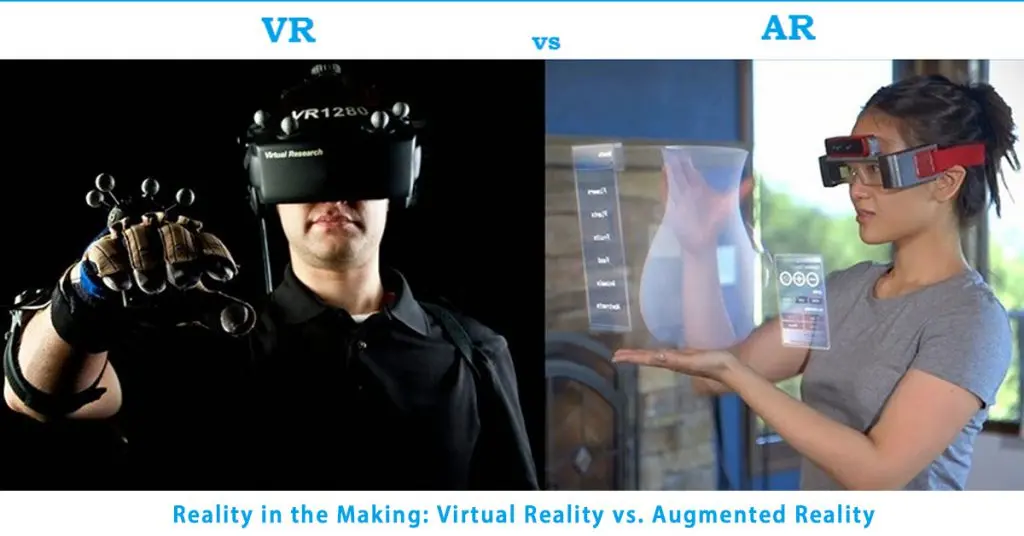
AR sits inside a broader XR ecosystem that blends virtual and mixed experiences, including AR VR technologies. QSS helps enterprises move from standalone AR pilots to full XR-powered digital environments that connect the real world with virtual worlds. Extended Reality (XR) encompasses augmented, virtual, and mixed reality technologies, offering a continuum of immersive experiences.
While AR overlays digital content onto the real world, VR creates fully virtual environments, and MR blends the two with interactive holograms. Together, these technologies enable new forms of collaboration, training, and entertainment. QSS supports enterprises in navigating this evolving landscape by designing integrated XR solutions that align with business goals and user needs.
Moving beyond isolated AR pilots, organizations can implement comprehensive XR environments that enhance productivity, creativity, and engagement. This strategic approach ensures investments in immersive technology deliver sustainable value and competitive advantage.
The future of augmented reality
More accurate sensors. Lighter devices. Smarter context detection. AR is about to become ambient technology that seamlessly integrates into real life and the real world. QSS is preparing clients for this shift through robust engineering and long term AR strategies.
The future of AR promises even greater integration into daily life as hardware and software advance. Sensors will become more precise, enabling seamless interaction with the environment and other devices. Wearable augmented reality glasses will be lighter, more comfortable, and socially acceptable, allowing continuous use without disruption.
Advances in artificial intelligence will enable smarter context detection, so AR systems can anticipate user needs and deliver personalized content proactively. This ambient AR will blend unobtrusively with the physical world, providing assistance without distraction. The ability to create immersive AR experiences that blend real and virtual worlds will drive engagement and open new benefits for users across industries.
QSS is at the forefront of these developments, helping clients design scalable solutions that leverage emerging technologies. By investing in long-term AR strategies, organizations can stay ahead of the curve and harness the full potential of ambient augmented reality.
Why organizations should start embracing AR now
Better training. Lower errors. Higher engagement. Stronger customer trust. AR delivers measurable results across sectors by overlaying digital elements on real world objects. QSS provides the development, integration, and optimization required to turn AR ideas into enterprise-grade solutions.
Organizations that adopt AR today gain significant competitive advantages. Enhanced training programs reduce onboarding time and improve skill retention, leading to a more capable workforce. AR’s ability to lower errors and increase accuracy improves product quality and safety, reducing costs associated with defects and accidents.
Higher engagement through immersive experiences boosts employee motivation and customer satisfaction, fostering loyalty and brand advocacy. As AR becomes increasingly popular and a standard tool across industries, early adopters position themselves as innovators and leaders.
QSS offers end-to-end services to help organizations seamlessly integrate AR into their operations, ensuring solutions are tailored, scalable, and aligned with strategic objectives. Embracing AR now is not just a technological upgrade it’s a strategic imperative for future-ready organizations.