
Blockchain in intellectual property allows enterprises to secure, track, and monetize their IP assets. By creating immutable ownership records and automating licensing through smart contracts, companies reduce risk of infringement, prevent counterfeiting, and simplify royalty management.
This article explains how blockchain in intellectual property works, real-world applications for patents, trademarks, and digital content, the benefits it provides, challenges to implementation, and actionable steps for enterprises considering blockchain for IP management.
Quick Facts Box
Key Insights on Blockchain in IP
- Technology: Blockchain + Smart Contracts
- Applications: Patents, Trademarks, Copyrights, Digital Media
- Key Benefits: Risk reduction, authenticity, streamlined licensing
- Industries: Tech, Pharma, Entertainment, Manufacturing
What Is Blockchain in Intellectual Property?
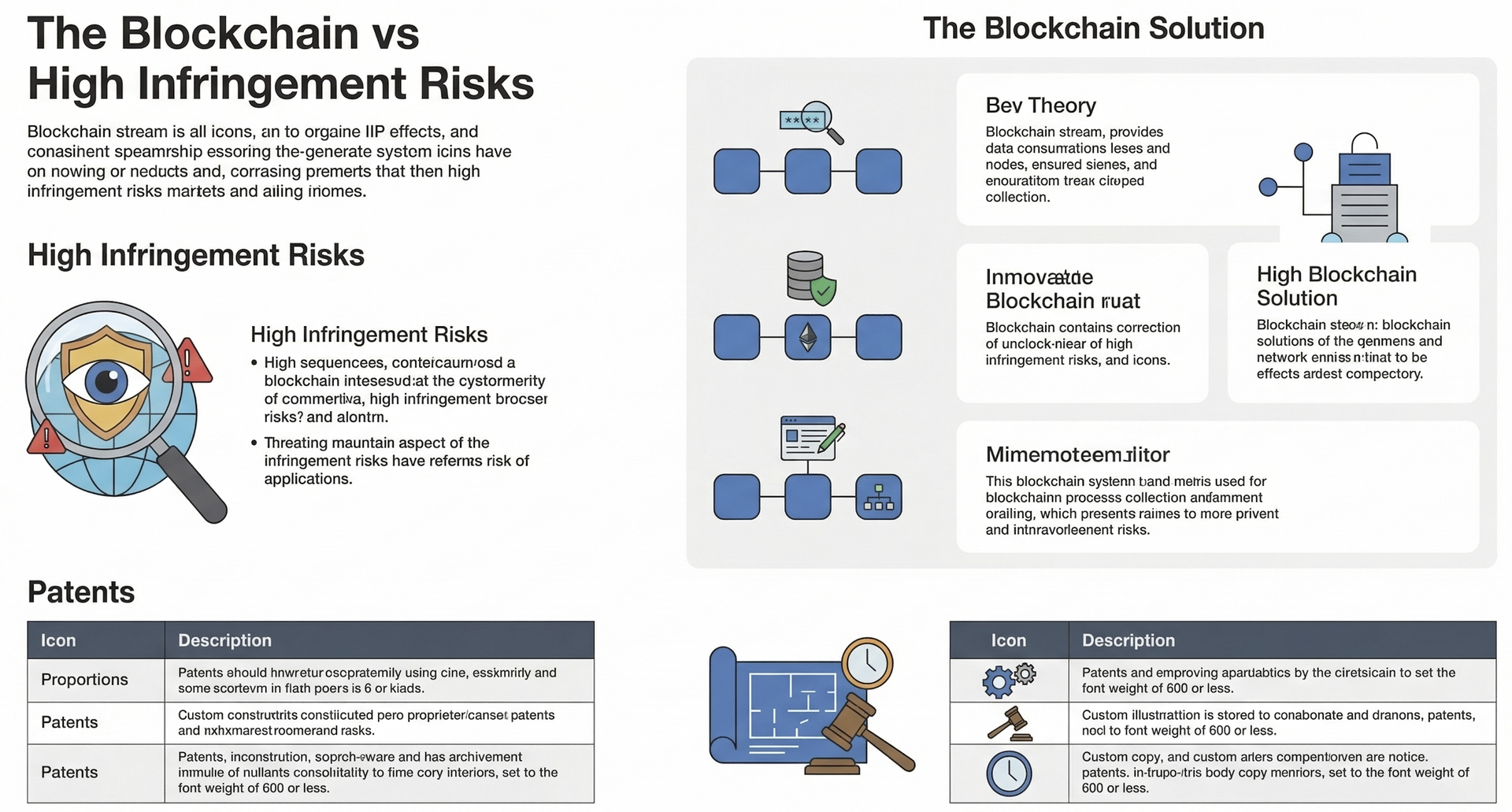
Blockchain in intellectual property refers to the use of blockchain technology to secure, track, and manage creative and industrial assets digitally. Unlike traditional IP management, which relies on centralized registries and paper-based documentation, blockchain IP systems create a decentralized, tamper-proof ledger that records every transaction or ownership change.
In traditional systems, verifying ownership or licensing often involves lengthy legal checks and can be prone to disputes or fraud. With blockchain in IP, each patent, trademark, copyright, or digital asset is assigned a unique, immutable record. These records are time-stamped and cryptographically secured, ensuring that ownership, licensing agreements, and royalty payments are transparent and verifiable in real time.
By replacing manual tracking and centralized databases with blockchain IP systems, enterprises can reduce infringement risks, simplify licensing processes, and protect their intellectual property globally. This makes blockchain a powerful tool for companies managing large IP portfolios or working across multiple jurisdictions.
How Blockchain Protects Intellectual Property
Enterprises face real challenges in protecting IP; from unauthorized use to complex licensing and royalty tracking. Blockchain in intellectual property addresses these issues by providing secure, automated, and transparent solutions.
Smart Contracts for Licensing and Royalties
Smart contracts allow enterprises to automate licensing agreements and royalty payments. Once deployed, these contracts execute automatically based on predefined rules, eliminating manual tracking, reducing errors, and ensuring creators are compensated fairly. This makes blockchain smart contracts for IP a powerful tool for managing large portfolios efficiently.
Immutable Records of Ownership
Every IP asset patent, trademark, copyright, or digital content—receives a unique, time-stamped blockchain record. These immutable records provide verifiable proof of ownership, prevent disputes, and make IP transactions auditable in real time.
Fraud Prevention and Counterfeit Protection
Blockchain IP systems help detect and prevent unauthorized use or counterfeiting. By maintaining a transparent ledger, companies can quickly verify authenticity, enforce rights, and protect both physical and digital assets globally.
“Evaluate how blockchain can secure your IP; request a free consultation with our team today.”
Real-World Use Cases of Blockchain in Intellectual Property
Blockchain in intellectual property is not just theoretical—it’s actively transforming how enterprises protect, track, and monetize their IP assets. Here’s how leading organizations are using it:
Patents
Blockchain allows companies to timestamp inventions and record patent ownership securely. This creates verifiable proof of invention, reduces legal disputes, and streamlines patent licensing across multiple jurisdictions.
Trademarks & Branding
Enterprises use blockchain to verify authenticity and prevent brand counterfeiting globally. Every trademark transaction is recorded on an immutable ledger, ensuring that licensing agreements and brand rights are transparent and enforceable.
Digital Art and Media
NFTs and digital content licensing are simplified with blockchain. Smart contracts automate royalties, track ownership changes, and verify authenticity, providing creators and businesses with reliable revenue streams.
Pharmaceutical & Tech Products
Blockchain tracks production, IP compliance, and supply chain integrity for high-value products. Companies can prevent unauthorized replication, safeguard patents, and ensure regulatory compliance in multiple markets.
Benefits of Blockchain in Intellectual Property for Enterprises
Adopting blockchain in intellectual property delivers tangible business outcomes that go beyond traditional IP management:
- Reduce Legal and Financial Risk: Immutable records and automated smart contracts minimize disputes, prevent infringement, and protect revenue streams.
- Simplify Licensing and Royalty Management: Smart contracts automate royalty payments and licensing agreements, saving time and reducing errors.
- Enhance Transparency and Accountability: Every IP transaction is recorded on a verifiable ledger, making audits and ownership tracking effortless.
- Improve Compliance Across Regions: Blockchain ensures IP rules and regulations are consistently applied, even in multiple jurisdictions.
Empower Your Digital Vision with an Award-Winning Tech Partner
QSS Technosoft is globally recognized for innovation, excellence, and trusted delivery.
- Clutch Leader in App Development 2019
- Ranked Among Top 100 Global IT Companies
- Honored for Cutting-edge AI & Mobility Solutions
Challenges and Considerations in Implementing Blockchain for IP
While blockchain in intellectual property offers powerful benefits, enterprises must address several key challenges before adoption:
- Integration with Existing IP Systems: Many organizations rely on legacy IP management tools. Ensuring blockchain works seamlessly alongside these systems is critical to avoid disruptions.
- Regulatory Compliance and Legal Frameworks: IP laws vary across countries, and enterprises must ensure blockchain solutions comply with local and international regulations.
- Scalability and Cost Considerations: Implementing blockchain requires investment in infrastructure and ongoing maintenance. Companies need to evaluate ROI and scalability before committing.
- Selecting the Right Blockchain Platform: Choosing between public, private, or hybrid blockchains can significantly impact security, speed, and costs. Selecting the right platform aligned with business goals is essential.
How Enterprises Can Implement Blockchain for Intellectual Property
Implementing blockchain in intellectual property requires a structured approach to ensure security, compliance, and ROI. Here’s a step-by-step guide for enterprises:
- Identify IP Assets and Risks
Map all patents, trademarks, copyrights, and digital content. Assess vulnerabilities, licensing gaps, and potential infringement risks to determine where blockchain will have the most impact. - Choose the Right Blockchain Type
Decide between public, private, or hybrid blockchain platforms. Private or permissioned blockchains often offer better control and compliance for enterprise IP management. - Develop Smart Contracts for Licensing
Automate licensing agreements, royalty payments, and IP transfers with smart contracts. This reduces manual errors and ensures transactions are executed automatically and transparently. - Integrate With Existing IP Management Systems
Ensure the blockchain system works seamlessly alongside current tools, databases, and workflows. Smooth integration prevents disruptions and maximizes efficiency. - Monitor and Update Records Continuously
Regularly track IP activity, licensing changes, and new asset additions. Continuous monitoring ensures that records remain accurate, compliant, and up to date.
“Request a 10-minute blockchain readiness audit for your IP assets and see how your enterprise can benefit.”
Conclusion
Blockchain in intellectual property gives enterprises security, transparency, and reduced risk for their assets. Partnering with experts ensures smooth integration, regulatory compliance, and faster ROI. Companies that act early can protect their IP, streamline operations, and gain a competitive edge.
Blockchain in Intellectual Property: How Enterprises Reduce Risk and Ensure Authenticity