
Introduction
“SEO is dead.” If you’ve been in digital marketing for even a short time, you’ve probably heard this statement repeatedly, especially since artificial intelligence began reshaping how people search online. But the truth is more complex. Search behavior isn’t disappearing; it’s evolving faster than ever.
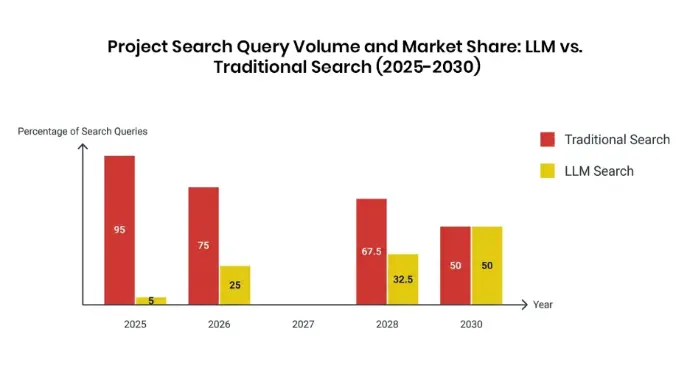
In fact, search activity is still massive. Google alone now processes around 5 trillion searches every year, showing that people still rely heavily on search engines to discover information, products, and services. However, the way users search is changing dramatically. Studies show that 37% of consumers now start their searches using AI tools instead of traditional search engines, preferring direct answers rather than browsing multiple links.
AI-powered features are also transforming search results. Nearly half of Google searches already include AI-generated summaries, and this number is expected to exceed 75% in the coming years. As a result, traditional organic clicks are shifting, and businesses are beginning to question whether traditional Search Engine Optimization still works.
But here’s the reality: SEO isn’t dying, it’s being reinvented by AI. Businesses that understand this shift and adapt their strategies will have the biggest advantage in the new era of search.
Why People Think Search Engine Optimization Is Dead
Over the last couple of years, the phrase “SEO is dead” has started appearing more often in marketing discussions. The concern isn’t completely random; many visible changes in search engines have made businesses question whether traditional Search Engine Optimization still works the way it used to.
Here are some of the main reasons behind this belief:
- AI-generated answers at the top of search results
Search engines are increasingly showing AI summaries and direct answers. Instead of clicking on multiple websites, users sometimes get what they need immediately from the search page. - Fewer clicks on traditional search results
With featured snippets, knowledge panels, and AI overviews, users often find quick information without visiting external websites. - Voice and conversational search
Many people now search through voice assistants or conversational queries, which means search engines focus more on understanding intent rather than matching exact keywords. - Constant algorithm updates
Google regularly updates its ranking systems, which can cause fluctuations in website rankings and make SEO feel unpredictable for businesses. - AI-generated content flooding the internet
With AI tools producing large volumes of content, some marketers assume search engines will struggle to differentiate quality information.
While these concerns are understandable, they don’t mean Search Engine Optimization is disappearing. What’s really happening is a shift in how search engines interpret and rank content.
How Search Optimization Has Evolved Over Time
To understand why SEO isn’t dying, it helps to look at how it has evolved. Search engines have gradually moved from simple keywords, matching a deeper understanding of meaning, intent, and context.
A few years ago, SEO mostly focused on placing the right keywords in titles, headings, and meta descriptions. While keywords still matter, search engines today analyze much more than that.
Here’s how the evolution looks:
- Early SEO: Keyword-Centric Strategies
In the early days, ranking often depended on how frequently a keyword appeared on a page. Many websites relied on heavy keyword usage to gain visibility. - Search Engines Became Smarter
As search technology improved, algorithms started analyzing content quality, relevance, and user experience rather than just keyword density. - Intent and Context Now Matter More
Modern search engines try to understand why someone is searching, not just what they typed. This means content must answer real questions and provide meaningful value. - AI Is Now Part of the Process
Artificial intelligence helps search engines understand language patterns, relationships between topics, and the credibility of information.
In simple terms, Search Engine Optimization hasn’t disappeared it has matured. Instead of focusing only on keywords, modern SEO revolves around context, relevance, and user-focused content.
The Reality Check: Search Engine Optimization Isn’t Dying, It’s Evolving
Let’s address the big question directly: Is Search Engine Optimization actually dying?
Not really. What’s happening is a shift in how search engines evaluate and rank content.
Search engines have become much smarter than they were a decade ago. Earlier, ranking often depended on how well a page was optimized for specific keywords. Today, algorithms are far more focused on understanding the purpose behind a search and delivering the most helpful results.
In other words, SEO hasn’t disappeared; it has simply grown up.
Here are a few ways the approach has changed:
- From Keyword-Focused to Intent-Focused
Earlier, marketers focused heavily on inserting the right keywords. Today, search engines analyze the intent behind a query and prioritize pages that genuinely answer the user’s question. - From Content Quantity to Content Value
Publishing dozens of articles with minimal value used to work for some websites. Now, search engines favor well-researched, helpful content that actually benefits readers. - From Ranking Pages to Solving Problems
The goal of modern SEO isn’t just to appear on the first page; it’s to provide the most relevant and useful solution for the searcher. - Greater Focus on Helpful Content
Recent algorithm updates increasingly reward websites that demonstrate expertise, trustworthiness, and real usefulness rather than content created only for rankings.
The takeaway is simple: SEO is still very much alive, but the strategies that worked years ago no longer deliver the same results. Businesses that adapt to this smarter, user-focused approach will continue to benefit from search visibility.
How AI Is Reinventing Search Engine Optimization
Artificial intelligence has quietly become one of the biggest forces shaping modern Search Engine Optimization. Search engines are no longer simple systems that match keywords with webpages. Today, they use advanced AI models to understand language, analyze context, and determine which content helps the user.
This shift is changing how websites get discovered and how SEO strategies need to work.
Here are some keyways AI is reshaping search:
- Search Engines Now Understand Intent; Not Just Keywords
AI helps search engines interpret the meaning behind a query. For example, when someone searches for “best laptop for remote work,” the algorithm isn’t just looking for those exact words it’s trying to find pages that truly help someone choose a laptop for that purpose. - Smarter Ranking Signals
AI allows search engines to evaluate multiple signals at once such as relevance, user engagement, expertise, and overall content quality. This means rankings depend less on simple optimization tricks and more on how useful a page actually is. - Semantic Search and Topic Understanding
Modern search engines analyze the relationship between topics and ideas. Instead of ranking a single page for one keyword, they prefer content that covers a subject thoroughly and naturally. - Predictive and Personalized Search
AI can also anticipate what users might need next. Search results are becoming more personalized, meaning businesses must create content that answers broader user needs rather than focusing on narrow keywords. - AI-Assisted Content Optimization
AI tools are now helping marketers analyze search trends, identify content gaps, and optimize pages more intelligently.
What This Means for SEO Strategies
Because of these changes, businesses need to rethink how they approach SEO:
- Focus on solving real user problems, not just targeting keywords.
- Build topical authority by covering subjects in depth.
- Create high-quality, trustworthy content that demonstrates expertise.
- Structure content clearly so AI-driven search systems can understand it easily.
In simple terms, AI hasn’t replaced Search Engine Optimization; it has raised the bar for it. Websites that adapt to these smarter search systems will continue to gain visibility, while those relying on outdated tactics will gradually fall behind.
Empower Your Digital Vision with an Award-Winning Tech Partner
QSS Technosoft is globally recognized for innovation, excellence, and trusted delivery.
- Clutch Leader in App Development 2019
- Ranked Among Top 100 Global IT Companies
- Honored for Cutting-edge AI & Mobility Solutions
Major Ways AI Is Transforming SEO Strategies
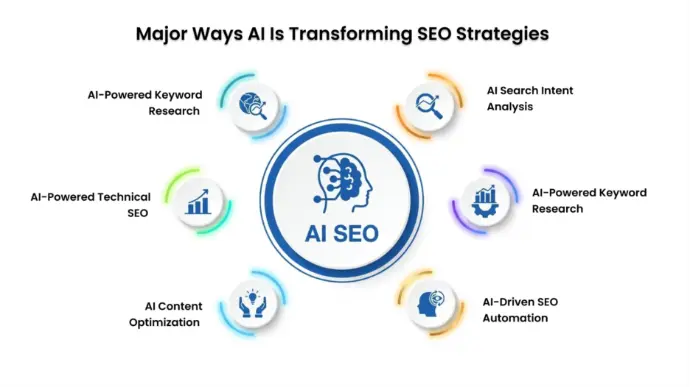
Artificial intelligence isn’t just changing search engines it’s also changing how SEO is done behind the scenes. Many tasks that once took hours of manual work can now be analyzed faster and more accurately with AI tools. Here are some of the most important ways AI is influencing modern Search Engine Optimization strategies.
AI-Powered Keyword Research
AI tools can now analyze huge amounts of search data to identify keyword opportunities, trends, and long-tail queries that people are actually searching for. Instead of guessing keywords, marketers can find phrases that match real search behavior.
AI Content Optimization
AI helps analyze top-ranking pages and suggests improvements such as better headings, topic coverage, and content structure. This helps content align more closely with what search engines consider valuable.
AI Search Intent Analysis
One of AI’s biggest strengths is understanding user intent. It can analyze search patterns and determine whether users are looking for information, products, comparisons, or solutions—helping businesses create more relevant content.
AI-Powered Technical SEO
AI tools can quickly detect site issues like broken links, slow pages, indexing problems, or crawl errors. This helps websites maintain better technical health without constant manual audits.
AI Competitor Analysis
AI platforms can scan competitor websites and highlight ranking strategies, content gaps, and backlink opportunities, giving businesses a clearer idea of where they can improve.
AI-Driven SEO Automation
Many repetitive SEO tasks such as site audits, reporting, rank tracking, and data analysis—can now be automated with AI, allowing marketers to focus more on strategy rather than routine work.
Together, these advancements show how AI is making Search Engine Optimization smarter, faster, and more data driven.
New SEO Ranking Factors in the AI Era
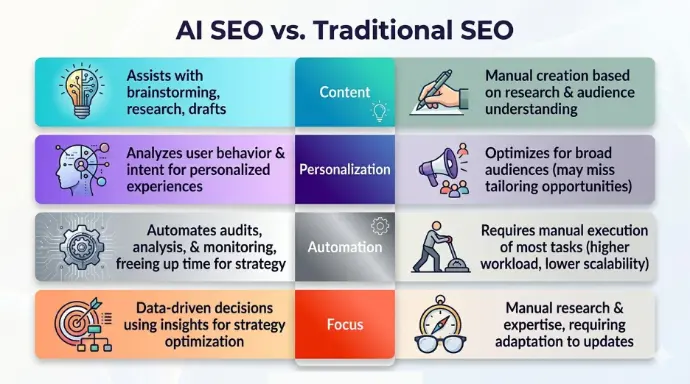
As search engines become more AI-driven, the factors that influence Search Engine Optimization rankings are gradually shifting. While traditional elements like keywords and backlinks still matter, search engines now pay closer attention to how helpful and trustworthy a page is for the user.
Here are some ranking signals that are becoming more important today:
- Search Intent Satisfaction
AI systems to analyze whether a page truly answers the user’s query. If visitors quickly leave a page and return to search results, it can signal that the content didn’t meet their needs. - Content Relevance and Depth
Instead of focusing on one keyword, search engines now evaluate how well a page explains the overall topic. Pages that cover a subject clearly and thoroughly tend to perform better. - Expertise and Credibility
Search engines increasingly prioritize content that shows real expertise and reliable information. Articles backed by data, real examples, or industry knowledge often gain stronger visibility. - User Engagement Signals
Metrics like time spent on a page, scrolling behavior, and interaction with content help search engines understand whether users find the information valuable. - Topical Authority
Websites that consistently publish high-quality content around a specific subject gradually build authority in that niche, making it easier for their pages to rank. - Well-Structured Content
AI-powered search engines prefer content that is easy to understand. Clear headings, organized sections, and structured formatting help algorithms interpret information more effectively.
A New Factor Emerging: AI Visibility
With AI-generated search summaries becoming more common, another emerging factor is whether your content is useful enough to be referenced by AI-generated answers. Pages that present information clearly and directly have a better chance of being included in these summaries.
In simple terms, modern Search Engine Optimization is less about “optimizing algorithms” and more about creating content that genuinely helps people and is easy for AI systems to understand.
Why Businesses Must Adapt Their SEO Strategy Now
Search is changing faster than it has in the last decade. With AI reshaping how search engines deliver results, businesses that rely on outdated Search Engine Optimization strategies risk losing visibility online. Adapting isn’t just a marketing upgrade anymore, it’s becoming a necessity.
Here’s why businesses need to rethink their SEO approach now:
- Organic Visibility Is Getting Harder to Maintain
AI-powered search features, summaries, and rich results are taking more space on search pages. If content isn’t optimized for these new formats, websites may see fewer clicks even if they rank. - Competitors Are Already Using AI for SEO
Many companies are now using AI tools to analyze keywords, identify content gaps, and optimize their websites faster. Businesses that don’t adopt similar strategies can quickly fall behind competitors who are moving more efficiently. - Search Behavior Is Changing
People are increasingly using conversational searches, voice queries, and AI assistants to find answers. This means SEO strategies must focus more on intent, context, and helpful information, not just keywords. - Digital Strategies Need to Be Smarter
Traditional SEO tactics alone are no longer enough. Businesses now need data-driven insights, AI-supported optimization, and continuous content improvements to stay competitive in search results.
The key takeaway is simple: SEO is still one of the most powerful ways to drive organic traffic, but the rules are evolving. Businesses that adapt early will have a much stronger chance of maintaining visibility and reaching their audience in an AI-driven search environment.
Practical Ways Businesses Can Combine AI with SEO
AI doesn’t replace Search Engine Optimization; it makes it smarter. Businesses that learn how to combine AI tools with SEO strategies can discover opportunities faster, understand their audience better, and improve search visibility more efficiently.
Here are some practical ways companies are already using AI in their SEO workflows:
Use AI for Smarter Keyword Discovery
Traditional keyword research often focuses on search volume. AI tools go further by analyzing search intent, trending queries, and long-tail opportunities that people are actually asking. This helps businesses discover topics their audience is actively searching for but competitors may have missed.
AI-Assisted Content Creation
AI can help generate content outlines, topic ideas, and structure suggestions based on what currently ranks in search results. Instead of starting from scratch, marketers can focus on adding expertise, insights, and real value to make the content stronger.
Predictive SEO Strategies
Some AI tools can analyze historical search data and identify emerging search trends before they become competitive. This allows businesses to publish content early and capture traffic while the topic is still growing.
AI-Powered SEO Analytics
AI-based analytics platforms can quickly interpret large datasets showing which pages are performing well, which keywords are dropping, and where new opportunities exist. This makes SEO decisions more data-driven rather than guesswork.
Automating Technical SEO Tasks
AI tools can automatically detect broken links, crawl issues, page speed problems, and indexing errors. Instead of spending hours on manual audits, businesses can quickly identify and fix technical problems that affect search rankings.
Identifying Content Gaps
AI can analyze competitors’ websites and highlight topics they rank for that your website doesn’t cover yet. This helps businesses build stronger topical authority and expand their content strategy strategically.
By combining AI with Search Engine Optimization, businesses can move beyond traditional SEO tactics and build smarter, more adaptive strategies that align with how modern search engines work.
The Future of Search Engine Optimization in an AI-Driven World
Search is entering a completely new phase. Instead of simply listing links, search engines are gradually becoming AI-powered information assistants. This shift doesn’t mean Search Engine Optimization will disappear; it means SEO will evolve into something more intelligent and experience focused.
Here are some forward-looking trends shaping the future of SEO:
- AI Search Engines Becoming the New Interface
Search platforms are increasingly powered by AI models that summarize information, compare sources, and generate answers instantly. In the future, ranking may not only mean appearing on page one; it may mean being selected as a trusted source in AI-generated answers. - Conversational Search Will Become Normal
Users are already moving toward longer, more natural questions instead of short keyword phrases. As conversational search grows, businesses will need to create content that answers questions clearly and naturally, almost like speaking directly to a person. - Multimodal Search Is Expanding
Search is no longer limited to text. People can now search using voice, images, screenshots, or even video. SEO strategies will need to optimize not just written content but also visual and multimedia information. - Hyper-Personalized Search Results
AI can understand user behavior, preferences, and past searches. In the future, two people searching the same query may see different results tailored to their interests, location, or context. - AI-Generated Search Summaries
Search engines are increasingly presenting summarized answers before showing traditional links. This means businesses must structure their content clearly, so AI systems can easily extract and reference useful information.
What This Means for Businesses
The future of Search Engine Optimization will be less about chasing algorithms and more about becoming a reliable source of knowledge online. Businesses that invest in high-quality content, clear information structures, and strong topical expertise will have the best chance of staying visible as AI-driven search continues to evolve.
How QSS Technosoft Helps Businesses Adapt to AI-Driven SEO
As search engines become more AI-driven, businesses need SEO strategies that go beyond traditional keyword optimization. Adapting this shift often requires a mix of technical expertise, data insights, and AI-powered tools.
QSS Technosoft supports businesses in aligning their Search Engine Optimization strategies with the new AI-focused search landscape. The focus is on building SEO frameworks that remain effective as search technology continues to evolve.
Key areas where QSS helps include:
- AI-Powered SEO Strategy
Developing modern SEO approaches that consider search intent, AI-driven algorithms, and evolving ranking signals. - SEO Audits and Website Optimization
Identifying technical gaps, content opportunities, and performance issues that may affect search visibility. - Data-Driven Digital Marketing
Using analytics and search insights to guide content strategy, keyword targeting, and organic growth. - Scalable SEO Solutions
Building long-term SEO frameworks that support business growth as search platforms and user behavior continue to change.
By combining AI insights with practical SEO expertise, QSS Technosoft helps businesses stay visible and competitive in a rapidly evolving search environment.
Conclusion
The idea that Search Engine Optimization is dead comes every few years, but history shows the same pattern of SEO doesn’t disappear; it evolves with technology. Today, artificial intelligence is simply the next major shift, changing how search engines understand content and how users find information.
AI is making search smarter, more contextual, and more user-focused. Instead of rewarding keyword-heavy pages, modern search systems prioritize content that genuinely answers questions, demonstrates expertise, and delivers real value. For businesses, this means SEO strategies must evolve from basic optimization tactics to intent-driven, AI-aware search strategies.
The opportunity is still huge. Companies that adapt early by combining AI insights, high-quality content, and modern SEO practices will continue to gain visibility and organic traffic, even as search technology advances.
If your business is looking to adapt its Search Engine Optimization strategy for the AI-driven search landscape, QSS Technosoft can help. With expertise in AI-powered digital solutions and data-driven SEO strategies, the team can help you build a smarter, future-ready approach to organic growth.
Is Search Engine Optimization Dead? How AI Is Reinventing SEO and Why Businesses Must Adapt