Developing an NFT Gaming Platform Like Gods Unchained
 By Shahrukh KhanNFT & Blockchain TeamDecember 15, 202510 min read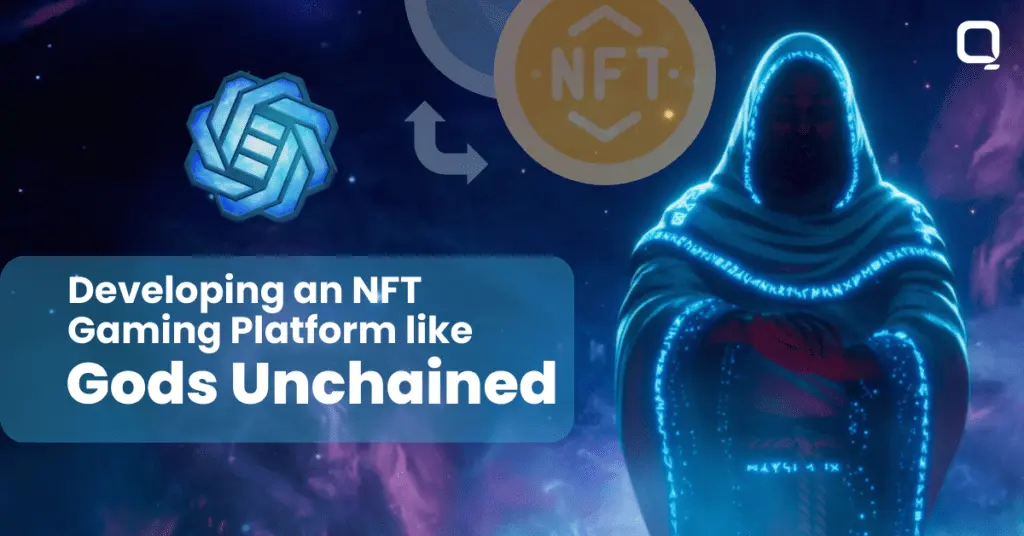
NFT gaming platforms are decentralized applications (dApps) that use non-fungible tokens (NFTs) to represent game items, characters, or other in-game assets. NFT gaming platforms offer a number of advantages over traditional centralized gaming platforms, including increased security, transparency, and ownership rights for gamers.
The NFT Gaming Platform is a great way for gamers to get involved in the world of blockchain gaming. It offers a variety of games that use NFTs, which makes it a great choice for those who want to own, trade, and play games using these tokens. NFT gaming platforms are providing gamers with new ways to play and own their favorite games. These platforms are also helping to drive the adoption of blockchain technology by offering real-world use cases for NFTs.
Gods Unchained is a blockchain-based game that has gained a lot of popularity on this platform, and it's definitely worth reading the blog for anybody interested in blockchain gaming about what exactly Gods Unchained is and how to build a gaming platform similar to it.
Why NFT card game development is reshaping digital collectibles
NFT card game development is revolutionizing the world of digital collectibles by introducing verifiable ownership, provable rarity, and on-chain card utility. Unlike traditional trading card games, where ownership and rarity can be ambiguous or manipulated, NFT-based games provide players with true digital ownership secured on the blockchain. Each card is a unique digital asset that can be tracked and verified, ensuring scarcity and authenticity.
This transparency addresses major issues faced by Web2 card games, such as lack of trust and centralized control over in-game economies. Blockchain technology empowers players by giving them control over their assets, allowing them to trade, sell, or use cards across different platforms. As a result, the collectible card game (CCG) genre is experiencing a resurgence, fueled by a more secure and player-centric ecosystem.
QSS Technosoft offers insights into building balanced card game ecosystems. These ecosystems must combine competitive gameplay with long-term asset value to keep players engaged. By leveraging blockchain’s decentralized nature, developers can create games where players feel confident their investments in cards hold real value. This balance between playability and economic sustainability is crucial for the future of NFT card games.
NFT gaming platforms like Gods Unchained have set a high standard in the gaming industry by showcasing how blockchain gaming can create engaging game experiences that reward players and offer real world assets.
What makes Gods Unchained a benchmark for NFT card game design
Gods Unchained stands as a benchmark for NFT card game design due to its emphasis on skill-based gameplay, fair matchmaking, and transparent card minting. The game rewards player skill rather than pay-to-win mechanics, creating a competitive environment where success depends on strategy and tactics.
Its transparent card minting process ensures players understand the rarity and value of each card. This builds trust and encourages active participation in the game’s economy. The game’s fusion mechanics and seasonal metas keep the gameplay fresh and engaging, motivating players to continually refine their decks and strategies.
QSS Technosoft believes new NFT collectible card games can learn from Gods Unchained’s success by focusing on fairness and transparency. Incorporating these elements helps create a loyal player base and a thriving in-game marketplace. By balancing game mechanics with economic incentives, developers can foster long-term engagement and growth.
Game developers working on NFT game development services should consider the importance of integrating blockchain technology with traditional game design principles to achieve this balance.
Core trends driving the future of blockchain card game development
The future of blockchain card game development is shaped by several core trends. One significant shift is the move toward skill-driven collectible card games (CCGs), moving away from pure play-to-earn (P2E) grinding models. This shift prioritizes player engagement and competitive integrity over simple token accumulation.
On-chain provenance allows players to verify the history and authenticity of their cards. Deck customization and multi-format gameplay modes provide depth and variety, catering to different player preferences. These innovations create a richer and more immersive gaming experience.
QSS Technosoft views these trends as the next wave of NFT card game innovation. Developers and game developers are focusing on combining blockchain’s benefits with engaging gameplay mechanics to attract both traditional gamers and NFT investors. This fusion promises a more sustainable and exciting future for blockchain-based card games.
Choosing the right blockchain for NFT card game development
Selecting the right blockchain platform is critical for NFT card game development. Popular choices include Ethereum, Immutable X, Polygon, BNB Chain, and Flow, each with distinct advantages and trade-offs. Factors such as transaction fees, trading liquidity, NFT interoperability, and security benchmarks must be carefully considered.
Ethereum offers robust security and a large user base but can have high gas fees. Immutable X and Polygon provide layer-2 solutions with lower fees and faster transactions, enhancing gameplay fluidity. BNB Chain and Flow offer alternative ecosystems with unique developer tools and communities.
QSS Technosoft advises choosing a blockchain that supports high-volume trading and fast gameplay to ensure a smooth player experience. The right blockchain integration enhances scalability and reduces costs, which is vital for maintaining an active and growing NFT card game community.
Game developers should also consider the programming language and development tools available for each blockchain platform to streamline the game development process.
Smart contract integration and why it defines card ownership and game logic
Smart contracts are the backbone of NFT card games, defining card ownership and game logic. They automate minting, rarity assignment, card fusion, crafting, and battle validations, ensuring transparency and fairness. Smart contracts prevent card duplication and exploit loops, protecting the integrity of the game economy.
By embedding game rules and ownership on-chain, smart contracts enable secure, audit-ready, and gas-optimized operations. This reduces the risk of fraud and reward manipulation, fostering player trust. Players can confidently trade and use their cards knowing the system enforces game rules without bias.
QSS Technosoft emphasizes the importance of well-designed smart contracts for scalable and secure NFT card games. Proper integration ensures smooth in-game transactions and competitive gameplay, essential for player retention and marketplace activity.
NFT game architecture and design for scalable competitive card platforms
Building scalable NFT card game platforms requires a robust architecture that supports real-time competitive gameplay. Key components include a deck builder, matchmaking engine, combat resolver, leaderboard synchronization, and player inventory management. These systems must work seamlessly together to deliver a smooth gaming experience.
On-chain asset management ensures true digital ownership, while keeping gameplay loops off-chain helps maintain speed and responsiveness. This hybrid approach balances blockchain’s security with the performance demands of fast-paced card battles.
QSS Technosoft provides blueprints for reliable backend and frontend systems that power real-time card battles. Designing for scalability and low latency is crucial to support growing player bases and maintain competitive integrity in multiplayer modes.
Game developers should leverage modern game engines such as Unreal Engine to create immersive game art and responsive user interfaces that complement the blockchain integration.
Designing card NFTs and building a competitive gameplay ecosystem
Designing card NFTs involves creating balanced stats, distinct card classes, unique abilities, factions, and synergy mechanics. These elements form the foundation of a competitive gameplay ecosystem that rewards strategy and creativity. A well-crafted card design not only impacts gameplay balance but also enhances the collectible value of NFTs, encouraging players to invest time and resources into building their decks. Incorporating lore and thematic elements into card design can deepen player immersion, making the virtual world more engaging and memorable. Seasonal events and limited-time releases of special edition cards further stimulate player interest and foster a dynamic marketplace where valuable NFTs can appreciate over time.
Seasonal metas, special edition cards, and rarity tiers add depth to collecting and gameplay. They encourage players to experiment with different deck builds and strategies, keeping the game dynamic and engaging over time. These features also create a sense of progression and accomplishment, motivating players to participate in ongoing events and challenges. By introducing rotating metas, developers can balance gameplay and prevent stagnation, ensuring that no single strategy dominates for too long. This approach supports a vibrant in-game economy where players trade cards, seek out rare NFTs, and continuously refine their competitive edge. The interplay between rarity and utility makes collecting both a strategic and enjoyable aspect of the game.
QSS Technosoft’s experience in digital trading card assets for collectible and trading card game genres helps developers craft compelling NFT cards. Thoughtful design enhances player investment and supports a vibrant in-game economy. Their expertise extends to integrating blockchain technology seamlessly with game mechanics, ensuring that each card’s uniqueness is verifiable and secure. By leveraging smart contracts, QSS Technosoft enables features like card fusion, crafting, and upgrades, which add layers of depth to gameplay. Their collaborative approach with studios helps tailor card design to target audiences, maximizing engagement and retention. Ultimately, their solutions aim to create NFT games that are not only fun to play but also economically sustainable.
Deck building systems and battle mechanics for NFT card games
Deck building and battle mechanics are central to player engagement in NFT card games. Turn-based battles, mana curves, card draws, and ability triggers create strategic depth. Competitive ranked modes, casual battles, tournaments, and seasonal ladders offer varied gameplay experiences. Designing intuitive yet deep deck-building systems allows players of all skill levels to participate and enjoy the game. The inclusion of synergy mechanics encourages creative deck construction, rewarding players who master complex strategies. Battle mechanics must be finely tuned to ensure fairness and excitement, with clear feedback and animations enhancing the overall experience.
QSS Technosoft’s modular framework allows gameplay mechanics to evolve over time. This flexibility supports ongoing content updates and meta shifts, which are essential for maintaining player interest and competitive balance. Their engineering supports real-time matchmaking and latency optimization, critical for smooth multiplayer experiences. By incorporating analytics, developers can monitor player behavior and adjust game mechanics accordingly. This data-driven approach helps maintain a healthy competitive environment and prevents dominant strategies from overpowering the meta. QSS Technosoft’s solutions also prioritize scalability, ensuring that games can handle growing player bases without sacrificing performance or gameplay quality.
Tokenomics for NFT card games and how to build sustainable in game economies
Tokenomics in NFT card games involves managing utility and governance tokens, emissions control, and burn mechanisms. Well-designed in-game sinks, crafting fees, fusion systems, and reward balancing prevent inflation and maintain token value. A balanced token economy incentivizes both casual and competitive players to participate actively, fostering long-term engagement. Governance tokens can empower players to influence game development decisions, strengthening community involvement and loyalty. Transparent tokenomics also attract investors and partners by demonstrating economic viability and sustainability.
Sustainable economies encourage player participation and long-term investment. Balancing token supply and demand is key to avoiding economic collapse and ensuring rewards remain meaningful. QSS Technosoft models stable, long-running card game economies that minimize inflation risk. Their expertise includes designing reward curves that align with player progression and activity levels. By integrating secondary market royalties and transaction fees, developers can generate ongoing revenue streams. These mechanisms support the continuous growth of the game ecosystem while rewarding both developers and players fairly. Effective tokenomics are foundational to the success of any NFT-based game.
Multiplayer NFT card game development and real time gameplay engineering
Developing multiplayer NFT card games requires engineering real-time gameplay systems. PvP matchmaking, anti-cheat mechanisms, session handling, and latency management are essential to competitive integrity. Ensuring low latency and smooth synchronization between players enhances the user experience, making battles feel responsive and fair. Anti-cheat systems protect the game’s reputation and maintain player trust by preventing exploits and unfair advantages. Robust session management supports seamless reconnections and game persistence.
Handling sudden card effects, interrupts, random number generation fairness, and maintaining smooth gameplay ensures a high-quality player experience. Robust engineering supports fair competition and player trust. QSS Technosoft applies engineering principles to build reliable real-time multiplayer infrastructure for Web3 games. Their solutions include scalable server architectures and secure communication protocols. By integrating blockchain verification for key game events, they enhance transparency and fairness. These technologies collectively contribute to engaging game experiences that keep players returning and foster vibrant online communities.
NFT marketplace integration and secondary trading opportunities
Integrating NFT marketplaces into card games facilitates auction systems, direct listings, creator royalties, and pack drops. Players can trade cards, participate in cross-season markets, and benefit from dynamic price discovery. Marketplace integration encourages player-driven economies where supply and demand dictate card values. This dynamic enhances player engagement by allowing them to monetize their collections and invest in rare assets. Seamless wallet integration and user-friendly interfaces are crucial for adoption and ease of use.
A well-designed ecosystem supports high-volume card trading that remains fair and transparent. Marketplace integration is vital for liquidity and player-driven economies. QSS Technosoft designs ecosystems that balance trading activity with game balance, ensuring sustainable secondary markets for NFT cards. They implement safeguards against market manipulation and fraud, protecting both players and developers. By enabling creator royalties, they incentivize ongoing content creation and community growth. This holistic approach to marketplace integration strengthens the overall health and longevity of NFT card games.
Security and fraud prevention for blockchain card games
Security is paramount in blockchain card games. Preventing bots, detecting duplicate cards, and ensuring exploit-proof smart contracts protect the game’s integrity. Wallet authentication and transaction validation safeguard player assets. Regular security audits and bug bounty programs help identify vulnerabilities before they can be exploited. Compliance with data protection regulations builds trust with players and regulators alike.
Secure matchmaking prevents unfair advantages and maintains a level playing field. Compliance-ready infrastructures build trust with players and regulators. QSS Technosoft employs best practices to build secure, fraud-resistant Web3 card game platforms that protect players and developers alike. Their solutions include multi-factor authentication, encrypted communications, and real-time monitoring. By combining blockchain transparency with robust security measures, they create environments where players can confidently engage and transact. Security is not just a feature but a foundational pillar for successful NFT card games.
Cost and timeline breakdown for NFT card game development
The cost and timeline for NFT card game development depend on gameplay depth, card variety, marketplace complexity, and multiplayer features. A minimum viable product (MVP) can be developed faster but may lack full competitive features. More complex games require extensive design, development, testing, and iteration phases. Budgeting must also account for ongoing maintenance, content updates, and community management.
Fully featured competitive collectible card games require longer timelines and higher budgets. QSS Technosoft provides estimation models based on gameplay modules, asset volume, and blockchain selection to help clients plan effectively. Their project management includes milestone tracking and risk assessment to ensure timely delivery. Transparent communication and agile methodologies allow for flexibility and adaptation throughout the development process. Investing appropriately in development phases results in polished, engaging, and sustainable NFT card games.
Game developers should partner with a reputable NFT game development company to leverage expert knowledge and ensure the success of their projects.
Long term maintenance, balancing, and seasonal content strategy
Long-term success requires continuous maintenance, balancing, and content updates. New cards, mechanics, faction expansions, meta rotations, and event passes keep the game fresh. Regular balancing addresses player feedback and meta shifts, preventing dominant strategies from stagnating gameplay. Seasonal content introduces limited-time challenges and rewards, fostering excitement and community participation.
Smart contract updates, combat engine tuning, and trading policy improvements ensure fairness and adaptability. QSS Technosoft’s lifecycle approach supports multi-year growth of card gaming ecosystems. Their support includes monitoring game health metrics and deploying patches with minimal downtime. Community engagement through forums and social media informs development priorities. This ongoing commitment to quality and innovation is essential for retaining players and growing the NFT card game’s player base over time.
How QSS Technosoft helps studios build world class NFT card games
QSS Technosoft offers expertise in blockchain collectible card game development, gameplay architecture, tokenomics, and marketplaces. Their experience spans trading card games, strategy RPGs, battle arenas, and deck-based systems. They provide end-to-end services from concept design through deployment and post-launch support. Their collaborative approach ensures alignment with studio goals and player expectations.
Partnering with QSS ensures stable, scalable, competitive, and player-focused Web3 card games. Their comprehensive services help studios deliver world-class NFT card gaming experiences. They emphasize innovation, security, and economic sustainability to create games that thrive in the evolving blockchain gaming landscape. With QSS Technosoft, studios gain a trusted partner capable of navigating the complexities of NFT game development and delivering engaging, successful titles.
Game developers looking to create an NFT game should consider the full game development process, including game concept, game art, gameplay mechanics, and blockchain integration. Many games today benefit from using advanced game engines like Unreal Engine and programming languages suited for smart contract development.
The growing demand for NFT games in the gaming industry, alongside technological advancements, continues to attract more developers eager to innovate and create compelling gaming experiences. The market cap of successful NFT trading card games like Gods Unchained and projects related to the Bored Ape Yacht Club exemplify the potential for growth and monetization opportunities within this space.
Developers can earn revenue through NFT sales, transaction fees, and secondary market royalties, while players compete and earn rewards by completing quests and participating in play to earn models. NFT game development services provided by specialized NFT game development companies can guide game developers through this intricate process, from NFT creation to blockchain integration.
Many games now incorporate blockchain based assets, virtual land, and other crypto assets, allowing players to buy, sell items, and create an NFT to enhance their gaming experience. The environmental impact of these games is also being addressed through more efficient blockchain platforms, ensuring sustainable growth in the gaming industry.
By understanding these elements, game developers can successfully navigate the development tools and programming languages necessary to build a new game that stands out in the competitive NFT gaming platform like Gods Unchained market.